Pork sauté with peaches and ginger
Tenderloin strips, firm peach wedges and a short ginger sauce give four portions from 600 g meat. Fruit should remain recognisable rather than becoming purée for prolonged simmering. Soy supplies salt, so the base recipe contains none added. Measure it instead of seasoning by an uncontrolled pour.
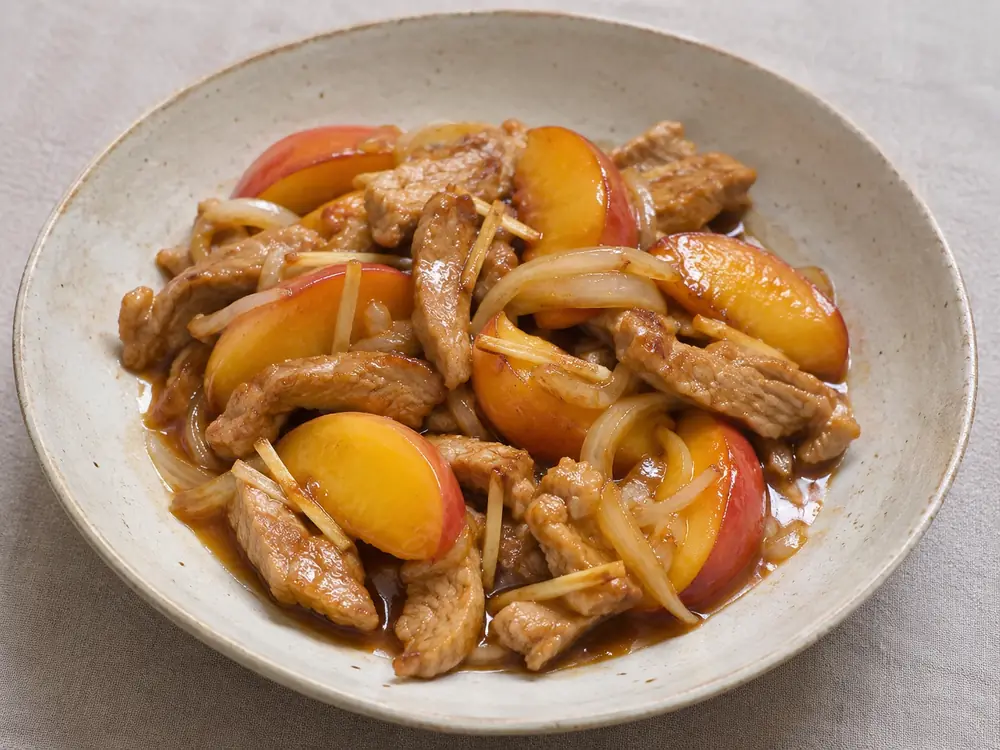
Ingredients
- 600 g trimmed fresh pork tenderloin
- 3 firm peaches
- 1 onion
- 15 g ginger
- 20 ml oil
- 20 ml soy sauce
- 15 ml vinegar
- 80 ml water for juices and 15 ml cold water for starch
- 5 g starch
- added salt 0 g
Preparation
Method at a glance — Cut pork into even strips and peaches into wedges. Sear meat in oil in two batches; reserve cleanly. Fry onion and ginger about 4 minutes. Add peaches, soy, vinegar and 80 ml water, then pork. Cook 5–7 minutes according to thickness, retaining a conservative 71 °C reference centrally in a thick strip. Mix starch with 15 ml cold water, stir again and add to simmering sauce. Thicken about 1 minute and serve.
Cutting for even cooking — Remove tough silverskin from tenderloin and cut comparable strips. Keep chilled during vegetable preparation. Wash peaches, remove stones and cut substantial wedges. Fine skin may remain; peel thicker skin gently without crushing flesh. Slice onion and finely chop or grate peeled ginger. Measure soy, vinegar and the 80 ml cooking water. Separately prepare 15 ml cold water for 5 g starch. This small binding-water allowance is explicit, not an omitted extra. Have ingredients ready before heating so the quick cooking sequence does not pause for measuring.
Searing without a wet crowded mass — Heat measured oil and sear pork in two batches, reserving on a clean plate. First searing colours surfaces, without constituting the final central check. Fry onion and ginger about four minutes in the same pan, lowering heat if ginger darkens excessively. Add fruit, soy, vinegar and cooking water. Return pork and cook about five to seven minutes according to thickness. This version retains complete cooking with a conservative reference of 71 °C in a thick strip, measured from its side. Stop once satisfactory because lean tenderloin firms with prolonged cooking. Remove already-tender peaches temporarily if meat needs longer.
Keeping thickening smooth — Starch settles quickly in its container. Stir again immediately before adding to simmering sauce, never a nearly dry pan. Loosen excessive thickness with a little hot water. Observe the first thickening before considering any second addition. Peach juice varies greatly with ripeness, explaining minor evaporation adjustments without changing the entire formula.
Preparing pan and utensils — Read the sequence, measure liquids and organise a clean cooked-meat plate. Do not reuse unwashed raw plates. Refrigerate meat until needed and pat damp surfaces dry; water cools the pan and encourages liquid before browning. A heavy pan helps if not overloaded. Heat oil without smoke and arrange one layer at a time. Adjust from stronger searing heat to gentler sauce finishing. Minutes guide action, not proof of thick-centre readiness. If deposits blacken, stop briefly and remove burnt particles. Brown juices flavour planned liquid; black residue cannot be repaired with sugar or condiments. Keep only clean component juices and heat them completely when combined.
Adjusting sauce and serving promptly — Sauce should coat lightly rather than become paste. Small hot-water additions loosen excessive concentration. Taste after reduction because soy and juices intensify, without automatically adding salt. After starch, maintain a brief simmer to show binding. Peach wedges should still move freely rather than adhere inside a dense coating. Prepare accompaniment first and serve promptly on warm plates. Cool leftovers rapidly in shallow portions, refrigerate covered and use within 48 hours. Reheat only needed portions completely centrally, using 74 °C as the manuscript's reference. Reheated meat will be firmer; longer cooking cannot recover original tenderness.
Binding just before service — Stir starch suspension smooth again and pour into simmering sauce while mixing. Wait approximately one minute before deciding on further reduction. A glossy coating is sufficient, not opaque jelly. Taste a complete bite of meat and fruit before correcting. Serve with separately counted plain rice or grain and green vegetables. If soy dominates, add a little water and keep sauce fluid rather than increasing fruit. Firm nectarines are a variation with similar attention. Small batches preserve the sauté character better than a crowded casserole of strips. Enjoy your meal!
Introduction
Tenderloin strips, firm peach wedges and a short ginger sauce give four portions from 600 g meat. Fruit should remain recognisable rather than becoming purée for prolonged simmering. Soy supplies salt, so the base recipe contains none added. Measure it instead of seasoning by an uncontrolled pour.
Cultural context
This contemporary combination claims no South African traditional name. Peaches may evoke Cape orchards without establishing a historical origin. Choose aromatic fruit still firm enough for the pan; very ripe juicy peaches suit another preparation better. Fruit in syrup requires reformulation rather than silent substitution.
Planning
Serves 4; preparation 20 min; cooking 20 min.
Enjoy your meal
Enjoy your meal!