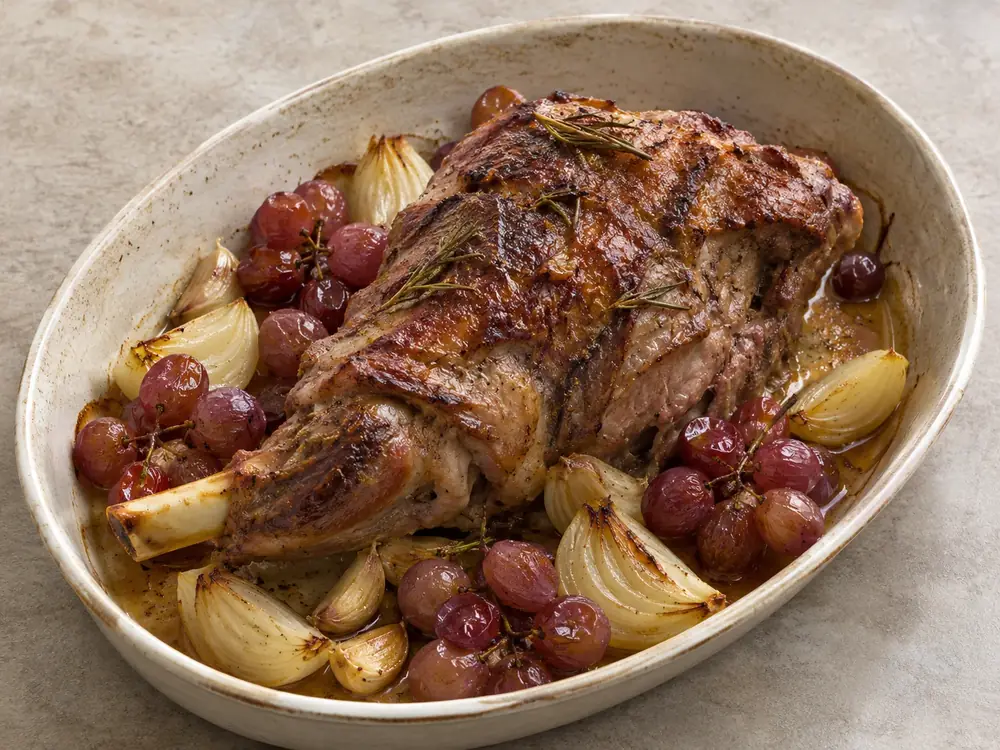
Oven-braised lamb with fresh grapes and rosemary
Shoulder cooks covered with onion, garlic and rosemary before fresh grapes join near the end. Fruit warms and splits slightly, releasing juice without becoming compote. A 1.4 kg bone-in shoulder provides six portions; the same boneless weight gives more flesh and potentially different timing according to its shape.
Ingredients
- 1.4 kg bone-in lamb shoulder
- 300 g fresh seedless grapes
- 2 onions
- 4 garlic cloves
- 300 ml initial water, topped up if needed
- 25 ml oil
- 5 g salt
- 2 rosemary sprigs
Preparation
Method at a glance — Coat shoulder with oil and salt. Arrange over onion wedges with garlic, rosemary and water. Cover and cook 2 hours at 160 °C, basting. Add grapes, uncover and cook another 30 minutes until tender and golden. Rest 15 minutes before carving.
Preparing shoulder and dish — Ask the butcher for a slow-cooking shoulder. Remove loose bone fragments and excessive external fat without stripping all protective fat. Pat dry and coat with measured oil and salt. Peel and wedge onions; retain whole garlic cloves, lightly crushed if desired. Place onion and garlic in a deep dish or casserole, shoulder above, and pour measured water around. Add two rosemary sprigs without scattering excessive needles into juices. Close with a suitable tight lid: loosely laid paper does not retain steam equivalently. This version begins directly over aromatics, without an added preliminary pan-searing stage.
Cooking before adding grapes — Bake at 160 °C approximately two hours. Check halfway for remaining liquid and baste. If shoulder remains very firm at two hours, continue covered before adding fruit. Flesh must begin yielding to a fork; the final stage cannot compensate for a still-resistant shoulder. Wash, destem and dry 300 g grapes, discarding damaged fruit. Arrange around meat, uncover and continue about thirty minutes until surface is golden and meat tender. Watch grapes near edges because sugars brown quickly if liquid dries. Add a little hot water around meat without soaking its surface when necessary.
Preserving grapes during reheating — Cooked grapes break readily when stirred with meat. For a two-day preparation, reserve presentation fruit and warm gently at the end. Crushed grapes can remain in juices. Remove rosemary stems before storing to avoid an increasingly dominant flavour after reduction and waiting. Check juices for bone fragments when deboning, not only the larger pieces visible on the serving platter.
Managing slow cooking — Choose a casserole fitting the meat without excessive empty area or restricted handling. Its lid limits evaporation. Preheat oven and maintain gentle liquid movement. Fierce boiling does not guarantee quicker tenderness and makes juices harder to control. The covered phase tenderises; colour comes after adding grapes and uncovering. Baste with pan juices and turn the dish if oven heat is uneven. Protect a fast-browning surface lightly without closing everything again, then finish according to meat tenderness. Do not invent a searing stage absent from this formula. Check liquid after openings, replacing evaporation with small hot-water additions. If juices are abundant once meat is tender, remove shoulder before reducing separately. Avoid continuing meat cooking solely to concentrate sauce. A moderate volume should remain for serving without becoming a sweet salty syrup.
Checking tenderness and arranging service — Fork-test thick flesh away from bone. Resistance should decrease markedly; elastic meat generally needs further moist cooking. This complements cooking checks: oven temperature does not indicate meat-centre temperature. Thickness, cut and oven stability affect timing. Allow a margin rather than promising an exact serving hour. For advance preparation, divide cooked meat into shallow containers, cool promptly and refrigerate. Do not leave the whole casserole for hours on the stove. Use refrigerated leftovers within 48 hours. Reheat only needed portions completely centrally, using 74 °C as the manuscript's reference; add a little water if thickened. Reheating does not reset the storage period.
Resting, sauce and carving — Rest shoulder fifteen minutes under light protection. Remove rosemary stems, skim fat and mash cooked garlic if a slightly fuller sauce is desired. Retain several whole grapes. Reduce only excessive juices because reduction concentrates fruit sugar and salt together. Remove flesh from bone and share fairly, or present the joint before carving. Separately prepared green vegetables, plain couscous or potatoes suit; lightly acidic salad can balance without changing sauce. Another fruit requires revised timing rather than copied grape instructions. For advance cooking, tenderise meat first, cool promptly with juices and reserve fresh grapes for finishing on serving day. This preserves their shape and avoids prolonged double cooking. Separate timing, measured rosemary and skimmed juices determine success. Enjoy your meal!
Introduction
Shoulder cooks covered with onion, garlic and rosemary before fresh grapes join near the end. Fruit warms and splits slightly, releasing juice without becoming compote. A 1.4 kg bone-in shoulder provides six portions; the same boneless weight gives more flesh and potentially different timing according to its shape.
Cultural context
This contemporary meat-and-fruit composition may evoke Cape produce without inventing a family or community origin. Seedless grapes simplify service. Taste fruit first: a very sweet bunch makes sweeter juices, affecting accompaniment choice. Do not automatically add another sweet garnish to an already fruity plate.
Planning
Serves 6; preparation 20 min; cooking approximately 2 h 30 or longer; resting 15 min.
Enjoy your meal
Enjoy your meal!