Beef brisket braised with coffee
Brisket cooks slowly in mild coffee, water and tomato. Coffee should deepen juices without dominating through roasted bitterness. Boneless 1.2 kg brisket gives six portions after some fat and thick membrane trimming. Choose a braising cut; tender steak would not suit this prolonged cooking.
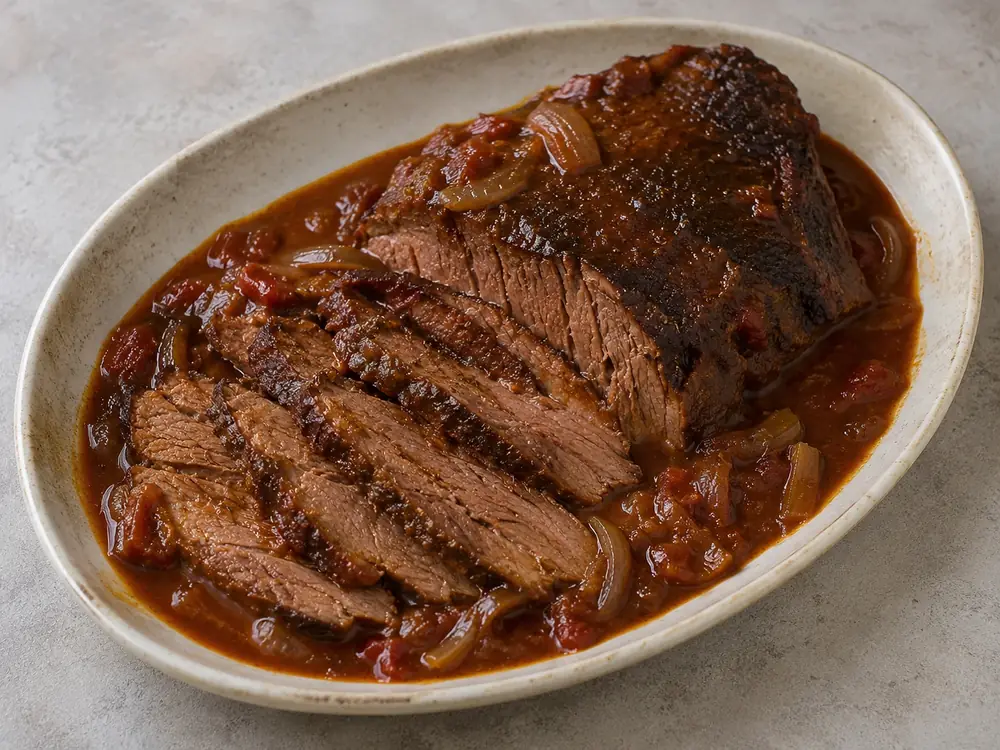
Ingredients
- 1.2 kg boneless beef brisket
- 2 onions
- 250 ml mild filtered coffee
- 350 ml initial water, topped up if needed
- 30 g tomato purée
- 20 ml oil
- 15 g brown sugar
- 5 g salt
- thyme
Preparation
Method at a glance — Brown brisket in oil, then fry onions. Add tomato purée, coffee, water, sugar, thyme and salt. Cover tightly and cook 3 h 30 at 150 °C until tender, turning halfway. Rest 15 minutes before slicing. Skim juices and reduce if necessary.
Preparing measured coffee — Prepare 250 ml weak coffee and filter carefully. Avoid very bitter diluted espresso or flavoured coffee. Taste before adding: a defect in the cup concentrates during reduction. The 350 ml water completes initial liquid; additional hot water may replace evaporation during braising. Slice onions thickly. Trim only excessive exterior fat, keeping some protection. Pat brisket dry and brown in measured oil. Reserve briefly and fry onions. Add 30 g tomato purée and stir one minute at moderate heat without burning. Prepare the remaining seasonings before closing the casserole.
Allowing time to work — Pour coffee and water, add sugar, thyme and salt and loosen browned juices. Return meat, close tightly and place in a preheated 150 °C oven. Allow approximately three and a half hours, turning halfway and checking liquid. It must not disappear. Black dry residue produces bitterness that coffee or sugar cannot repair. Test with a fork after the indicative duration. Flesh should yield and make supple slices. If resistant, continue covered with a little water in twenty-to-thirty-minute stages. Thick pieces need longer, so allow flexibility in planning. Once texture is satisfactory, remove brisket and rest fifteen minutes before cutting.
Slicing brisket cooked ahead — Chilled meat generally slices more neatly, provided it cooled promptly and remained refrigerated. Dividing into reasonable portions before storage also speeds cooling. Reheat slices completely in juices under a light cover. Melt gelled cold juices gently before judging liquid quantity; do not immediately add a whole cup of water. Often only a small adjustment is needed.
Managing slow cooking — Use a casserole fitting the meat without a vast empty base or restricted handling. An appropriate lid limits steam loss. Preheat oven and maintain quiet liquid movement; vigorous boiling does not guarantee faster tenderness. Dry meat and heat oil without smoke for browning, working in batches if pieces touch. Let surfaces release before turning instead of moving constantly. Stop if residues blacken and remove burnt patches rather than dissolving them throughout sauce. Brown deposits can loosen with planned liquid. Check levels particularly after lid openings, replacing evaporation with small hot-water additions. If liquid is excessive when meat is tender, remove meat before reducing separately. Extra sauce reduction should not become unnecessary further brisket cooking.
Checking tenderness and arranging service — Fork resistance should fall markedly. Elastic flesh generally needs more moist time. Texture checks complement cooking checks; oven temperature is not meat-centre temperature. Thickness, cut and oven stability determine duration. Plan a margin rather than a fixed promise of service at an exact minute. For advance preparation, portion into shallow containers, cool promptly and refrigerate. Do not leave the whole casserole for hours on the stove. Use refrigerated leftovers within 48 hours. Reheat only needed portions completely centrally, with 74 °C as the manuscript's reference, adding water if thickened. Reheating does not restart the storage period.
Skimming and reducing separately — Remove thyme stems and visible surface fat. Reduce uncovered only if necessary while meat rests. Taste repeatedly because reduction concentrates salt, tomato and coffee bitterness together. Keep a strongly flavoured sauce more fluid rather than forcing thickness. A little hot water can restore consistency. Identify grain direction and slice across it with a sharp knife. Coat lightly and offer remaining sauce alongside. Unsweetened squash mash and green vegetables suit; another sweet accompaniment reinforces sauce sweetness. For next-day meals, cool portions with juices and reheat gently but completely. Moderate coffee and genuine braising patience determine success. Enjoy your meal!
Introduction
Brisket cooks slowly in mild coffee, water and tomato. Coffee should deepen juices without dominating through roasted bitterness. Boneless 1.2 kg brisket gives six portions after some fat and thick membrane trimming. Choose a braising cut; tender steak would not suit this prolonged cooking.
Cultural context
This contemporary composition claims no heritage or named traditional South African coffee-beef dish. Brown sugar rounds sauce rather than making a sweet glaze. Tomato contributes variable acidity. Measured infusion and patient cooking matter more than adding ingredients to mask excessively strong coffee.
Planning
Serves 6; preparation 25 min; cooking approximately 3 h 30 or longer; resting 15 min.
Enjoy your meal
Enjoy your meal!