Lamb kidneys with mustard and onions
Careful trimming and attentive cooking matter most for kidneys. Soft onions, a little cream and mustard accompany 600 g raw trimmed meat for four. Purchase extra if kidneys arrive whole and untrimmed, since removing large white centres reduces usable weight.
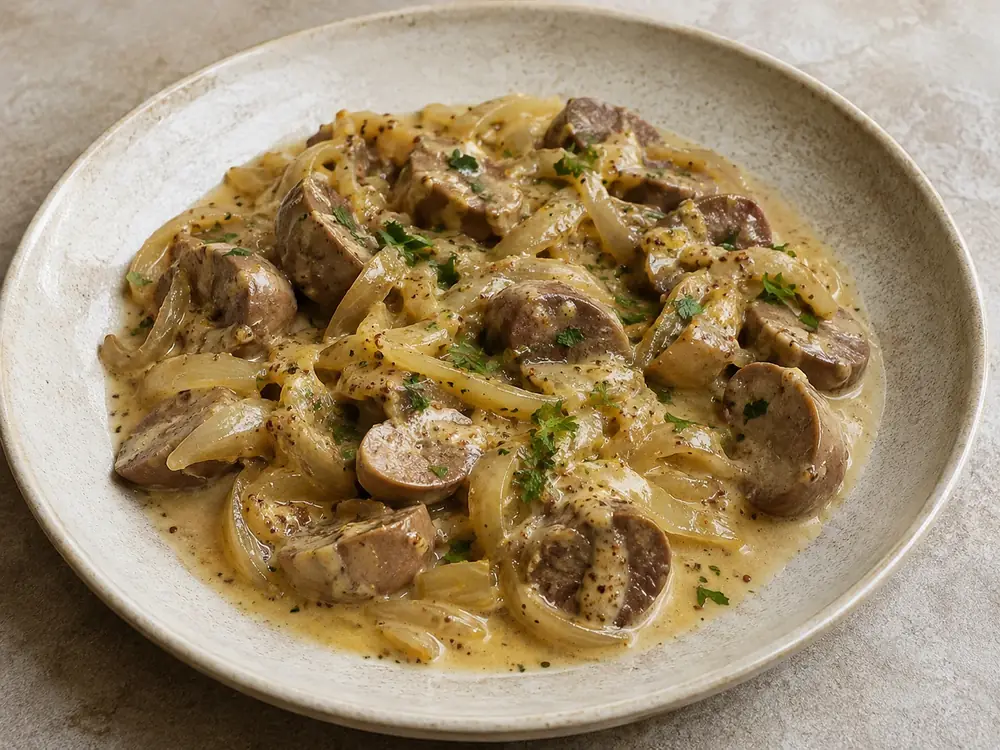
Ingredients
- 600 g raw lamb kidneys after trimming
- 2 onions
- 100 ml cream
- up to 20 g mustard
- 20 ml oil
- 15 g butter
- up to 3 g salt
- parsley
Preparation
Method at a glance — Open kidneys, remove white central tissue and cut evenly. Soften onions in butter about 10 minutes; reserve. Cook kidneys in oil at controlled heat, in batches if needed, until at least 71 °C centrally. Combine with onions, cream and mustard, simmer briefly and adjust salt. Add parsley and serve promptly.
Trimming without soaking — Ask the butcher to remove external membranes where necessary. Split lengthways and remove white centres carefully with a knife tip. Keep comparable pieces on a clean board and pat dry. Prolonged soaking is not part of this formula; it introduces water and alters the cooking sequence. Slice onions, melt 15 g butter over gentle heat and soften about ten minutes, longer if still firm. Stir without dark browning and reserve cleanly. Measure cream and mustard. Wash and dry parsley, chopping near serving for fresher flavour. Organise these elements before the short final meat stage.
Cooking kidneys centrally — Heat 20 ml oil and arrange pieces without piling. Turn regularly, controlling heat for colour without burnt edges. If much water appears, work in two batches instead of boiling the whole quantity in its juices. Actual piece dimensions, not total purchased weight alone, determine duration. This version uses complete cooking to at least 71 °C at the centre of a thick piece, probing from its side. Colour or finger pressure alone is less reliable. Once satisfactory, return onions and add cream and mustard progressively up to the stated amount. Simmer briefly. A two-minute sauce finish does not replace the preceding central check.
Choosing mustard strength — Strong mustard feels sharper than wholegrain at equal weight. Start with part, taste sauce with a cooked piece and add more if needed. Parsley supplies freshness without correcting excess mustard. Choose a gentler product initially rather than multiplying cream afterwards. A little balanced sauce accompanies offal better than a large volume entirely masking its flavour.
Preparing pan and utensils — Read the sequence and measure liquids before heating. Reserve a clean cooked-meat plate, never an unwashed raw dish. Keep kidneys cold until needed and pat surfaces dry; moisture cools the pan and encourages liquid release before browning. A heavy pan helps when not overloaded. Heat fat without smoke and cook one layer in batches as required. Initial colouring needs more heat than cream finishing. Timing guides action but cannot replace thick-centre checks. Stop briefly if the base becomes excessively dark. Brown deposits can flavour planned liquid; black particles make sauce bitter. More cream, sugar or condiment does not remove that cause. Keep only clean component juices and heat them completely on combining. Avoid small reserve vessels packing meat into a continuing hot mass.
Adjusting sauce and serving promptly — Judge coating on a spoon: sauce should accompany rather than become paste. Small hot-water additions loosen over-reduction. Taste salt after concentration, since mustard and juices intensify. Keep cream simmering gently rather than boiling violently. Extra finishing fat is unnecessary for shine. Have accompaniment ready before final cooking and serve on warm plates without prolonged holding. Cool leftovers promptly in shallow portions, refrigerate covered and use within 48 hours. Reheat only needed portions completely, aiming for 74 °C as the manuscript's reference. Texture becomes firmer; prolonged reheating cannot restore initial tenderness.
Balancing sauce — Taste before using the full salt allowance. Add parsley off heat or immediately before serving. If cream reduces rapidly, loosen with a small spoonful of hot water instead of boiling for extreme thickness. Sauce should coat kidneys with soft onions still visible. Serve promptly with separately prepared mash, rice or polenta and perhaps a lemon-dressed salad. Do not leave kidneys on low heat while finishing accompaniments. Correct quantities are preferable when seeking supple flesh; leftovers are possible but reheating changes texture. Trimming and organised service determine success. Enjoy your meal!
Introduction
Careful trimming and attentive cooking matter most for kidneys. Soft onions, a little cream and mustard accompany 600 g raw trimmed meat for four. Purchase extra if kidneys arrive whole and untrimmed, since removing large white centres reduces usable weight.
Cultural context
This contemporary offal preparation claims no precise South African regional origin. Kidney flavour should remain identifiable rather than hidden. Buy fresh traceable product and maintain refrigeration. An abnormal smell must not be disguised with prolonged marination, vinegar or excessive mustard. Sauce cannot repair poor starting material or inadequate trimming.
Planning
Serves 4; preparation 25 min; cooking 20 min.
Enjoy your meal
Enjoy your meal!