Pulled pork collar with apricots
Covered long cooking makes pork collar easy to pull. Dried apricots partially dissolve into a fruity sauce balanced by vinegar and coriander. A 1.2 kg boneless piece provides six portions with separately prepared vegetables or bread. Yield depends on discarded fat, so distinguish served flesh from purchase weight.
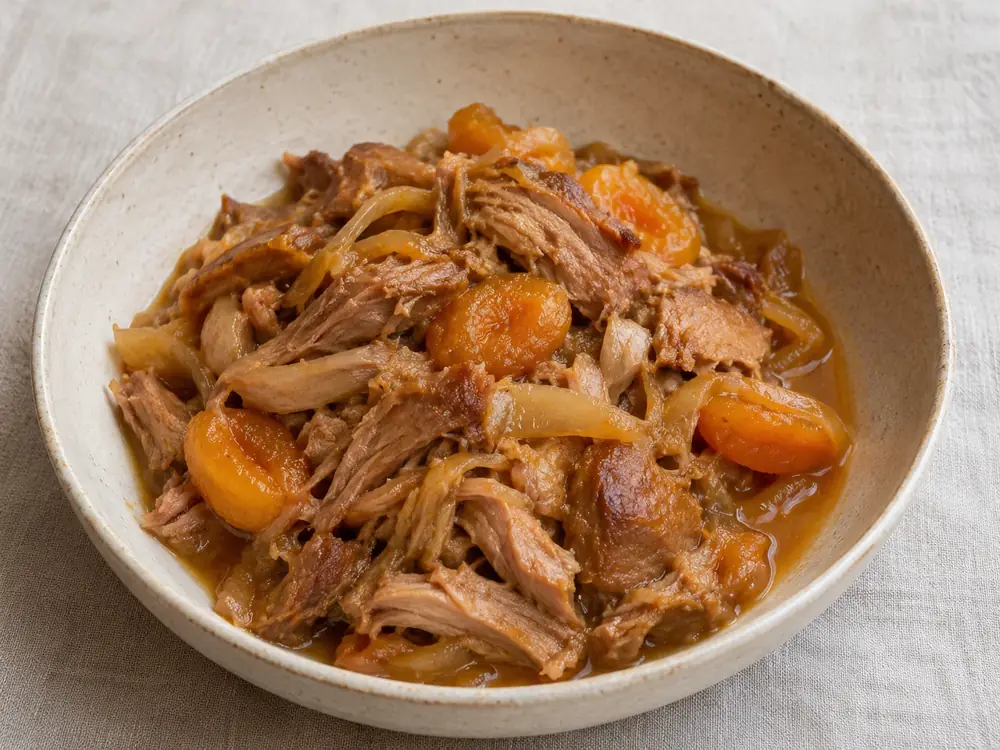
Ingredients
- 1.2 kg fresh boneless pork collar
- 120 g pitted dried apricots
- 2 onions
- 400 ml initial water, topped up if needed
- 20 ml oil
- 20 ml vinegar
- 3 g ground coriander
- 5 g salt
Preparation
Method at a glance — Brown pork in oil. Add onion wedges, apricots, water, vinegar, coriander and salt. Cover and cook 3 hours at 150 °C, turning once and adding water if necessary. Shred meat, skim excess fat from juices and combine with mashed fruit.
Preparing fruit and starting braising — Check apricots for remaining stones. Halve very large ones without puréeing beforehand. Peel and wedge onions. Measure water, vinegar, ground coriander and salt before starting. Fruit absorbs juices, requiring checks during braising rather than assuming the initial volume lasts unchanged. Pat meat dry and colour several faces in measured oil. Add onion and allow light colour. Pour water, loosen brown unburnt juices and add fruit and seasoning. Cover and place in a preheated 150 °C oven. Allow approximately three hours and turn halfway if the shape permits, keeping the piece intact for this stage.
Recognising when to pull — Check liquid whenever opening, topping up with hot water if nearly dry. After three hours, a fork should separate fibres easily. If resistant, continue covered in twenty-to-thirty-minute stages. Extended moist cooking is preferable to forcing firm meat into dry fragments. Thickness determines duration more than a rigid timer. Transfer to a clean dish and rest briefly. Pull with two forks, removing large fat pockets and resistant membranes. Retain some substantial fibres rather than reducing everything to tiny threads. Meanwhile skim juices with a spoon and mash cooked apricots into them. Keep clean handling throughout the separation.
Portioning for several meals — Warm pulled meat is easier to portion. Share comparable fruit and juices among servings, then cool containers for later meals promptly. Date portions before freezing if chosen. For sandwiches, drain the filling slightly just before assembling without discarding all sauce. Very wet pork soaks bread, while completely drained meat dries. Add raw vegetable garnishes at service.
Managing slow cooking — Choose a lidded casserole fitting meat without a large empty base or cramped turning. Width increases evaporation; a lid limits steam loss. Preheat oven and maintain gentle liquid movement rather than fierce boiling. Dry surfaces and heated oil without smoke promote initial browning. Let a face release before turning instead of shifting continually. If residues become black, stop heat and remove burnt areas rather than dissolving them into sauce. Brown juices can loosen with some planned water. Check levels particularly after opening. Small hot-water additions replace evaporation rather than introducing a new aromatic ingredient. Once meat is tender, remove it before any separate reduction of excess liquid.
Checking tenderness and organising service — Fork resistance should drop markedly; elastic flesh generally needs longer moist cooking. This texture check complements cooking checks, since oven temperature does not equal meat-centre temperature. Thickness, cut and oven stability affect duration. Plan a margin rather than an exact serving promise. For advance cooking, divide into shallow containers, cool promptly and refrigerate. Never leave the whole casserole for hours on the stove. Use refrigerated leftovers within 48 hours. Reheat only needed portions completely, with 74 °C as the manuscript's reference, adding water if thickened. Reheating does not restart the storage period.
Combining without soaking — Reduce excessive juices, then fold gradually into pork. Reserve some sauce alongside instead of emptying the entire pot automatically. Meat should be moist and glossy, not floating. Taste vinegar with meat: it seems sharper alone than distributed among fibres. Do not add sugar reflexively because fruit already supplies concentrated sweetness. Serve with sliced cabbage and grain, or fill bread with a measured portion and separately prepared raw vegetables. For next-day preparation, pull and promptly cool shallow portions with enough juice to protect flesh. Reheat gently but completely, stirring. A cut suited to slow cooking and balanced fruit sweetness and acidity define this dish. Enjoy your meal!
Introduction
Covered long cooking makes pork collar easy to pull. Dried apricots partially dissolve into a fruity sauce balanced by vinegar and coriander. A 1.2 kg boneless piece provides six portions with separately prepared vegetables or bread. Yield depends on discarded fat, so distinguish served flesh from purchase weight.
Cultural context
This contemporary combination claims no precise historical origin. It uses dried fruit rather than jam; sweetness remains linked to apricot texture. Choose fresh unsalted, unsmoked collar. Much leaner loin is not an equivalent replacement for long cooking and may dry out. Suitable cut selection is central to the result.
Planning
Serves 6; preparation 20 min; cooking approximately 3 h or longer according to the cut.
Enjoy your meal
Enjoy your meal!