Beef steaks with pepper and rooibos
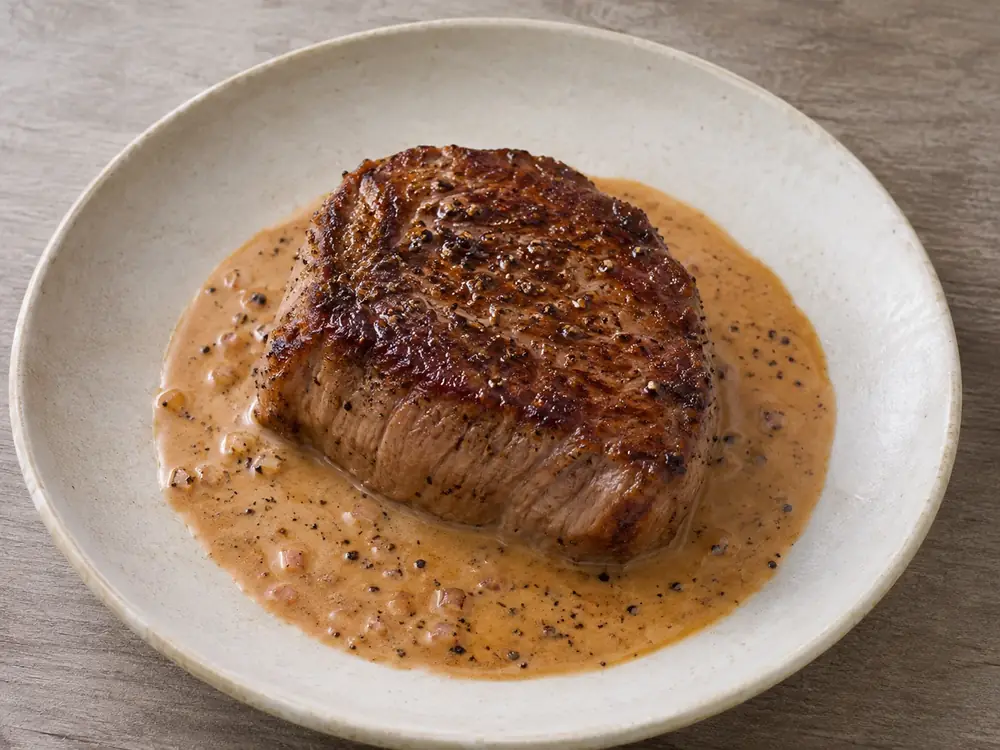
Four 150 g steaks receive a pepper, cream and rooibos sauce. Infusion replaces some deglazing liquid without becoming a concentrated drink. Choose tender whole-muscle cuts of even thickness. Ask the butcher if mechanically tenderised: cooking precautions then differ from those for intact muscle.
Ingredients
- 4 beef steaks of 150 g
- 200 ml brewed rooibos
- 1 shallot
- 100 ml cream
- 20 g butter
- 10 ml oil
- 3 g cracked pepper
- 3 g salt
Preparation
Method at a glance — Brew moderate rooibos and strain. Cook steaks in oil according to thickness; this version retains at least 63 °C centrally for whole-muscle meat, followed by at least 3 minutes' rest. Reserve on a clean plate for 5 minutes. Soften shallot in butter, add rooibos and pepper, reduce about half. Add cream, simmer, then heat clean resting juices in sauce. Adjust salt and serve sauce beneath steaks.
Infusing without concentrating bitterness — Prepare 200 ml plain rooibos according to its packet at normal strength. Strain carefully and keep warm. Vanilla- or fruit-flavoured blends alter the intended taste. Strong infusion does not become more delicate through reduction; start moderately and judge the finished sauce. Finely chop peeled shallot. Crack pepper fairly coarsely rather than grinding to dust. The 3 g gives marked heat; start with two-thirds and add more after tasting if useful. Measure cream and butter. Have accompaniment nearly ready before cooking steaks because sauce finishes quickly while they rest.
Cooking steaks and resting — Pat beef dry and use some measured salt. Heat 10 ml oil in a suitable pan and lay steaks without crowding. Colour one face, turn and adjust heat to thickness. This version uses at least 63 °C centrally for intact whole muscle and a minimum three-minute rest. The planned five-minute rest also allows sauce preparation. Surface colour alone is insufficient. Reserve on a clean warm plate under light protection, without sealing in steam that wets the crust. Add clean resting juices to sauce later and heat through. Remove burnt pan particles while keeping brown unburnt juices. Do not reuse an unwashed raw-meat plate for finished steaks.
Choosing pepper for diners — Freshly cracked pepper is more expressive than stale opened powder. Begin moderately if diners are unfamiliar with its strength, offering extra separately. More rooibos is not a neutral remedy for excessive pepper: it changes the entire balance. Reserve some sauce before full seasoning or prepare it less concentrated. A separate saucepan is useful if the steak pan overheated.
Preparing pan and utensils — Read the short sequence, measure liquids and organise clean cooked-meat plates before heating. Keep meat refrigerated until useful and dry wet surfaces; water cools the pan and encourages liquid before browning. A heavy pan helps if not overcrowded. Heat oil without smoke and work in single-layer batches if needed. Searing heat differs from gentler sauce finishing. Indicative minutes do not replace thick-centre checks. Stop briefly if the base becomes too dark. Brown deposits flavour liquid; black particles make it bitter and cannot be corrected by more cream, sugar or condiments. Retain only clean component juices and heat them completely when combined. Avoid packing reserved meat into a hot compact mass.
Adjusting sauce and serving promptly — Sauce should coat lightly rather than become paste. Loosen over-reduction with small hot-water additions. Taste salt after reduction because condiments and juices concentrate. Keep cream at a gentle simmer, without relying on extra finishing fat for shine. Prepare accompaniment first and serve on warm plates promptly, avoiding prolonged holding that firms meat. Cool leftovers rapidly in shallow portions, refrigerate covered and use within 48 hours. Reheat only needed portions completely, aiming for 74 °C as the manuscript's leftover reference. Reheated texture is firmer; extending cooking cannot restore the original tenderness.
Making a short sauce — Lower heat, soften shallot in butter without browning, then add rooibos and pepper and loosen juices. Reduce about half. Add 100 ml cream and simmer a few minutes; taste and adjust salt. Loosen with a small spoonful of hot water if needed. Serve a little beneath each steak, remainder separately. Green beans and steamed potatoes keep aromas clear. A cream-free version requires reformulation: simply removing 100 ml changes volume and balance. Reduce pepper for a gentler sauce rather than adding sugar. Separate cooking and moderate infusion determine success. Enjoy your meal!
Introduction
Four 150 g steaks receive a pepper, cream and rooibos sauce. Infusion replaces some deglazing liquid without becoming a concentrated drink. Choose tender whole-muscle cuts of even thickness. Ask the butcher if mechanically tenderised: cooking precautions then differ from those for intact muscle.
Cultural context
This contemporary pan recipe claims no traditional specialty. The South African Rooibos Council documents culinary uses of rooibos, not this sauce's proportions. No therapeutic property is attributed to the infusion. It contributes warm colour and a gently woody aromatic background that pepper and cream should leave perceptible rather than overwhelm.
Planning
Serves 4; preparation 15 min; cooking 20 min; resting 5 min.
Enjoy your meal
Enjoy your meal!