Ostrich strips with mushrooms
Small batches of ostrich meet mushrooms and a short mustard sauce. The 600 g gives four portions. Ask the supplier for a tender cut suitable for quick cooking and slice regularly. Thinly cutting a stewing cut does not automatically make it tender; suitability must be confirmed at purchase.
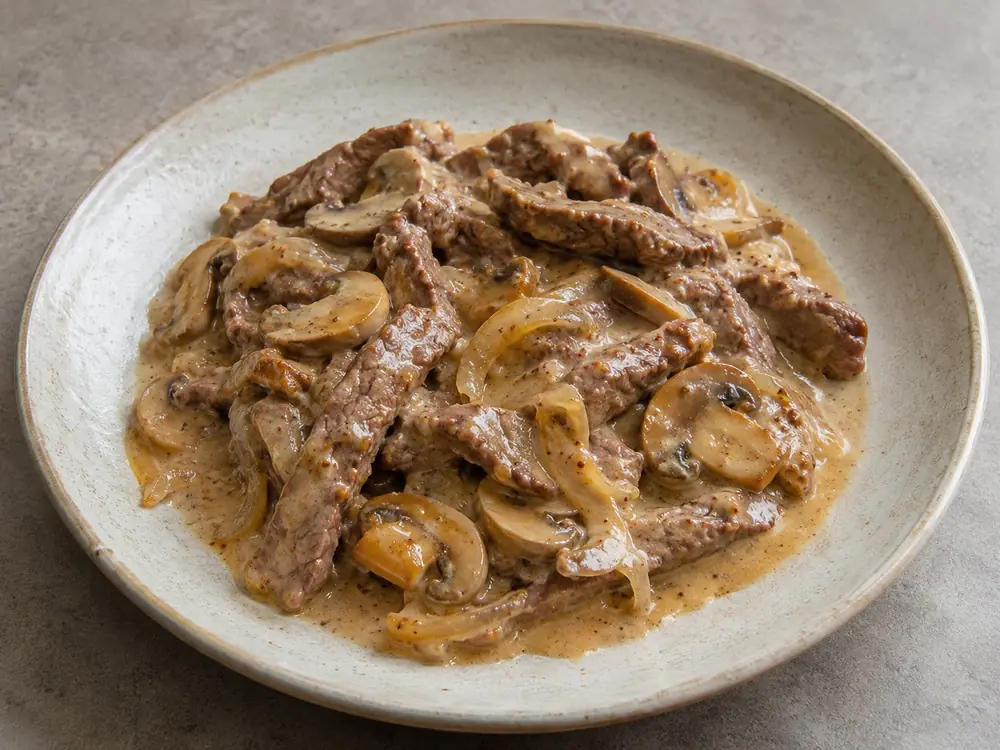
Ingredients
- 600 g farmed ostrich, identified tender quick-cooking cut, in strips
- 300 g mushrooms
- 1 onion
- 150 ml cream
- 20 ml oil
- 15 g mustard
- up to 3 g salt
- pepper
Preparation
Method at a glance — Fry onion then mushrooms in half the oil approximately 10 minutes until moisture evaporates; reserve. Sear ostrich in small batches in remaining oil. Combine with vegetables, cream and mustard; simmer 3–5 minutes or according to thickness and supplier instructions. This version uses complete cooking with a conservative 71 °C reference centrally in a thick strip. Adjust salt and serve immediately.
Preparing vegetables without excess water — Clean mushrooms, trim earthy stems, wipe or rinse briefly as needed and dry promptly. Slice without tiny fragments. Slice onion. Heat half the oil and fry onion, then mushrooms, for about ten minutes altogether. Allow released water to evaporate substantially before reserving in a clean plate. Wet mushrooms would cause meat to boil when combined. Do not compensate with extra flour or cream during this stage. Keep the pan available and measure cream and mustard before starting meat. Preparing all sauce ingredients first prevents unnecessary waiting during a short final cooking sequence.
Searing and finishing gently — Pat strips dry and divide into two or three batches. Heat remaining oil and briefly sear, letting faces colour before moving, then reserve in a clean container. Do not crowd all 600 g into a small pan. Surface browning does not prove the centre ready; check thickness and supplier guidance. Return meat and mushrooms, add cream, mustard and some salt. Simmer three to five minutes, longer if checking requires. This domestic formula retains complete cooking with a conservative reference of 71 °C in the centre of a thick strip, measured from its side, not in sauce. Stop when satisfactorily cooked; prolonged cream holding firms the strips.
Avoiding misleading substitutions — A package labelled only ostrich meat does not establish quick-cooking suitability. Ask whether intended for pan cooking or stewing. Another meat requires an appropriate cut and revised central checks rather than copied minutes. Mushroom sauce does not determine meat's cooking requirements. Have plates ready before the final combination so finished strips are not held unnecessarily.
Preparing pan and utensils — Read the sequence, organise vegetables and measure liquids before heating. Keep a clean plate for cooked meat, distinct from unwashed raw-meat dishes. Refrigerate until needed and pat damp surfaces dry; surface water cools the pan and encourages juices before browning. A heavy pan helps control if not overloaded. Heat oil without smoke and work in single-layer batches. Searing needs stronger heat than sauce finishing. Indicative minutes organise action without replacing checks of the thickest piece. Stop heating briefly if the base darkens excessively. Brown deposits can flavour the planned liquid; black particles make sauce bitter. Extra cream, sugar or condiments cannot remove that cause. Retain component juices only when clean and heat them thoroughly during final combination. Avoid small reserve containers packing meat into a continuing hot mass.
Adjusting sauce and serving promptly — Sauce should coat lightly, not form paste. Loosen excessive reduction with small hot-water additions and taste before salting, since mustard and juices concentrate. Keep cream at a gentle simmer rather than violent boil. Do not rely on extra finishing fat for shine. Prepare accompaniment first and serve on warm plates promptly, avoiding hot holding that toughens strips. Cool any leftovers rapidly in shallow portions, refrigerate covered and use within 48 hours. Reheat only required portions completely, aiming for 74 °C as the manuscript's leftover reference. Texture will be firmer; longer cooking cannot restore original tenderness.
Adjusting and plating — Taste before using all 3 g salt because mustard brands vary. Loosen thick sauce with a spoonful of hot water and pepper near serving. Separately prepared grain or mash can accompany without being drowned in sauce. Oyster mushrooms may replace some button mushrooms, still cooked separately to evaporate moisture. Never substitute unidentified game under unchanged instructions. Suitable meat, initial pan heat and measured finishing determine success. Enjoy your meal!
Introduction
Small batches of ostrich meet mushrooms and a short mustard sauce. The 600 g gives four portions. Ask the supplier for a tender cut suitable for quick cooking and slice regularly. Thinly cutting a stewing cut does not automatically make it tender; suitability must be confirmed at purchase.
Cultural context
This contemporary recipe uses farmed ostrich marketed in South Africa, without claiming an ancient community dish. Identify meat and supply chain rather than relying on general wildlife imagery. Follow product storage and cooking directions, particularly after thawing. Cut selection and thickness matter more than total purchase weight for timing.
Planning
Serves 4; preparation 20 min; cooking 20 min.
Enjoy your meal
Enjoy your meal!