Pork hock braised with apples
Fresh hock becomes tender when connective tissues have time to soften. Apples and onions sweeten juices, balanced by mustard and a little vinegar. A 1.4 kg bone-in purchase gives four portions rather than equivalent boneless meat weight. This contemporary family composition claims no named regional specialty.
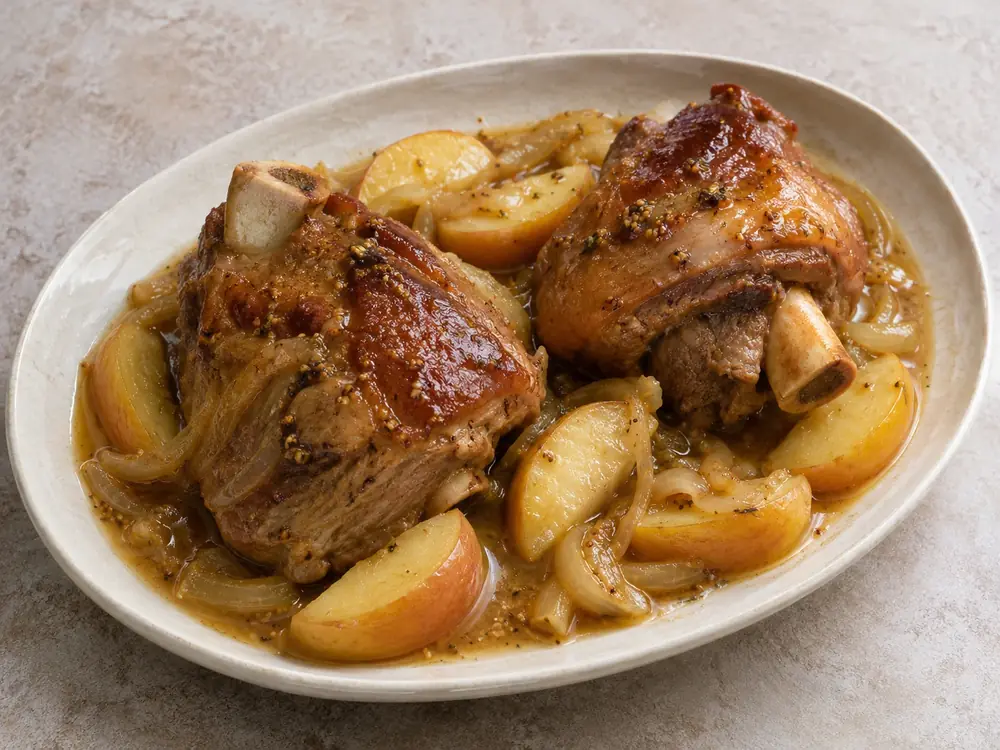
Ingredients
- 1.4 kg fresh cut bone-in pork hock, unsalted and unsmoked
- 3 firm apples
- 2 onions
- 500 ml initial water, topped up if needed
- 25 ml oil
- 20 g mustard
- up to 10 ml cider vinegar
- 4 g salt
- thyme
Preparation
Method at a glance — Brown pork in oil, add onions and cook 8 minutes. Add water, mustard, thyme and salt. Cover and braise at 160 °C for 2 hours. Add apple wedges and continue 30 minutes until meat separates easily. Finish with vinegar and skim juices.
Choosing cuts and preparing apples — Ask for comparable pieces large enough to withstand braising. Remove loose bone fragments and obviously excessive fat only. Clean skin may remain if its soft texture is desired, making its presence clear when serving. Pat surfaces dry before browning. Choose firm apples, wash, core and cut substantial wedges. Peel according to variety and texture preference; resistant skin may detach. Do not add fruit initially, or it dissolves before meat tenderises. Cut onions into wedges or broad slices. Keep the distinct cooking needs of meat and fruit in mind throughout assembly.
Braising in two stages — Heat measured oil and colour pork on several sides. Remove, soften onions about eight minutes, then add 500 ml water, mustard, thyme and salt. Loosen brown unburnt juices, return hock and cover. Bake at 160 °C approximately two hours, checking liquid once. Juices should remain at the base without completely submerging meat. Test resistance before adding fruit. If still very firm, extend the first stage. Once hock begins yielding, arrange apple wedges in juices and continue roughly thirty minutes. Total time can exceed two and a half hours. Remove meat when it separates easily from bone and fruit when tender but recognisable.
Keeping sauce clear — Hock can release much fat, especially with skin. Skim before reducing rather than concentrating an oily sauce. If cooked ahead and promptly cooled, chilled surface fat is easier to lift; retain the jellied juices beneath, which contribute body. If apples were not already cooked, add them during final reheating with sufficient time to become tender.
Managing slow cooking — Choose a casserole fitting meat without excessive empty area or cramped handling. A lid limits evaporation. Preheat oven and seek gentle liquid movement rather than fierce boiling. For browning, dry meat and heat fat without smoking. Work in batches, letting the first face release before turning; constant movement inhibits flavourful browning. If juices blacken, stop heating and remove burnt deposits instead of dissolving them into sauce. Brown residue can loosen with some planned liquid. Check levels during cooking, especially after opening. Replace evaporation with a little hot water. When meat is tender but liquid excessive, remove solids before reducing separately, avoiding unnecessary further meat cooking.
Checking tenderness and arranging service — Test thick flesh away from bone with a fork. Markedly reduced resistance indicates softening; elastic meat generally needs more moist cooking. This complements cooking checks, since oven temperature is not central meat temperature. Thickness, cut and oven stability affect duration, so allow a margin in meal planning. For advance preparation, portion into shallow containers after cooking, cool promptly and refrigerate. Do not leave the whole casserole on the stove for hours. Use refrigerated leftovers within 48 hours. Reheat only required quantities until hot centrally, with 74 °C as the manuscript's reference. Add water if thickened. Reheating does not restart storage time.
Skimming and balancing — Remove meat and fruit, let juices settle and spoon off visible fat. Reduce only if too thin. Add up to 10 ml cider vinegar gradually, since apples and mustard already supply acidity. No extra sugar is necessary for balance. Return solids only long enough to coat. Serve after removing or clearly identifying bones. Separately prepared celeriac-potato mash suits juices; simply cooked cabbage offers a lighter option. Deboning leftovers before cooling eases portioning and reheating. Apples cooked with meat still require refrigeration. Success comes from respecting the hock's long cooking and the fruit's later addition. Enjoy your meal!
Introduction
Fresh hock becomes tender when connective tissues have time to soften. Apples and onions sweeten juices, balanced by mustard and a little vinegar. A 1.4 kg bone-in purchase gives four portions rather than equivalent boneless meat weight. This contemporary family composition claims no named regional specialty.
Cultural context
Pork and fruit appear in various cuisines and do not independently establish South African origin. Buy fresh unsalted, unsmoked hock. Brined product is not a direct substitute: it changes flavour and may make the entire dish excessively salty. Tenderness-led timing is more useful than an exact serving deadline.
Planning
Serves 4; preparation 25 min; cooking approximately 2 h 30 or longer according to the hock.
Enjoy your meal
Enjoy your meal!