Beef tongue with mustard sauce
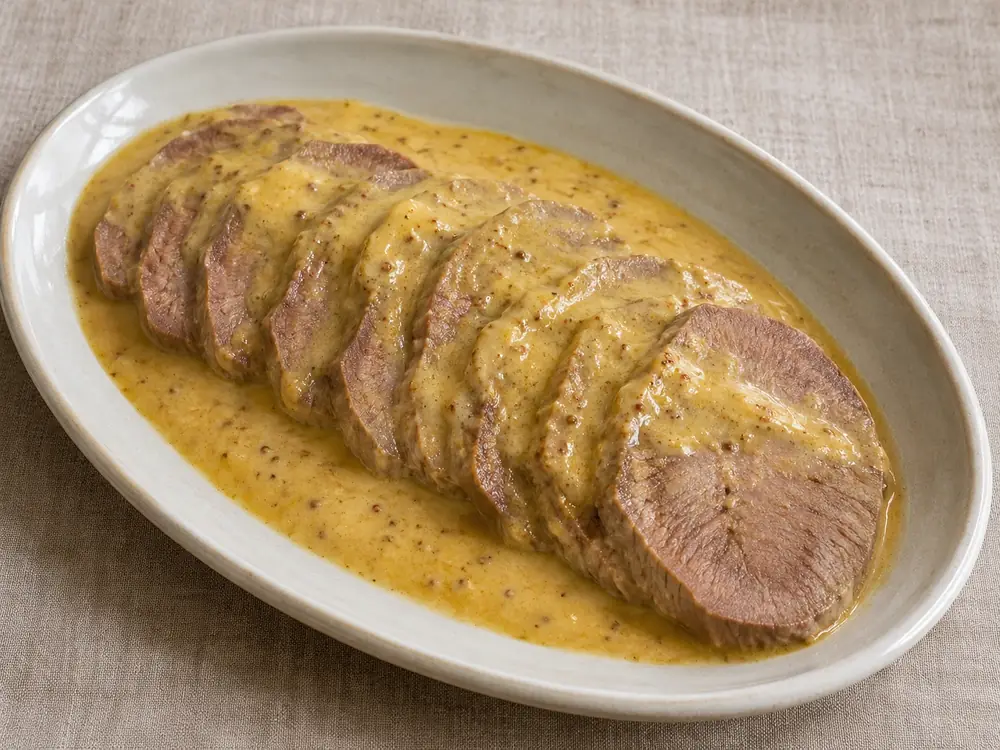
Properly cooked tongue gives supple close-grained slices lifted by mustard. A fresh 1.2 kg tongue provides six portions; purchase weight includes skin and trimming rather than equivalent ready-to-serve flesh. Salted or brined tongue requires different preparation and salt management, so use the stated fresh product.
Ingredients
- 1 fresh unbrined beef tongue of 1.2 kg
- sufficient water to cover tongue
- 1 onion
- 1 carrot
- 1 bay leaf
- 30 g butter
- 25 g flour
- 400 ml strained cooking broth
- 40 g mustard
- up to 4 g salt
Preparation
Method at a glance — Cover tongue with cold water, onion, carrot and bay. Bring to boil, skim and simmer gently 2 h 30–3 h until tender. Peel while warm and slice. Make roux with butter and flour, gradually add broth and cook 5 minutes; add mustard. Adjust salt and warm slices in sauce.
Cooking in gently flavoured broth — Rinse briefly if necessary without splashing, and place in a suitably sized pot with divided onion, carrot pieces and bay. Cover with cold water. Heat gradually, skim rising deposits, then partially cover and maintain a calm simmer. Top up with hot water to keep tongue submerged. The 400 ml for sauce is not the total cooking-water allowance. Allow two and a half to three hours, sometimes longer. A blade should enter the thickest part easily. Firm centres require continued simmering. The manuscript retains at least 71 °C centrally for this offal, followed by further cooking to tenderness. Minimum temperature does not itself establish texture, and fierce boiling does not usefully shorten the wait.
Peeling before complete cooling — Lift out carefully and retain broth. Once safe to handle, slit skin and peel while warm; cold skin adheres more. Remove tough tissue at the base and slice approximately one centimetre thick. For a short wait, cover slices with a little warm broth rather than letting them dry on a board. Filter 400 ml broth and remove visible fat. Melt 30 g butter, add 25 g flour and cook briefly. Gradually whisk in broth, simmer approximately five minutes, then add 40 g mustard. Taste before using the full salt allowance because mustard contributes salt. Warm slices gently in sauce without fierce boiling.
Keeping sauce supple — Mustard slightly thickens sauce and its acidity becomes stronger with prolonged reduction. Adding it after cooking the roux improves control. Warm chilled gelled broth before measuring; cold consistency does not imply less liquid. For later service, cool meat and sauce promptly, cover and refrigerate, then combine during complete reheating. Never leave dry slices out for hours.
Managing slow cooking — Use a casserole fitting the tongue without a vast empty area or restricting handling. Excess width accelerates evaporation; a lid limits steam loss. Keep discreet liquid movement rather than a rolling boil. Starting cold heats tongue and aromatics progressively, followed by early skimming and quiet simmering. Maintain full liquid coverage, unlike the half-height level used for some braises. Turn with tongs if part protrudes temporarily. Avoid heavy initial salting before knowing how much broth will be concentrated into mustard sauce. Check levels after opening the lid and replace evaporated water with hot water. If liquid is abundant once tongue is tender, remove meat before separate reduction.
Checking tenderness and organising service — Probe thick flesh with a fork or blade: resistance should fall markedly. Elastic meat generally needs more moist cooking. Texture checks complement cooking-temperature checks; hot broth does not instantly mean a hot centre. Thickness, product and simmer stability change duration, so allow a margin rather than promising an exact mealtime. For advance preparation, divide cooked components into shallow containers, cool promptly and refrigerate. Do not leave the whole pot on the stove for hours. Use refrigerated leftovers within 48 hours. Reheat only needed portions until hot centrally, using 74 °C as the manuscript's reheating reference; add a little water if thickened. Reheating does not restart storage time.
Serving and advance preparation — Arrange slices in a warm dish and coat moderately. Separately prepared steamed potatoes and green beans suit the sauce. If cooking the previous day, peel before cooling meat and broth in shallow containers; do not postpone peeling until tomorrow. Make sauce at mealtime using refrigerated broth if useful. Patient cooking, warm peeling and measured mustard determine the result. Enjoy your meal!
Introduction
Properly cooked tongue gives supple close-grained slices lifted by mustard. A fresh 1.2 kg tongue provides six portions; purchase weight includes skin and trimming rather than equivalent ready-to-serve flesh. Salted or brined tongue requires different preparation and salt management, so use the stated fresh product.
Cultural context
This contemporary family formula is not attributed to a particular South African community. Tenderness and timely peeling matter more than elaborate aromatics. Onion, carrot and bay flavour broth used partly for sauce. Surplus broth may serve another purpose after prompt cooling and removal of excess fat.
Planning
Serves 6; preparation 25 min; cooking approximately 2 h 30–3 h or longer until tender.
Enjoy your meal
Enjoy your meal!