Chicken gizzards simmered with onion and lemon
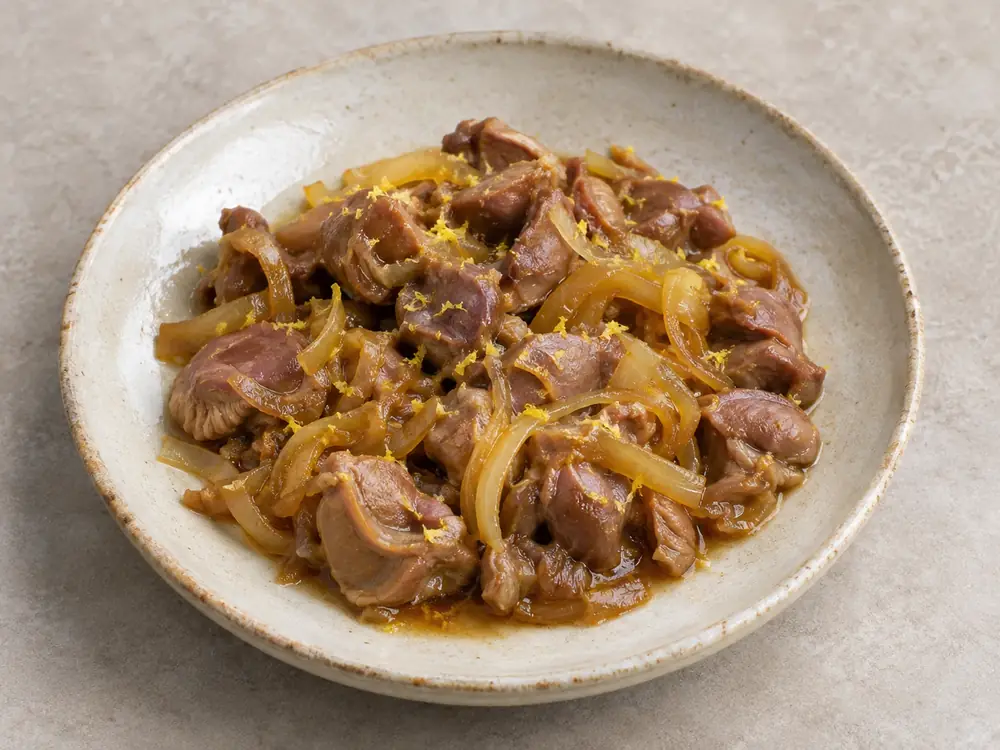
Gizzards simmer in water and bay before a final onion browning and lemon finish. This is a simmered preparation, not confit cooked in abundant fat. Seek tender pieces holding their shape with lightly coloured surfaces. Lemon lifts the final juices but cannot replace the time needed to soften muscular flesh.
Ingredients
- 700 g cleaned raw chicken gizzards
- 2 onions
- 500 ml initial water, topped up during simmering
- 30 ml oil
- 1 lemon
- 2 garlic cloves
- 3 g salt
- 1 bay leaf
Preparation
Method at a glance — Fry gizzards in half the oil 6 minutes. Add water, bay and salt; cover and simmer 80–100 minutes until tender. Drain, reserving 100 ml juices. Brown onions in remaining oil, add garlic, gizzards and reserved juices, and reduce 10 minutes. Finish with 15 ml lemon juice and zest.
Culinary context — This contemporary offal preparation claims no South African heritage name. It extends beyond the first manuscript's chicken feet and necks. A gizzard is a muscular organ requiring different cooking from briefly sautéed liver. Retain this anatomical distinction and raw cleaned condition: translating it as heart or liver changes timing and expected texture.
Checking cleaning — Buy prepared gizzards from an identified source. Remove remaining tough tissue or troublesome membranes, including any unremoved inner lining. Halve large pieces for comparable size without chopping finely. Keep cold and clean utensils after raw contact before cutting lemon or optional herbs. This base recipe requires no chemical tenderising treatment.
Starting with moderate browning — Heat half the oil and fry patted-dry gizzards approximately six minutes. Light colour supplies flavour; black surfaces do not soften centres. Work in batches if crowded. Add water, bay and measured salt, loosen unburnt juices and bring to a simmer. Reserve the remaining oil for onions rather than replacing it later with an uncounted dose.
Simmering until tender — Cover and cook gently around eighty to one hundred minutes, sometimes longer. Check water regularly and replenish with hot water. Test a sufficiently cooled piece: it should chew easily without excessive firm resistance. Cooked surfaces do not prove tender muscle. The stated overall duration is a guide rather than a guaranteed serving deadline.
Distinguishing cooking from tenderness — Gizzards can receive adequate cooking heat while remaining chewy. Continue gentle simmering for texture rather than boiling vigorously, which mainly evaporates liquid. If using a poultry temperature probe, apply the document's cooking guidance, then continue as tenderness requires. Adding lemon cannot instantly soften a still-tough muscular organ.
Preparing onions — Slice onions finely and chop garlic. Drain tender gizzards, reserving clean cooking juices, and remove bay. Soften and lightly brown onions in remaining oil, adding garlic near the end. The ten-minute final reduction is not the entire allowance for cooking coarse raw onion; finish the vegetables before returning already-cooked meat if necessary.
Combining and lightly glazing — Add gizzards and approximately 100 ml reserved juices. Reduce gently while stirring without tearing. Leave a short aromatic coating rather than a burnt dry base. Concentrated salty cooking liquid may need no more salt. A little hot water restores flexibility. Brief finishing colour follows tenderising; prolonged grilling of tough raw gizzards would not achieve the same result.
Finishing with lemon — Wash lemon and finely zest without bitter white pith. Start with 15 ml juice, adding off heat or during brief final warming, then taste. A whole lemon's variable yield need not all be used. Aim for brightness rather than sourness. Fresh herbs are an optional declared addition, counted separately if chosen.
Serving and variations — Share gizzards, onions and juices evenly among four portions, with separately counted grain, mash or vegetables. Chilli may accompany. Previously cooked gizzards require revised salt and removal of unnecessary long simmering. These remain variations. The simmered title makes clear that this method does not preserve meat by cooking and storing it in fat.
Storage and conclusion — Simmering is not canning. Cool leftovers promptly, refrigerate and use within 48 hours, or freeze portions where product conditions permit. Reheat completely with juices. Gizzards may simmer the previous day if cooled correctly; finish with onion and lemon after complete reheating. Clean product, tenderness-led timing and late lemon determine success. Enjoy your meal!
Introduction
Gizzards simmer in water and bay before a final onion browning and lemon finish. This is a simmered preparation, not confit cooked in abundant fat. Seek tender pieces holding their shape with lightly coloured surfaces. Lemon lifts the final juices but cannot replace the time needed to soften muscular flesh.
Cultural context
Weigh cleaned raw gizzards ready to cook. Previously cooked or confit products need a declared shorter adaptation. Four servings assume a separate accompaniment. Initial water may need topping up to keep pieces sufficiently surrounded; reserve finishing liquid before draining. Evaporation changes the recovered volume, so do not discard everything automatically.
Planning
Serves 4; preparation 20 min; indicative cooking 110–140 min or longer until tender.
Enjoy your meal
Enjoy your meal!