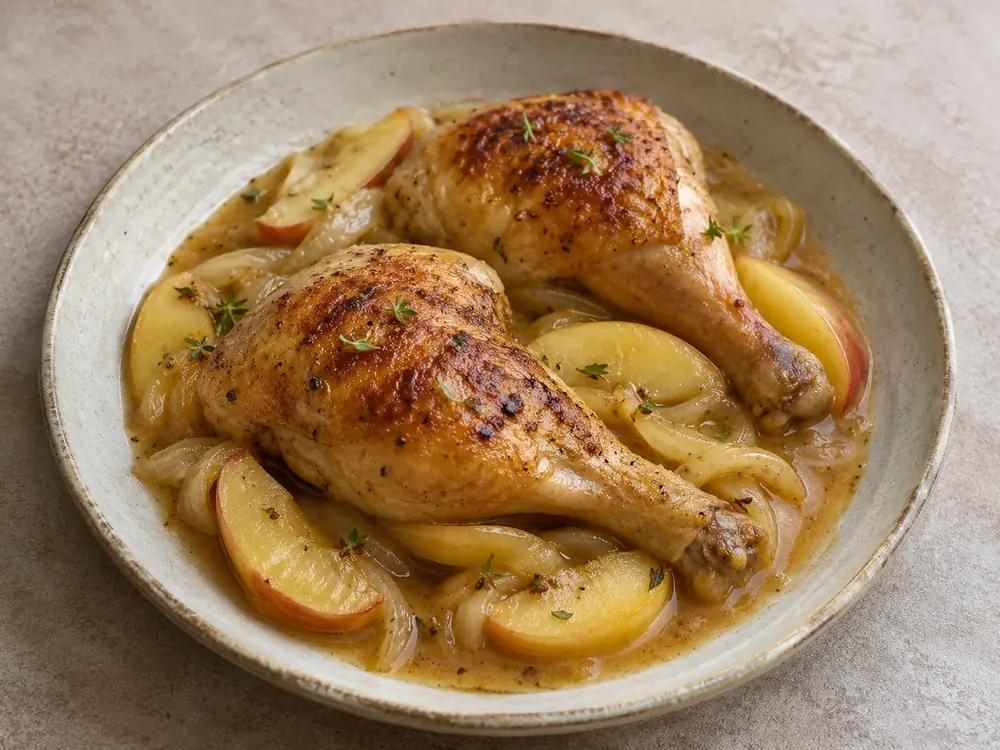
Chicken braised with apples and cider
Onion, cider and a little mustard flavour gently braised chicken, with apple wedges added late. Fruit should soften without dissolving. Seek gentle acidity and poultry flavour rather than sugary caramelisation. Covered cooking tenderises meat; thin juices can be reduced separately afterwards. Cooking cider cannot guarantee complete absence of alcohol in the finished dish.
Ingredients
- 4 chicken legs
- 3 apples
- 1 onion
- 200 ml cider
- 150 ml water
- 20 ml oil
- 15 g mustard
- 3 g salt
- thyme
Preparation
Method at a glance — Brown chicken in oil and set aside. Fry sliced onion 5 minutes, then deglaze with cider. Add water, mustard, thyme, salt and chicken. Cover and simmer gently 35 minutes. Add apple wedges and cook another 15–20 minutes until chicken is fully cooked and apples tender.
Culinary context — This contemporary poultry-and-fruit combination claims no precise traditional South African origin. Local availability of orchards and cider does not prove antiquity for this formula. Preserve fresh apple and cider, explicitly declaring an alcohol-free adaptation instead of silently using vinegar or very sweet juice. These liquids differ in acidity and composition.
Choosing chicken and apples — Use similarly sized fresh legs kept refrigerated. Small cuts may finish before whole large legs; check separately. Choose apples that hold their shape, removing damaged areas, thick peel if needed, cores and seeds. Cut substantial wedges. Tiny dice quickly become purée. Prepare fruit near its addition or organise chilled storage to limit browning.
Preparing onion and mustard — Slice onion finely to soften into juices. Measure 15 g mustard for the whole dish and loosen with liquid. Very strong or salty products require adjustment. Use a little thyme, either removable sprig or leaves, avoiding scattered hard stems. Salt allowance assumes plain chicken: check labels for brining or prior seasoning before retaining the same quantity.
Browning before braising — Heat oil and colour legs on several sides, working in batches if needed. Remove chicken and soften onion about five minutes in unburnt juices. Light colour is enough; a blackened base would make deglazed sauce bitter. Pour cider carefully and loosen browned particles. Bubbling during deglazing does not establish that all alcohol has disappeared.
Starting covered cooking — Add water, loosened mustard, thyme, measured salt and chicken. Bring to a simmer, cover and cook gently approximately 35 minutes. Legs should begin tenderising without the base drying. Check liquid occasionally and add a little hot water if needed. Vigorous boiling reduces juices faster without guaranteeing better cooking near bone. Total timing includes browning and onion preparation.
Adding apples late — Arrange wedges around chicken and continue fifteen to twenty minutes according to fruit firmness and meat readiness. Stir gently or baste rather than crushing apples. Record variety for future batches. Remove tender fruit temporarily if chicken needs longer, returning it at the end. Turning all fruit to compote while waiting for a large undercooked leg is avoidable.
Checking flesh and juices — Check thick thigh flesh near, but not against, bone under the document's poultry guidance. Exterior colour is insufficient. Once ready, remove chicken and apples before reducing juices separately. Taste mustard, salt and acidity; loosen concentrated sauce with hot water. Excess acidity is not simply solved by much sugar: cider choice and starting volume are the first adjustments next time.
Alcohol-free adaptation — For an explicitly cider-free version, replace the 200 ml cider with 150 ml unsweetened apple juice and 50 ml water, then add approximately 10 ml vinegar, adjusted to taste. This changes sweetness and acidity and must be named accordingly. It differs from claiming cooked cider contains no alcohol. Avoid automatic sugar additions and taste apple, chicken and sauce together before correcting.
Serving and variations — Share one leg, apple wedges and juices per person. Plain grain or green vegetables may accompany, counted separately. Another apple variety remains a variation. Boneless cuts require shorter, verified cooking rather than identical timing. Prepare onion and liquids ahead while keeping poultry cold, or cook in advance and cool correctly. Do not leave the casserole lukewarm awaiting the meal.
Storage and conclusion — Cool leftovers promptly, refrigerate and use within 48 hours. Reheat completely and gently, adding water if juices thickened. Apples soften on reheating; handle little to preserve pieces. Freezing may suit products but makes fruit softer after thawing. Unburnt browning, calm simmering and late-added apples let mustard and cider complement chicken without dominating. Enjoy your meal!
Introduction
Onion, cider and a little mustard flavour gently braised chicken, with apple wedges added late. Fruit should soften without dissolving. Seek gentle acidity and poultry flavour rather than sugary caramelisation. Covered cooking tenderises meat; thin juices can be reduced separately afterwards. Cooking cider cannot guarantee complete absence of alcohol in the finished dish.
Cultural context
Four legs provide four portions according to size and accompaniments. Bone-in weight differs from boneless edible yield. Choose medium firm apples and record usable weight during a first trial. Cider and water quantities apply to the entire dish. A very wide casserole evaporates more quickly; monitor without adding another uncounted bottle.
Planning
Serves 4; preparation 20 min; indicative total cooking 65–80 min.
Enjoy your meal
Enjoy your meal!