Chicken with peanuts and cabbage leaves
Chicken simmers with ginger before cabbage and a measured quantity of peanut butter join. Seek a supple coating sauce rather than paste sticking to the base. Cabbage remains recognisable, and final lime lightens the peanut flavour. This is not prolonged cooking of puréed leaves; meat, vegetable and sauce retain distinct roles, with chicken completely cooked before serving.
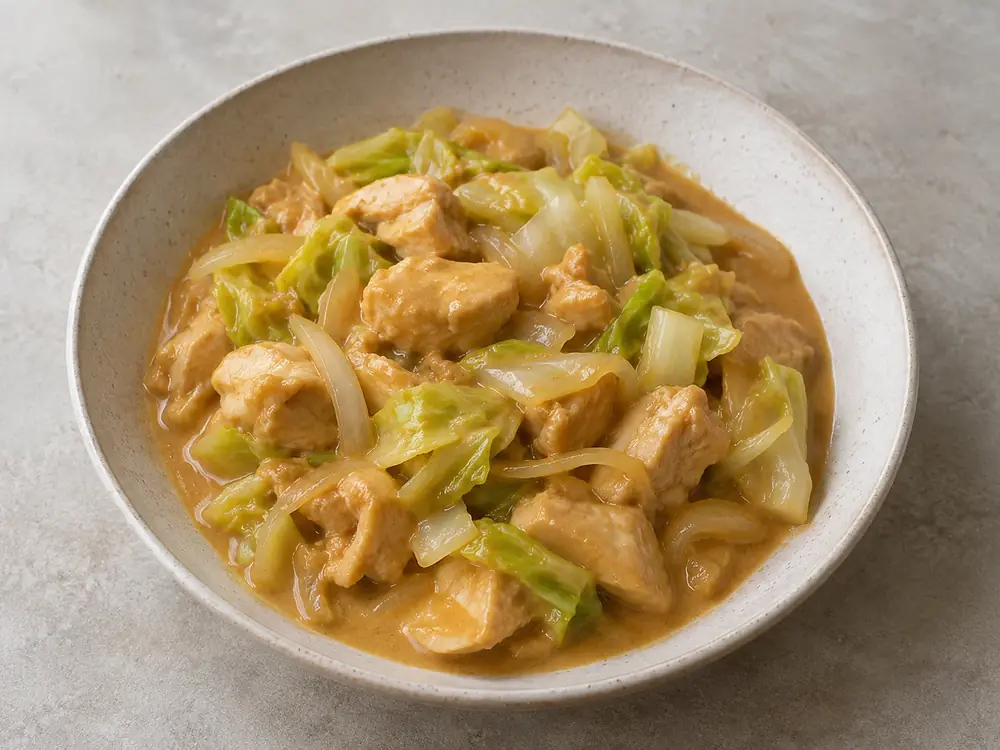
Ingredients
- 600 g boneless chicken
- 400 g cabbage
- 1 onion
- 60 g peanut butter
- 300 ml water
- 20 ml oil
- 10 g ginger
- 3 g salt
- 1 lime
Preparation
Method at a glance — Brown evenly cut chicken in oil 5 minutes. Add chopped onion and ginger; cook 5 minutes. Add water, cover and simmer 15 minutes. Incorporate sliced cabbage, salt and peanut butter loosened with cooking juices. Cook another 12–15 minutes until chicken is fully cooked. Finish with 10 ml lime juice.
Culinary context — This contemporary poultry, peanut and leaf combination has no attributed named regional origin. Peanut sauces have varied histories across Africa, without giving every peanut-containing composition one identical identity. The descriptive title avoids confusion. Preserve cabbage and peanut butter rather than substituting spinach or whole nuts, which change both vegetable timing and sauce texture.
Preparing chicken — Cut regular pieces around 3 cm, removing troublesome sinew. Boneless thigh tolerates simmering well; breast needs closer attention against drying. Keep chicken cold until preparation and do not wash under the tap. Clean equipment after raw contact before preparing lime for the finish. Comparable dimensions make timing more useful than a mixture of thin slivers and thick chunks.
Cutting cabbage — Remove damaged leaves and very hard core, then slice moderate strips. Thick leaves need finer cutting to suit the final twelve to fifteen minutes. Wash if necessary and drain. Very firm or curly varieties may need different treatment. Raw cabbage collapses as it cooks; apparent bulk is not a reason to reduce weight arbitrarily. Use a sufficiently broad casserole and fold in progressively.
Preparing aromatics — Slice onion and finely grate peeled ginger. The 10 g gives moderate presence, adjusted in later trials according to strength. Large fibrous pieces are less pleasant in thick sauce. Wash lime and reserve its juice for finishing rather than pouring everything in initially. Judge acidity after peanut butter and cabbage cooking. Organise aromatics before browning to avoid overcooking chicken while chopping.
Browning and starting the simmer — Heat oil and colour chicken approximately five minutes, turning faces. Add onion and ginger for five minutes at moderate heat. Pour water, loosen unburnt juices, cover and simmer about fifteen minutes before cabbage. This begins meat cooking and flavours liquid. Crowding or cold water changes return-to-simmer time; observe heat recovery rather than counting without adjustment.
Loosening peanut butter — Choose plain unsweetened peanut butter and stir separated oil into the jar before weighing. Mix the 60 g with a ladle of hot cooking liquid before returning to the pot. This prevents sticky clumps. Add liquid progressively while stirring. Check the product's salt when adjusting the measured allowance. Clearly identify peanuts to relevant diners, since their presence may be less visible once sauce coats cabbage.
Adding vegetables and finishing — Fold in cabbage and cook another twelve to fifteen minutes, longer for firm leaves. Stir regularly after adding peanut butter because sauce catches more readily. Loosen with a little hot water if it thickens before cabbage softens. Check chicken centrally under the document's poultry guidance. Bubbling sauce cannot replace checks on large pieces. Finish meat and vegetables together without reducing either to mush.
Finishing with lime — Start with 10 ml juice, taste a complete bite and adjust slightly if necessary. Freshness should balance peanuts rather than turn sauce sour. Check salt now. Loosen very dense sauce with hot water and heat through; reduce thin sauce briefly, preferably after removing ready meat. More peanut butter changes richness and flavour as well as thickness, so is not an automatic thickener.
Serving and variations — Share chicken, cabbage and sauce evenly. Plain rice or grain is separately prepared and counted. Chilli can be offered alongside. Another leaf changes timing and flavour and is a declared adaptation, not a new specialty to count. Another nut or seed paste changes identity and allergens, requiring an adjusted title. The base sauce clearly remains peanut-based.
Storage and conclusion — Cool leftovers promptly in portions, refrigerate and use within 48 hours. Reheat completely while stirring, adding water if thickened and checking acidity afterwards. Freezing may suit the dish, with softer cabbage after thawing. Fresh lime at serving can restore brightness without extended cooking. Avoid repeated reheating of the entire pot. Regular meat pieces, well-loosened peanut butter and late-added cabbage underpin success. Enjoy your meal!
Introduction
Chicken simmers with ginger before cabbage and a measured quantity of peanut butter join. Seek a supple coating sauce rather than paste sticking to the base. Cabbage remains recognisable, and final lime lightens the peanut flavour. This is not prolonged cooking of puréed leaves; meat, vegetable and sauce retain distinct roles, with chicken completely cooked before serving.
Cultural context
Weigh chicken boneless, preferably using one type of cut. Cabbage weight is usable flesh after removing damaged leaves and hard core. Peanut butter seasons the entire sauce. Water forms its base, with adjustments for evaporation. Four portions assume a separately planned accompaniment; rice quantities are not implicitly included in this dish.
Planning
Serves 4; preparation 20 min; cooking 40 min.
Enjoy your meal
Enjoy your meal!