Chicken rolls with spinach and feta
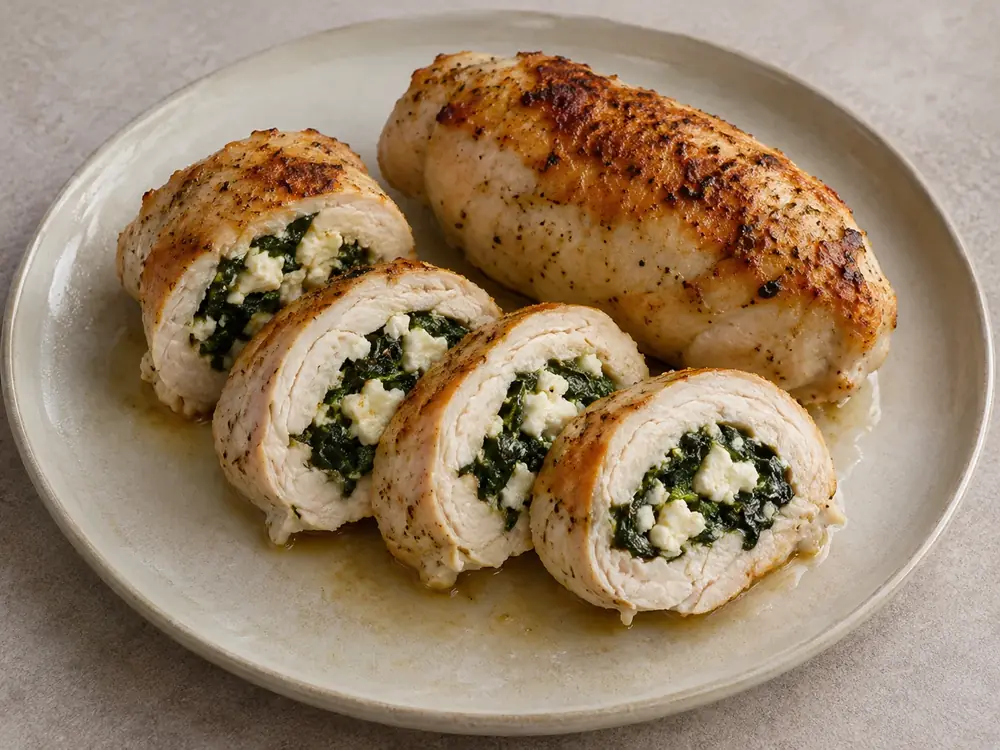
Butterflied chicken closes around spinach and feta before brief pan-browning and oven cooking. Filling must remain compact and well drained rather than leaking into juices. Heat must reach the centre and flesh beside stuffing. Seek tender thick slices with a visible vegetable pocket or spiral. Feta already supplies salt, so judge the measured allowance accordingly.
Ingredients
- 4 chicken breast fillets of 160 g each
- 250 g spinach
- 100 g feta
- 20 ml oil
- 100 ml water
- 1 garlic clove
- 2 g salt
- pepper
Preparation
Method at a glance — Wilt spinach with garlic and 5 ml oil; squeeze and mix with crumbled feta. Butterfly chicken, distribute filling and secure with toothpicks. Brown in remaining oil, then bake in a dish with water for 20–25 minutes at 180 °C until cooked throughout. Remove all toothpicks.
Culinary context — This contemporary family preparation has no attributed traditional South African name. Stuffed fillets and spinach-feta combinations circulate widely. It offers a different treatment from grilled or simmered pieces without inventing local origins. Preserve butterflying and flesh thickness: minced meat or cream cheese would require a different formulation, structure and cooking schedule.
Preparing spinach — Wash leaves and remove tough stems. Wilt with finely chopped garlic and reserved 5 ml oil. Drain, squeeze, chop roughly and cool before adding crumbled feta. Frozen spinach follows its packaging before pressing. Hot filling warms raw meat unevenly and complicates handling; wet filling escapes and dilutes juices. Cooling and pressing are essential technical steps.
Opening fillets without piercing — On a stable board, cut through thickness while retaining a hinge to open like a book. Do not separate halves completely. Lightly flatten thick fillets between food-safe sheets if helpful, without tearing into thin leaves. Even thickness improves cooking beside stuffing. Clean raw-chicken equipment before preparing ready-to-eat garnish or handling serving plates.
Dividing filling — Combine cold spinach and feta, taste before salting and divide into four comparable amounts. Place centrally with clear edges, fold and secure using the fewest necessary toothpicks. Excess filling prevents closure and leaks. Cook surplus separately instead of forcing it inside. Do not add an undeclared raw egg: it changes both texture and requirements at the stuffed centre.
Browning carefully — Heat remaining oil and colour fillets on several sides without trying to cook them fully. Turn with tongs and support with a spatula if needed to protect closures. Light browning is enough. Work in batches in a small pan rather than crowding four large portions. Position fasteners so they neither snap under tongs nor prevent a face touching the pan.
Finishing in the oven — Transfer to a dish with the measured 100 ml water around the chicken. Bake at 180 °C about 20–25 minutes, adjusting to thickness. Liquid protects the base without submerging fillets. Check the thickest centre, including flesh beside stuffing, under the document's poultry guidance. Browned surfaces and melted feta cannot establish readiness. Extend gently, protecting surfaces if needed.
Resting and removing fasteners — Rest a few minutes and remove every toothpick, checking the assembly count. Slice thickly with a clean sharp knife without squeezing filling out. Serve fragile pieces whole rather than forcing fine slices. Taste juices before sharing; released feta can make them salty. If reducing juices, do so separately without unnecessarily continuing to cook the fillets.
Understanding difficulties — Leaking may result from insufficiently squeezed spinach, excessive filling or a pierced pocket. Dry flesh often means a thin piece or prolonged cooking. Undercooked flesh beside filling requires further cooking and more even thickness next time. Sauce cannot correct these faults. Recording fillet weights, shape and retained filling helps reproduce portions and adjust timing to equipment.
Serving and variations — Separately counted salad, green vegetables or plain grain can accompany; moderate salt suits strong feta. Another cooked pressed leaf changes fibre and flavour. Another cheese changes melting and seasoning, without guaranteed gram-for-gram equivalence. These remain variations. Filling may be prepared the previous day if cooled promptly and refrigerated until assembly.
Storage and conclusion — Cool remaining portions promptly, refrigerate and use within 48 hours. Reheat completely with some juices, covered initially to limit drying. Freezing cooked rolls may alter spinach and feta; fresh preparation suits neat slicing better. Raw stuffed chicken remains subject to raw-poultry storage and must not wait at room temperature. Cold dry filling, an unpierced pocket and checked central cooking determine success. Enjoy your meal!
Introduction
Butterflied chicken closes around spinach and feta before brief pan-browning and oven cooking. Filling must remain compact and well drained rather than leaking into juices. Heat must reach the centre and flesh beside stuffing. Seek tender thick slices with a visible vegetable pocket or spiral. Feta already supplies salt, so judge the measured allowance accordingly.
Cultural context
Four 160 g fillets provide four individual portions. Spinach weight is before cooking and squeezing; feta quantity covers the whole filling. Choose similar fillets or adjust filling to capacity without forcing. Count toothpicks during assembly and remove them before serving. They are temporary fasteners, not objects diners should discover inside slices.
Planning
Serves 4; preparation 30 min; total cooking approximately 35–40 min.
Enjoy your meal
Enjoy your meal!