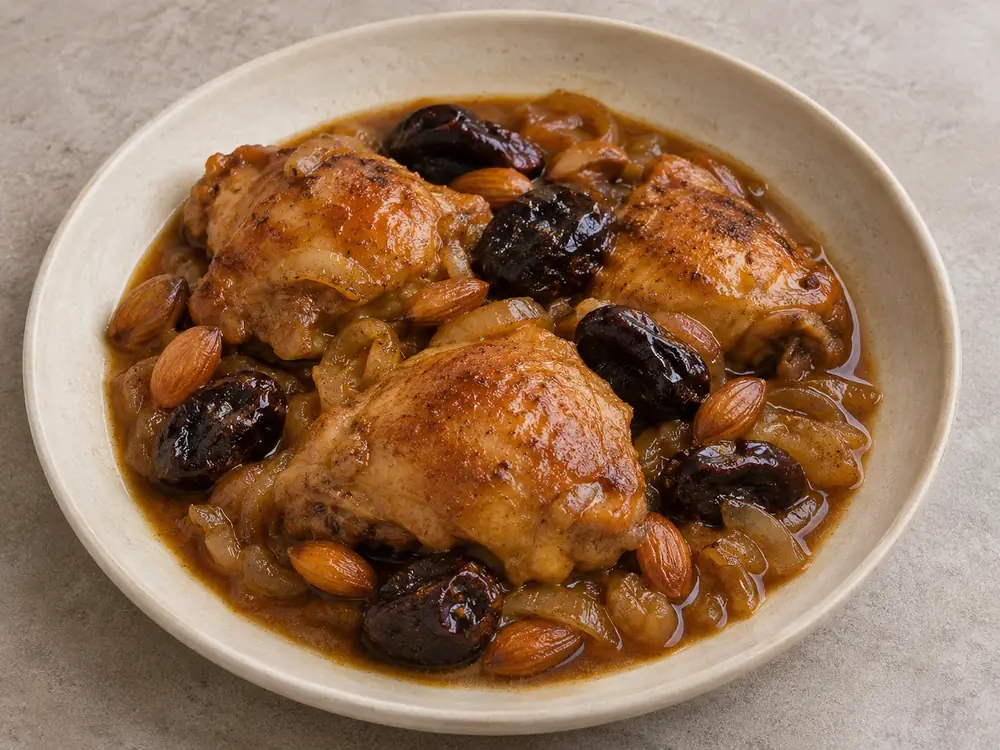
Chicken simmered with prunes and almonds
Chicken simmers first with onion and measured cinnamon; prunes and almonds join near the end. Fruit should soften without disappearing, retaining a savoury balance rather than dessert sweetness. Covered cooking tenderises meat, while onion lightly binds juices. Almond pieces offer texture without requiring grinding.
Ingredients
- 800 g bone-in chicken legs
- 120 g pitted prunes
- 40 g almonds
- 2 onions
- 350 ml water
- 20 ml oil
- 2 g cinnamon
- 3 g salt
- pepper
Preparation
Method at a glance — Brown chicken in oil and remove. Soften sliced onions 8 minutes. Return chicken with cinnamon, water and salt. Cover and simmer 35 minutes, then add prunes and almonds. Cook another 15–20 minutes until chicken is fully cooked. Reduce sauce briefly uncovered if needed.
Culinary context — This contemporary composition combines poultry, dried fruit and mild spice. Similar combinations exist in several cuisines, including some South African repertoires, without establishing this exact formula as a named tradition. No undocumented local name is added. Retain prunes and almonds; raisins or apricots are declared variations rather than interchangeable translations or additional recipes.
Choosing and preparing chicken — Use fresh pieces from an identified source with comparable dimensions. Refrigerate until preparation. Do not wash raw poultry under the tap; pat dry where needed and clean boards and knives before service ingredients. Whole legs and small thighs can take different times. Ask the seller to prepare very large pieces or extend cooking with checks. Water should support simmering, not full soup-like immersion.
Preparing fruit and onions — Slice both onions finely to melt into juices. Check pitted prunes for remaining stone fragments. Leave whole or halve large ones. Very dry fruit can soak briefly in some measured cooking water, adding this liquid at the appropriate stage. Use whole or roughly chopped almonds. Ground almonds bind sauce differently and cannot silently replace pieces in this version.
Browning without burning — Heat oil in a casserole and colour chicken on several sides, in batches if necessary. Overcrowding encourages water release rather than browning. Remove meat and soften onions in the same base for about eight minutes at moderate heat. Preserve coloured, unburnt juices. Do not scrape blackened residue into sauce hoping prunes or cinnamon will disguise bitterness.
Simmering chicken first — Return chicken with water, cinnamon and some salt. Bring to a gentle simmer, cover and cook approximately 35 minutes before adding fruit, checking liquid. The 2 g cinnamon seasons the entire pot; increasing it merely because colour seems faint can overpower sauce. Meat should begin tenderising. Add a little hot water if necessary without making an excessive broth.
Adding prunes and almonds — Fold in fruit and nuts, then cook another 15–20 minutes or longer as chicken requires. Stir gently to preserve prunes. Fruit absorbs juices and thickens sauce, so watch the base. Almonds heat through while retaining texture. For a crunchier variation, toast some separately for serving without increasing their total quantity.
Checking and reducing — Check thick flesh centrally; the document uses 74 °C for chicken pieces. Browning alone is insufficient. Remove ready meat temporarily if sauce still needs reduction. Concentrate liquid uncovered briefly, then return pieces for short reheating. Prolonged boiling of everything breaks fruit and unnecessarily firms flesh. Taste salt and sweetness afterwards.
Adjusting without distorting — A small acidic addition is an optional declared response to excessive sweetness, not a reason to add much salt. For future batches, record slightly fewer or less concentrated prunes. Reduce thin sauce before considering any thickener; raw flour is not a direct remedy. Excess cinnamon does not vanish under more pepper. Taste meat, fruit and juice together to assess balance.
Serving and variations — Share meat, prunes, almonds and sauce among four plates. Plain rice or simply cooked sorghum, counted separately, and green vegetables offer contrast. Another sweet side is unnecessary. Apricots change flavour and title and remain a variation. For larger gatherings, use comparable cuts and an appropriate casserole rather than increasing time without checking actual cooking.
Storage and conclusion — Cool leftovers promptly in portions, refrigerate and use within 48 hours. Reheat completely over low heat with a little water if fruit absorbed sauce. Freezing depends on starting product; thawed fruit will often be softer. Prepare ingredients ahead refrigerated or cook and cool correctly, avoiding prolonged lukewarm holding. Chicken simmered first, fruit added late and measured cinnamon determine success. Enjoy your meal!
Introduction
Chicken simmers first with onion and measured cinnamon; prunes and almonds join near the end. Fruit should soften without disappearing, retaining a savoury balance rather than dessert sweetness. Covered cooking tenderises meat, while onion lightly binds juices. Almond pieces offer texture without requiring grinding.
Cultural context
The 800 g includes bones, providing moderate meat portions for four within a complete menu. Choose comparable pieces; declare boneless substitutions and adjusted timing. Prunes are weighed pitted and almonds shared across the whole pot. Total cooking includes initial browning, onion softening and both simmering phases, rather than counting only the final covered stage.
Planning
Serves 4; preparation 20 min; indicative total cooking 65–80 min.
Enjoy your meal
Enjoy your meal!