Flattened chicken with lemon and rooibos
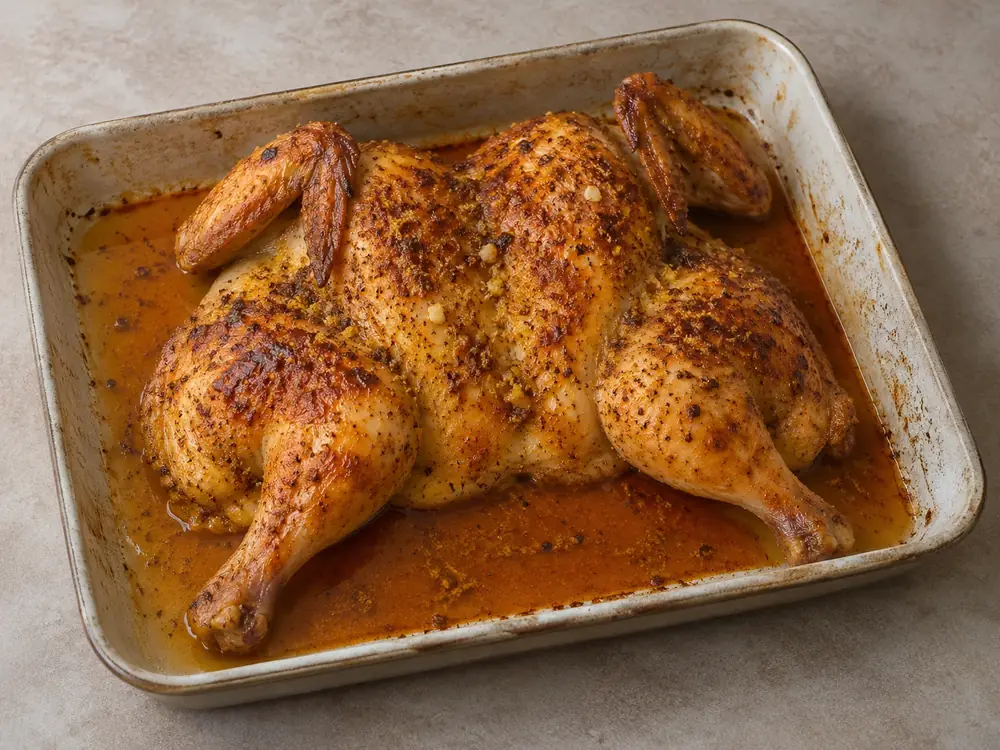
Flattening helps chicken roast evenly while presenting a broad surface for lemon, garlic and coriander. Rooibos forms pan juices rather than a lengthy marinade. Let skin colour without burning the base. Weight, thickness and oven determine duration; flattening does not eliminate central checks. A short rest helps juices settle before carving.
Ingredients
- 1 chicken of 1.5 kg, flattened by the poultry seller
- 150 ml brewed rooibos
- 1 lemon
- 25 ml oil
- 3 g ground coriander
- 5 g salt
- 2 garlic cloves
Preparation
Method at a glance — Mix oil, minced garlic, coriander, salt and lemon zest. Coat chicken, lay on a rimmed tray and pour rooibos around it. Roast at 190 °C for 60–75 minutes, basting. Check thick areas centrally and add a little water if juices dry. Rest 10 minutes and serve with lemon-finished juices.
Culinary context — This contemporary roast differs from the first volume's chicken braai. The South African Rooibos Council documents culinary uses of the infusion, not an ancient origin for this recipe. The stated method uses an oven, not automatically a charcoal fire. Coriander is ground spice rather than a large bunch of leaves, a distinction that matters when shopping.
Preparing the bird — Ask the seller to open and flatten chicken, or use a mastered technique with suitable equipment. Remove bone fragments and unused parts. Legs and breast should rest reasonably flat and stable. Do not force a poorly opened carcass with unsafe crushing movements. Refrigerate until preparation and clean raw-poultry equipment before using boards for lemon or serving ingredients.
Preparing rooibos — Brew plain unsweetened rooibos according to its packet and strain. Measure after removing leaves or bags. Moderate strength balances pan juices better than a dark concentrate. It supplies aroma, without a health promise. Brew ahead if useful, cooling and refrigerating correctly. Pour around the bird without flooding its skin, allowing roasting while keeping some moisture at the base.
Making the coating — Wash lemon, finely grate zest and mince garlic. Mix with oil, ground coriander and measured salt. Spread across legs, breast and sides rather than concentrating garlic in one thick patch, where it burns. The 5 g salt allowance assumes plain chicken; pre-brined or seasoned products need less. Check labels instead of treating already-salted poultry as unseasoned meat.
Arranging the tray — Choose a rimmed tray wide enough for flattened chicken and juices without overflow. An enormous tray evaporates liquid quickly; a narrow dish folding the bird's sides compromises flattening. Position skin upward, pour rooibos around and place in a preheated 190 °C oven. Liquid should not bathe the entire bird. Keep hot water available for small evaporation adjustments.
Roasting attentively — Cook approximately 60–75 minutes, basting occasionally. Watch garlic tips and areas near oven elements. Protect fast-darkening patches with suitable oven covering. Add small quantities of hot water around the chicken if juices concentrate too soon. A dry blackened base does not become good sauce when diluted. Preserve coloured, unburnt juices as both breast and thighs finish.
Checking several areas — Check thick thigh and breast flesh without touching bone with the thermometer. The document's poultry reference is at least 74 °C centrally. Different areas do not necessarily reach this together. Protect fast-browning breast while thigh finishes. Golden skin and boiling juices cannot replace checking flesh. Continue beyond the indicative time range if the centre is still insufficiently cooked.
Resting and finishing juices — Rest cooked chicken ten minutes without enclosing it in enough steam to soak the skin. Collect juices and skim excess fat if needed. Add lemon juice progressively after tasting. Reduce thin juices separately or loosen concentrated ones with a little hot water. Citrus at the end gives clearer freshness; it cannot disguise bitterness from an indiscriminately scraped burnt base.
Carving and accompanying — Share breast and leg meat fairly among four diners and add a little juice. Separately counted roast vegetables, plain grain or salad may accompany. Do not add large raw vegetables at the last moment and expect them to finish with chicken. For an all-oven meal, use another tray or explicitly schedule their earlier addition rather than silently changing this method.
Variations and storage — Another gentle spice may complement coriander, without masking citrus and rooibos. A larger bird needs adapted timing and checks, not simple multiplication by weight. Cool carved leftovers promptly, refrigerate and use within 48 hours. Reheat completely with some juice to limit drying, or serve cold after correct storage. Cooked portions may be frozen where appropriate. Proper flattening, an unburnt base and verified central cooking determine success. Enjoy your meal!
Introduction
Flattening helps chicken roast evenly while presenting a broad surface for lemon, garlic and coriander. Rooibos forms pan juices rather than a lengthy marinade. Let skin colour without burning the base. Weight, thickness and oven determine duration; flattening does not eliminate central checks. A short rest helps juices settle before carving.
Cultural context
A 1.5 kg bird gives four portions according to cuts and accompaniments. Purchase weight includes bones and skin, not equivalent boneless meat for nutrition calculations. Measure rooibos after brewing and filtering. Use lemon zest for coating and juice for the finish; pouring all juice in initially would change the intended balance.
Planning
Serves 4; preparation 20 min; cooking 60–75 min; resting 10 min.
Enjoy your meal
Enjoy your meal!