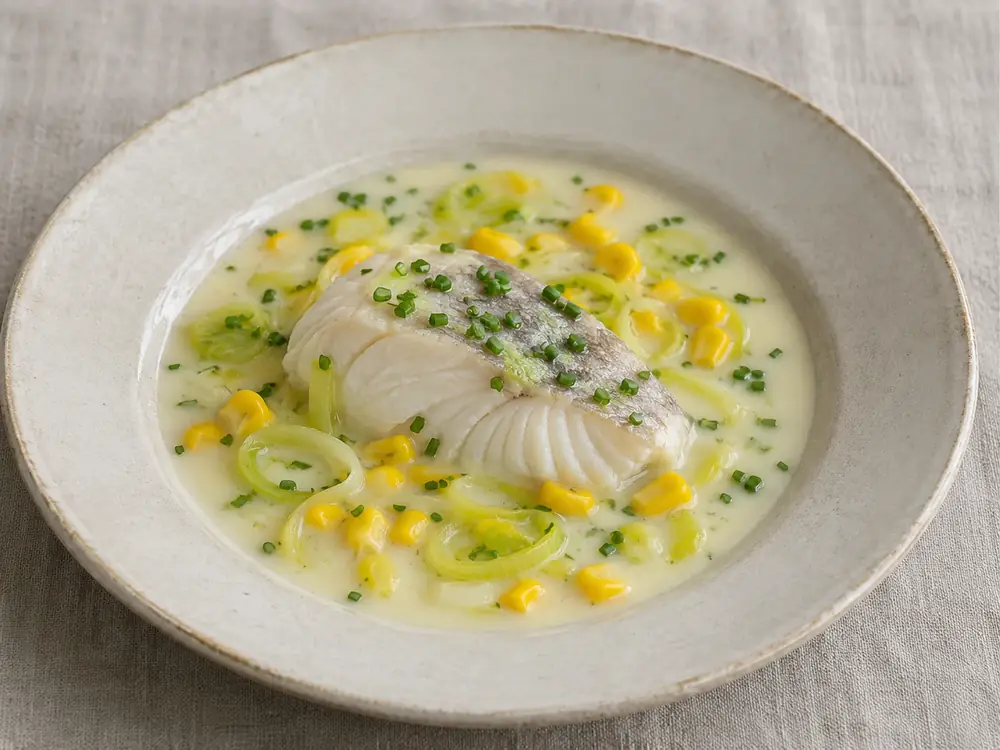
Hake poached in milk with sweetcorn
Hake poaches quietly in milk and water with sweetcorn and leek. Butter softens the vegetable first. Seek tender intact portions in a light milky broth with visible kernels, rather than a thick sauce or puréed fish. Gentle heat protects the flesh and helps prevent milk overflowing.
Ingredients
- 600 g hake in four portions
- 400 ml milk
- 250 ml water
- 250 g sweetcorn
- 1 leek
- 20 g butter
- 3 g salt
- pepper
- chives
Preparation
Method at a glance — Soften sliced leek in butter for 8 minutes. Add milk, water, corn and salt; simmer 5 minutes. Add fish and poach gently 8–12 minutes according to thickness, without vigorous boiling. Serve in deep plates with broth and chives.
Culinary context — This contemporary gentle-cooking preparation has no attributed traditional South African name. Poaching and broth service distinguish it from fried hake and fish pie elsewhere in the collection. Milk cannot remedy poorly stored fish. Preserve distinctions between milk, cream and sweetened plant drinks, which produce different flavours and textures in this simple formula.
Preparing hake — Remove bones and pat flesh dry. Choose similar thicknesses rather than combining thin tails and thick steaks. Thin fish may break before larger pieces finish. Thaw frozen product in the refrigerator according to packaging and drain. Keep chilled until needed. A broad shallow pan allows a single layer, hot liquid around each piece, and removal with a spatula without breaking portions.
Washing and softening leek — Split leek and wash between leaves to remove sand. Slice white and tender green parts, discarding tough leaves. Soften gently in butter about eight minutes, stirring without strong browning. Leek must be tender before the short fish stage. If water is needed to prevent sticking, take it from the measured allowance or record the extra amount for reproducibility.
Choosing sweetcorn — Drained canned kernels only need reheating; frozen corn must follow packet cooking instructions. Fresh kernels may need longer depending on maturity, so add early enough. Long-cooking dried maize cannot replace sweetcorn within these few minutes. Very salty or sweetened canned produce changes balance and should inform final seasoning rather than being treated as neutral.
Heating liquid gently — Add milk, water and corn to leek and bring to a moderate simmer. Stir along the base and corners to prevent milk catching. Leave headroom in the pan. Vigorous boiling risks overflow and makes fish harder to control. The initial five minutes bring ingredients together and begin any required corn cooking; check kernels before adding fish.
Poaching portions — Lay hake in hot liquid in one layer. Broth should surround flesh without requiring a large unmeasured addition of milk. Partially cover if helpful and poach about eight to twelve minutes according to thickness. Keep liquid calm. Turn only if necessary, supporting with a broad spatula; gentle basting can heat exposed tops, but every centre must still cook completely.
Checking without breaking — Inspect the thickest part for complete cooking, no raw translucency and easy separation. Remove ready pieces while thicker ones continue. Extensive crumbling suggests rough stirring or overcooking. If liquid seems excessive, remove fish before any brief reduction. The base version deliberately keeps a light broth and does not need the coating thickness of béchamel.
Seasoning and serving — Taste broth and adjust salt and pepper. Wash, dry and snip chives, adding at the end. Give each deep plate fish, corn, leek and broth. Spoon and fork are useful. Lemon can be an optional separate adaptation, but much juice in hot milk may cause separation. Bread or separately cooked vegetables can complete the meal.
Variations and organisation — Another white fish needs an adjusted name and cooking time. Alternative herbs remain variations. Wash and slice leek ahead and organise ingredients, keeping fish cold; poach shortly before serving. Prolonged hot holding firms fish and may scorch milk. Vegetable base can be made ahead if cooled promptly, refrigerated and reheated before adding fish.
Storage and conclusion — Cool leftovers correctly, refrigerate and eat the next day. Reheat gently but completely, stirring broth without breaking flesh; add a little water if thickened. Freezing the finished dish may alter both milk and fish textures, so fresh cooking is more predictable. Tender leek, suitable corn and a quiet simmer leave fish intact in a simple broth. Enjoy your meal!
Introduction
Hake poaches quietly in milk and water with sweetcorn and leek. Butter softens the vegetable first. Seek tender intact portions in a light milky broth with visible kernels, rather than a thick sauce or puréed fish. Gentle heat protects the flesh and helps prevent milk overflowing.
Cultural context
Divide 600 g fish into four comparable pieces. Milk and water are quantities for the entire dish, not each plate. Corn should be suitable for the short cooking schedule or already cooked according to its packaging. Clean and trim leek before slicing. Plan any additional accompaniment separately: broth volume alone does not determine the meal's portions.
Planning
Serves 4; preparation 15 min; cooking 25 min.
Enjoy your meal
Enjoy your meal!