Fish skewers with lemon and herbs
Fish and courgette alternate beneath a light coating of oil, garlic, parsley and lemon zest. Juice waits until serving, helping preserve the flesh during assembly. Seek a lightly seared surface, fully cooked centre and pleasant vegetables. Thick courgette needs compatible cutting and sometimes precooking rather than extra time that dries the fish.
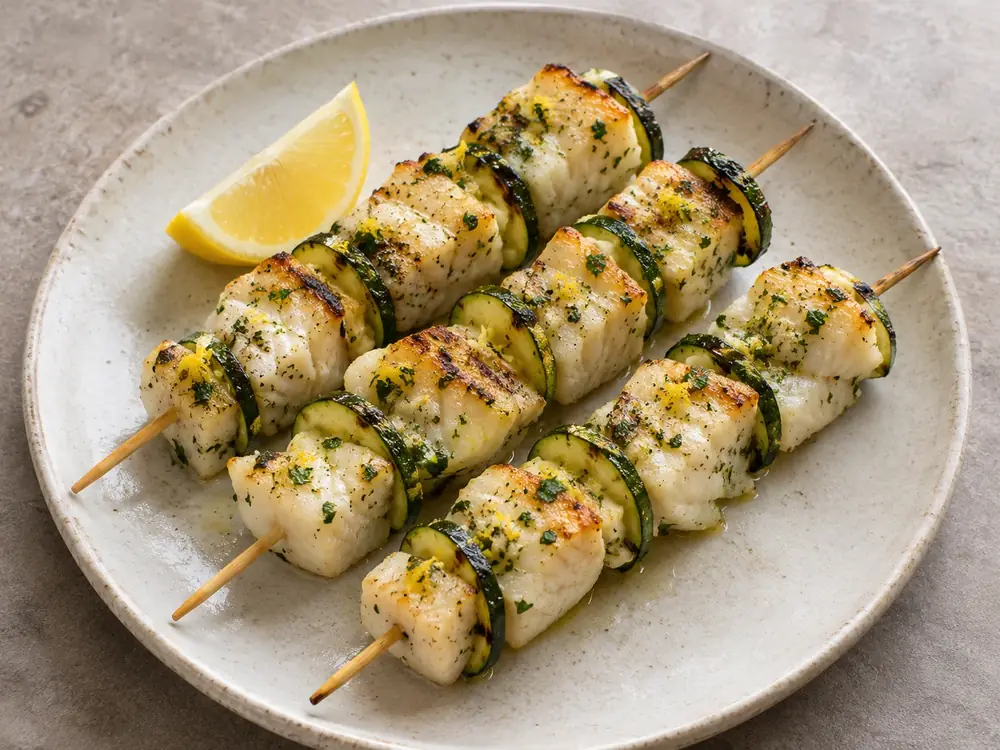
Ingredients
- 650 g firm white fish
- 2 courgettes
- 1 lemon
- 25 ml oil
- 10 g parsley
- 1 garlic clove
- 3 g salt
- pepper
Preparation
Method at a glance — Cut fish into 3 cm cubes and courgettes into rounds no thicker than 1 cm. Steam thick rounds about 5 minutes, then cool and drain. Combine oil, zest, minced garlic, parsley and salt. Coat ingredients and thread loosely. Grill or bake at 210 °C for approximately 10–12 minutes, turning halfway, until fish is cooked centrally. Add lemon juice at serving.
Culinary context — This contemporary fish grill claims neither a specific traditional origin nor a sosatie marinade. It can accompany a grilled meal, but calling every oven preparation a braai would not establish authenticity. Choose fish from an identified supply. Another firm species needs appropriate naming and adjusted cooking, without assuming identical results.
Choosing fish that holds together — Ask for firm flesh suitable for threading. Pat dry and remove bones with clean tweezers. Very thin sections can be cooked separately for less time. Thaw frozen product in the refrigerator according to packaging and drain thoroughly. Excess water makes pieces slip and steam. Keep fish cold while preparing vegetables; use clean utensils for herbs intended for serving.
Preparing courgettes — Wash, trim and cut rounds no thicker than about 1 cm, thinner for firm produce. Remove a spongy centre from oversized courgettes where needed. Brief steaming, followed by cooling and draining, helps thick rounds become tender. Do not leave fish in the oven simply to wait for oversized raw vegetables. Each component must suit the short cooking period.
Mixing the coating — Wash lemon and finely grate zest without bitter white pith. Mix with oil, finely minced garlic, washed dried parsley and measured salt; add pepper moderately. Reserve juice for the finish. Coat lightly rather than immersing in oil. Large garlic fragments burn readily, while wet herbs introduce unnecessary water. Prepare the mixture before taking fish from refrigeration for assembly.
Threading skewers — Soak wooden sticks about 30 minutes where their instructions and cooking method recommend it. Metal skewers avoid that step but become hot. Alternate fish and courgette without compressing pieces, allowing heat circulation. Two parallel sticks may stabilise longer skewers when flesh spins. Keep portion dimensions similar so some do not finish far earlier than others.
Cooking and turning carefully — Preheat oven to 210 °C or prepare a suitable grill. Use a properly prepared tray or rack and cook about 10–12 minutes, turning halfway. Timing varies with species and thickness. Hold sticks with tongs and support fish with a spatula where needed. Let adhering flesh set before lifting; an appropriate cooking surface reduces sticking. Precooked vegetables mainly need colour and reheating.
Checking the thickest centre — Fish must cook centrally without translucency and separate readily. A hot stick or browned surface does not establish this. Remove finished skewers while others continue. If garlic burns before fish cooks, protect the surface or reduce heat slightly rather than extending unchecked. Lemon juice adds flavour afterwards; it neither cooks raw fish adequately nor preserves it.
Serving without losing the garnish — Transfer to a warm platter and offer lemon wedges. Warn diners about hot metal. Slide pieces onto plates when fragile flesh makes eating from sticks awkward. Grain salad, vegetables or a little rice may accompany, counted separately. Simple moderate seasoning lets herbs and citrus remain clear; a heavy creamy sauce is unnecessary.
Variations and organisation — Precooked peppers can replace some courgette; large raw pieces cannot share the same schedule. Different herbs remain variations. Prepare vegetables and coating ahead and refrigerate separately. Assemble shortly before cooking, or keep assembled skewers briefly chilled according to fish conditions. Prolonged room-temperature waiting serves no purpose. Reserving juice avoids lengthy acidic alteration before grilling.
Storage and conclusion — Prefer the quantities needed. Cool leftovers promptly, refrigerate and eat the next day after gentle, complete reheating. Removing pieces from sticks eases storage and handling. Reheated flesh is usually firmer; do not dry it trying to regain its original colour. Firm fish, compatible dimensions and a thin coating support the result. Add lemon after cooking for fresh flavour. Enjoy your meal!
Introduction
Fish and courgette alternate beneath a light coating of oil, garlic, parsley and lemon zest. Juice waits until serving, helping preserve the flesh during assembly. Seek a lightly seared surface, fully cooked centre and pleasant vegetables. Thick courgette needs compatible cutting and sometimes precooking rather than extra time that dries the fish.
Cultural context
The 650 g refers to boneless flesh for four portions. Cubes around 3 cm guide thickness rather than perfect geometry. Skewer count depends on length: eight small pieces can be easier to turn than four very long ones. Slice large courgettes into half-rounds if useful. Four servings do not mean exactly four sticks.
Planning
Serves 4; preparation 20 min; cooking 15–20 min including precooking courgettes.
Enjoy your meal
Enjoy your meal!