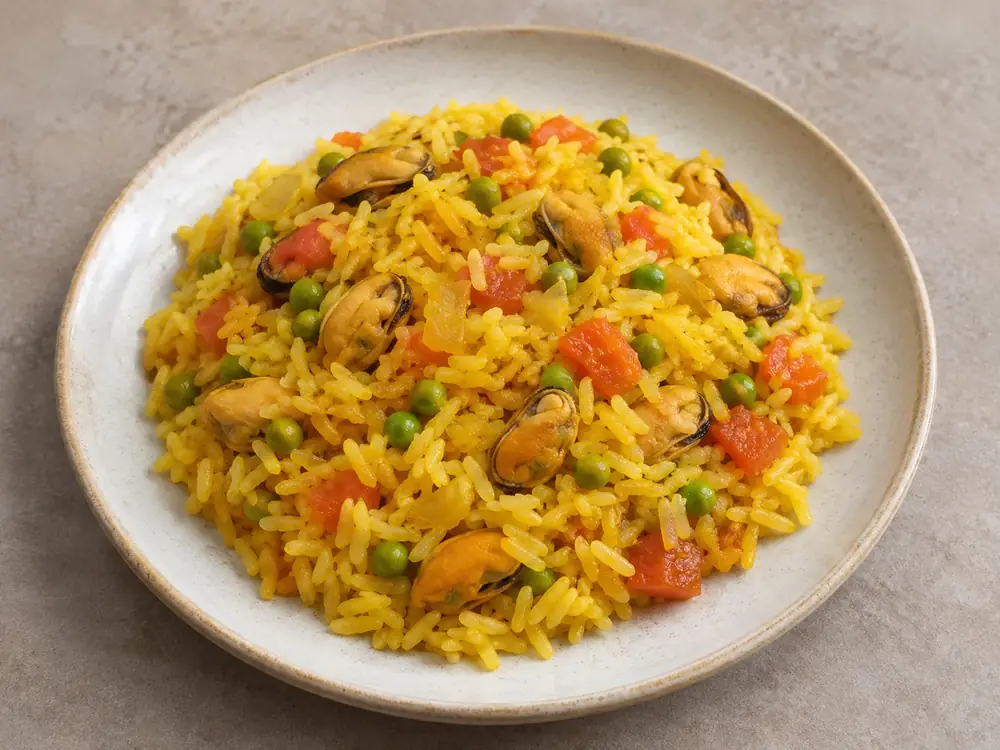
Mussel rice with turmeric and peas
Filtered mussel cooking juices provide part of the liquid absorbed by this yellow rice. Peas finish the vegetable garnish. Open shellfish separately and return their meat only near the end, avoiding tough mussels waiting for hard rice to soften. Seek tender grains and absorbed or very short liquid.
Ingredients
- 1 kg fresh mussels in shells
- 250 g dry long-grain rice
- 150 g peas
- 1 onion
- 1 tomato
- 100 ml water for opening mussels
- additional water to make 600 ml total rice-cooking liquid with strained mussel juices
- 20 ml oil
- 2 g turmeric
- up to 3 g salt
Preparation
Method at a glance — Sort and clean mussels. Steam covered with 100 ml water; discard those remaining closed after cooking. Shell and strain juices finely. Measure juices and add water to make 600 ml total, adjusted to rice directions. Fry onion, tomato and turmeric in oil; add rice and measured liquid. Cook until nearly tender. Add peas early enough to cook fully, then mussels for final reheating. Taste before salting.
Culinary context — This contemporary coastal rice differs from the first manuscript's fish breyani. Turmeric does not establish a specific traditional origin, and no authentic paella claim is made. Buy mussels from an identified commercial source and follow supplier storage guidance. Shellfish cooking and rice cooling each require attention beyond the dish's colour.
Sorting mussels — Use fresh live mussels for this opening method. Discard broken shells and those remaining open after gentle tapping. Clean and remove beards as appropriate without prolonged freshwater soaking. Previously cooked or frozen products need an explicitly adapted method. Keep shellfish cold while preparing other ingredients. Sorting cannot compensate for poor sourcing, ignored labels or spoiled produce.
Opening and straining — Place mussels in a pot with 100 ml water, cover and heat to generate steam. Shake or stir for even heating and check opening and cooking. Discard those remaining shut after cooking. Pass juices through a very fine sieve or suitable filter to remove sand and shell fragments. Shell with clean equipment; refrigerate meat if waiting is prolonged.
Measuring useful liquid — Measure filtered juices and top up to 600 ml, subject to the chosen rice's requirements. Taste cautiously for salinity first. Very salty juices may require greater dilution and using only part of what was recovered. Do not concentrate every drop of brine simply to use it up. Handle any surplus according to appropriate storage conditions.
Preparing the aromatic base — Slice onion and dice tomato. Soften onion in oil, add tomato and turmeric, and stir without burning spices. Add rice and measured liquid, stir once and bring to a simmer. Follow long-grain rice packet instructions. Brown rice needs a different schedule; substituting it silently would upset mussel timing. Pot width and lid also affect evaporation.
Almost finishing the rice — Cover and cook roughly 15 minutes according to the product, checking without constant stirring. Grains should be almost tender before final additions. If the base dries while centres remain hard, add a little hot water. Briefly uncover excess liquid around already-tender grains. Texture and absorption guide adjustments more reliably than time alone.
Adding peas and mussels — Add peas early enough for full cooking under their packet directions, allowing longer than an initial five minutes if needed. Fold in mussel meat for brief but thorough reheating. Avoid breaking grains. Taste a complete bite before adding salt because shellfish liquid contributes seasoning. Rest briefly off heat if suitable; do not boil mussels hard while waiting for raw peas.
Serving evenly — Share mussels and peas throughout four portions, mixing down to the base. Clean unbroken shells may decorate but are unnecessary. Lemon is a separately declared adaptation if chosen. Rice already supplies starch; simple salad or green vegetables offer contrast. Serve promptly before hot grains absorb all remaining juices.
Variations and organisation — Another rice requires revised liquid and timing. Herbs remain variations, not additional recipes. For larger meals, open mussels in batches and measure combined filtered juices before dividing among rice pots. Do not multiply cooking time by guest numbers. Prepare all ingredients first, considering container size and heat recovery while judging grain tenderness.
Storage and conclusion — Best served immediately. Cool leftovers promptly, ideally cooling rice within one hour, refrigerate and consume within 24 hours. Reheat only the required portion, once, until evenly hot. Reheating does not make rice left lukewarm for a prolonged period safe. Filtered measured juices, nearly cooked rice before shellfish return, and even distribution are the keys. Enjoy your meal!
Introduction
Filtered mussel cooking juices provide part of the liquid absorbed by this yellow rice. Peas finish the vegetable garnish. Open shellfish separately and return their meat only near the end, avoiding tough mussels waiting for hard rice to soften. Seek tender grains and absorbed or very short liquid.
Cultural context
Mussel weight includes shells; rice weight is dry. Four portions have a variable yield of flesh. The 600 ml is the combined total of strained juices and fresh water, not water added on top. The initial 100 ml helps open mussels, but recovered volume varies with their own juices.
Planning
Serves 4; preparation 25 min; cooking 35 min.
Enjoy your meal
Enjoy your meal!