Trout roasted with rooibos and grapes
Trout cooks in a small quantity of rooibos with fresh grapes, shallot and butter. Seek tender flesh, recognisable fruit and a light aromatic sauce. Rooibos is a cooking ingredient here, deliberately moderate so it does not overwhelm the fish. Lemon adjusts the balance at the end.
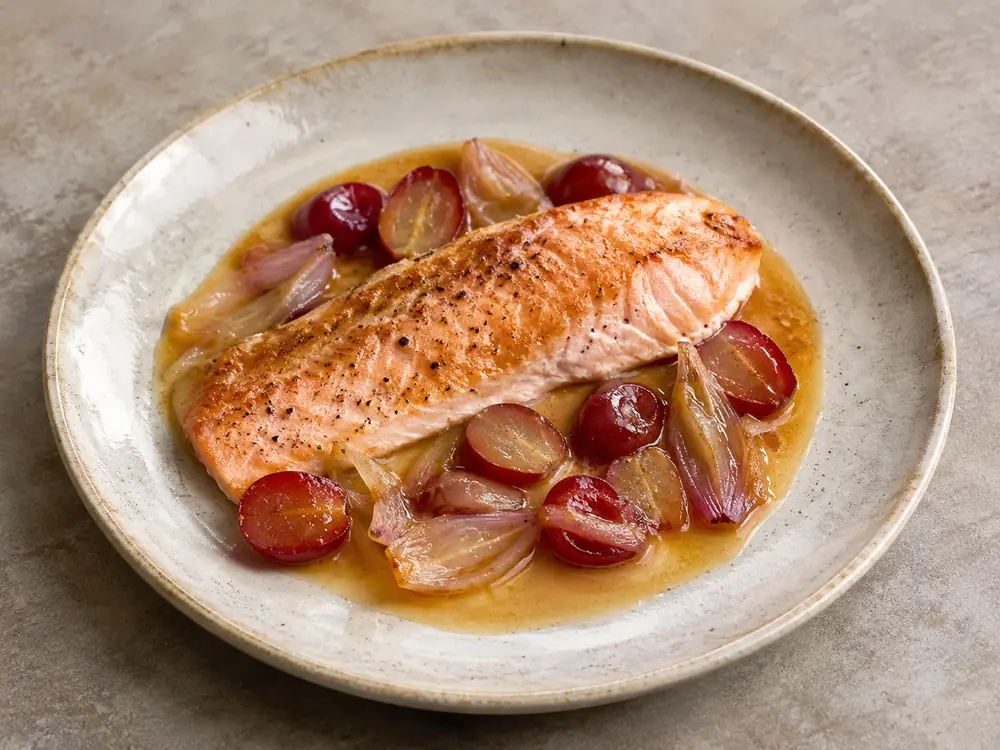
Ingredients
- 4 trout fillets of 150 g each
- 150 ml brewed rooibos
- 150 g halved grapes
- 1 shallot
- 20 g butter
- 10 ml lemon juice
- 3 g salt
- pepper
Preparation
Method at a glance — Arrange trout with grapes, sliced shallot, rooibos and salt. Dot with butter. Bake 15–20 minutes at 180 °C, according to thickness. Transfer cooked fillets to a warm plate, reduce juices separately for 3 minutes if needed, then finish with lemon.
Culinary context — This is a contemporary combination. The South African Rooibos Council documents culinary uses of rooibos, rather than this particular trout recipe. No community tradition or identified family's recipe is claimed. Retain rooibos by name: honeybush and black tea have different flavours and require an explicitly adjusted version.
Brewing a measured infusion — Choose plain food-grade rooibos and follow packet directions. Strain finely, then measure the required volume because leaves or bags retain water. Avoid strongly vanilla- or spice-flavoured blends for this version. Excessive concentration can dominate the flesh with bitter or vegetal notes; it does not make the dish more specifically South African.
Preparing trout — Feel for bones, remove them with clean tweezers and pat portions dry. Comparable thicknesses cook more evenly. Skin may remain, but moist cooking will not make it crisp. Thaw frozen fish in the refrigerator according to packaging, then drain; cooking it still frozen would alter both timing and dilution.
Preparing grapes and shallot — Wash and dry grapes, halve them and remove seeds where necessary. Seedless fruit simplifies eating alongside delicate fish. Slice shallot very finely so it softens during the short bake. Distribute both around and over fillets without a thick covering. Fruit is a measured garnish, not the main bulk of the meal.
Assembling the dish — Preheat to 180 °C. Add fish, fruit, shallot, rooibos and some measured salt. Distribute small pieces of butter and a little pepper. Liquid should remain below the tops of the portions. If the dish appears nearly dry before baking, check its size and the measured volume before adding uncounted infusion.
Cooking according to thickness — Bake approximately 15–20 minutes, checking the thickest centre for complete cooking and easy separation without translucency. Thin ends may finish sooner. Add a little hot water around the fish if evaporation is excessive; a light cover can protect a drying surface. Time alone is insufficient for uneven portions; check with a thermometer if necessary.
Reducing juices separately — Lift cooked fish carefully onto a warm plate. Reduce thin juices in a small saucepan for a few minutes, keeping fish out of this concentration stage. Preserve some intact grape halves. Add lemon and taste for salt. Stop at a light coating consistency, before butter and fruit become a caramel-like syrup.
Plating and accompaniments — Share fish, grapes and a little sauce evenly. Plain grain or green vegetables, accounted for separately, contrast better with the gentle sweetness than another sweet garnish. Additional lemon may be offered if desired. Judge seasoning with a complete bite, rather than tasting the sauce alone.
Variations and advance preparation — Another fish needs an adjusted title and cooking time. Different grape colours change presentation without creating another recipe. Brew rooibos and prepare fruit and shallot ahead, keeping them separately refrigerated. Assemble shortly before baking. A long raw-fish soak is unnecessary: this method relies on direct cooking, not prolonged marination.
Storage and conclusion — Prefer quantities needed for the meal. Cool leftovers promptly, refrigerate and eat the next day after gentle but complete reheating. Flesh will be firmer; do not reduce sauce for a long time with fish still inside. Freezing the finished dish suits fresh fruit and delicate trout less well. Measured rooibos, finely sliced shallot and separately reduced juices preserve balance. Enjoy your meal!
Introduction
Trout cooks in a small quantity of rooibos with fresh grapes, shallot and butter. Seek tender flesh, recognisable fruit and a light aromatic sauce. Rooibos is a cooking ingredient here, deliberately moderate so it does not overwhelm the fish. Lemon adjusts the balance at the end.
Cultural context
Four 150 g portions make four plates with a separately planned accompaniment. Measure the infusion after brewing and straining; weigh grapes without their stems. Use a dish that holds portions without overlap, rather than a vast tray that loses liquid too quickly. Fish should not be submerged, and grapes should not become a syrupy preserve.
Planning
Serves 4; preparation 15 min; cooking 20 min.
Enjoy your meal
Enjoy your meal!