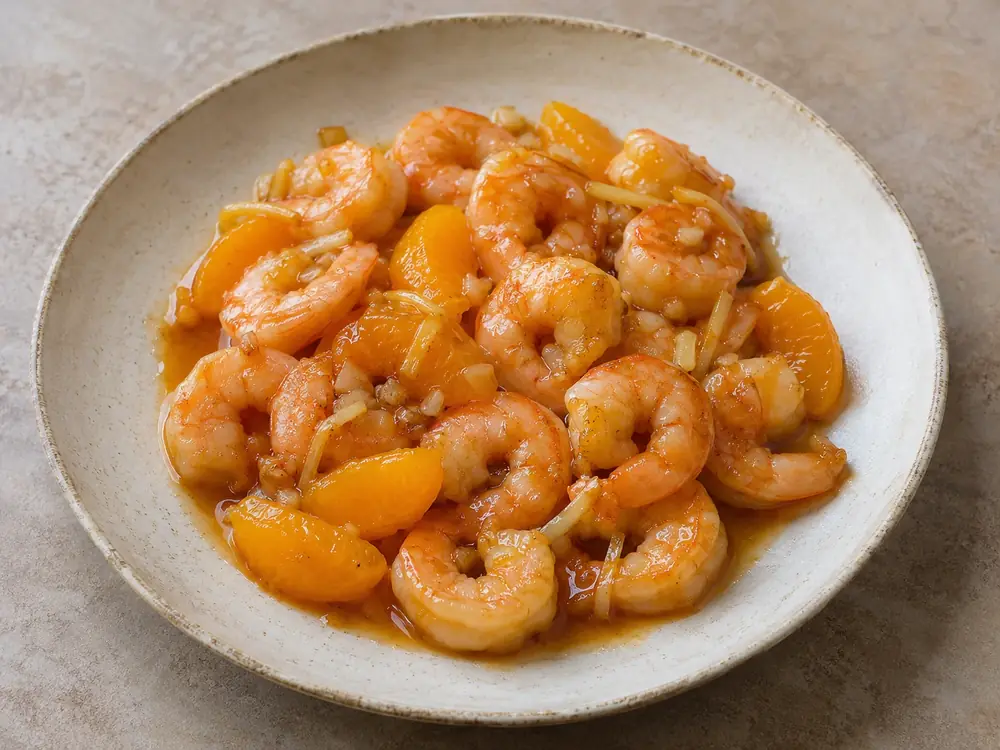
Prawns sautéed with ginger and naartjies
Prawns briefly sauté with ginger and garlic before a lightly starch-bound naartjie juice coats them. Segments join off the heat to retain shape. Keep sauce short and light rather than flooding. Prepare everything before heating the pan: once prawns begin, stopping to juice fruit or find starch risks overfirm flesh. This is controlled quick cooking, not improvised additions.
Ingredients
- 600 g raw peeled prawns
- 3 mandarins
- 15 g ginger
- 1 garlic clove
- 20 ml oil
- 15 ml soy sauce
- 10 ml lemon juice
- 5 g starch
- 30 ml water
- added salt 0 g
Preparation
Method at a glance — Juice two mandarins and segment the third. Mix juice, soy, lemon, water and starch. Stir-fry garlic and ginger in oil 30 seconds, add prawns and cook about 3 minutes. Stir sauce again, pour in and cook around 2 minutes until lightly thickened and prawns fully cooked. Fold segments in off the heat.
Culinary context — This is a contemporary citrus composition without peri-peri or curry. Naartjie is retained and explained as the South African usage for mandarin. Ginger and soy do not establish a traditional community dish. Preserve raw peeled prawns versus already cooked ones in translation: their pan timings have different purposes and precooked flesh toughens quickly.
Preparing prawns — Keep chilled, thaw as packaging directs if needed, then drain and blot. Remove visible vein if desired and check shell fragments. Comparable sizes cook evenly; mixed tiny and very large prawns may need separate batches or staggered addition. Dripping prawns cool the pan and boil in released water instead of searing briefly. Do not leave raw product warm while preparing other ingredients.
Preparing juice and segments — Wash mandarins, juice the first two and strain pips. Segment the third and remove troublesome thick membranes and seeds. Reserve this fruit for the end. Juice brings sweetness and acidity, not interchangeable sweetened industrial drink. Record yield from unusually small or dry fruit and adjust sauce moderately. The aim is not a large pan of juice reduced to syrup.
Dispersing starch cold — Whisk juice with soy, lemon, 30 ml water and starch without dry lumps. Disperse before entering the hot pan rather than sprinkling over prawns. Stir again just before pouring because powder settles. Soy sauce may contain wheat, retained in allergen information. A very salty product may require adjusted quantity, without additional salt. A smooth cold mixture gives more predictable thickening.
Cutting aromatics — Peel and grate ginger or mince very finely, and chop garlic separately. The 15 g ginger gives distinct presence, with variable strength. Coarse pieces leave hard fibres in a quick-cooked dish. Arrange bowls, spatula and plates near the hob. Do not leave aromatics heating alone for minutes while finishing another task: aroma develops quickly and garlic burns readily in little hot oil.
Sautéing a suitable quantity — Heat oil in a large pan or stable wok. Stir garlic and ginger about 30 seconds, then add prawns. Spread and cook about 3 minutes, turning to expose faces. A small pan needs two batches joined when sauce enters. Heat should sear without instantly blackening garlic. Timing follows size; flesh should become firm and opaque without prolonged holding once there.
Thickening and checking cooking — Stir sauce bowl and pour in. Cook, stirring, until lightly thickened, generally 1–2 minutes, while confirming complete prawn cooking. Glossy sauce does not prove large cold pieces ready centrally. Add a small spoonful of water if thickening too quickly. If thin, check settled starch entered and liquid reached sufficient heat. Do not keep adding starch to make dense jelly.
Finishing with fruit — Turn off heat and gently fold segments through to coat and warm without crushing. Taste prawn with sauce before deciding extra lemon. Fruit should supply mild freshness, not disappear as pulp. Fresh herbs are optional adaptation, not required. Serve immediately: lengthy standing on a hot hob continues firming prawns even after switching off heat.
Accompaniments and variations — Plain rice or crunchy vegetables suit, separately counted. Avoid an already salty side with soy sauce present. Offer chilli separately. Orange can replace some naartjies with measured volume and acidity. These remain variations. Precooked prawns need adapted reheating, not all minutes intended for raw product; title and method must identify that choice clearly.
Storage and conclusion — Best freshly made in meal-sized quantities. Cool leftovers promptly, refrigerate and consume next day with complete but brief reheating. Flesh may be firmer; concentrating sauce through long heating will not improve it. Follow product instructions on thawing and possible freezing. Ready sauce, drained prawns and fruit added off the heat give more consistent results than a sequence of improvised additions. Enjoy your meal!
Introduction
Prawns briefly sauté with ginger and garlic before a lightly starch-bound naartjie juice coats them. Segments join off the heat to retain shape. Keep sauce short and light rather than flooding. Prepare everything before heating the pan: once prawns begin, stopping to juice fruit or find starch risks overfirm flesh. This is controlled quick cooking, not improvised additions.
Cultural context
The 600 g is raw peeled weight without shells or unused parts; whole purchase weight may be higher. Four portions assume a separately prepared side. Soy supplies seasoning with no automatic extra salt. Three mandarins give juice and segments but variable liquid yield. Measure and record first-trial juice volume for repeatability instead of assuming identical fruit.
Planning
Serves 4; preparation 20 min; cooking 10 min.
Enjoy your meal
Enjoy your meal!