White bean salad with tuna and citrus
Beans, canned tuna, orange, onion and rocket make an uncooked assembly when beans and fish are already ready to eat. Beans must be tender and drained, tuna in pieces and orange free of thick membranes. A little collected juice makes dressing. Seek fresh, connected ingredients without watery liquid diluting flavour and wilting leaves. Final assembly belongs close to the meal.
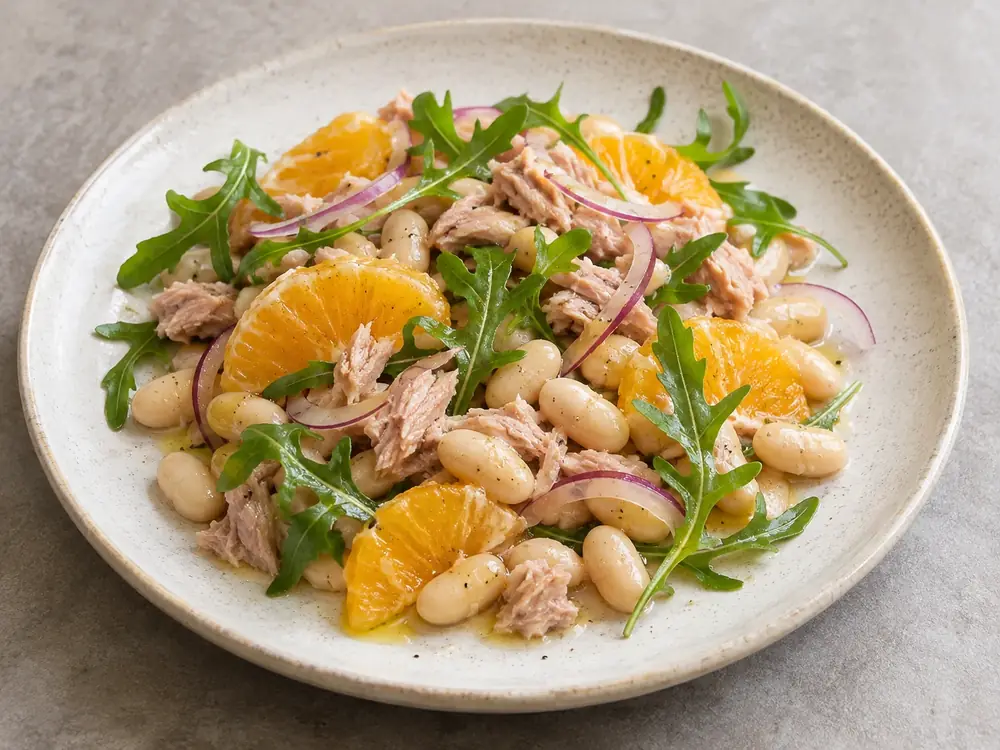
Ingredients
- 480 g cooked, drained white beans
- 250 g drained canned tuna
- 2 oranges
- 1 red onion
- 80 g rocket
- 25 ml oil
- 15 ml lemon juice
- 2 g salt
Preparation
Method at a glance — Peel oranges and remove membranes, cutting segments over a bowl to catch juice. Mix 30 ml orange juice with oil, lemon and some salt. Add beans, flaked tuna and finely sliced onion. Gently fold in segments and rocket just before serving.
Culinary context — This contemporary pulse, canned-fish and citrus combination claims no specific traditional South African origin. Oranges may recall the country's fruit production without proving an old assembly. Descriptive naming is preferable to invented cultural identity. Retain cooked white beans, canned tuna and fresh orange in translation: raw or dried substitutions fundamentally change method and usable quantities.
Draining cans — Open close to preparation or follow manufacturer storage for previously opened contents. Drain beans, rinse if very salty and let surface water escape. Drain tuna too. Oil-packed fish gives rounder texture and residual fat to consider; tuna in water leaves citrus more prominent. Avoid strongly seasoned ready-sauced tins when reproducing this simple version.
Retaining tuna pieces — Flake moderately with a fork rather than beating to paste. Pieces should distribute among beans, not sit as a central compact lump producing unequal portions. Remove any unpleasant-textured parts according to product. The measured quantity needs no second large fish garnish. Record extra tuna explicitly rather than assuming unchanged nutritional yield.
Segmenting oranges — Wash fruit and knife-peel skin and white pith. Remove segments over a bowl to catch liquid, taking out pips and thick membranes. Perfect restaurant cutting is unnecessary, but membrane-free pieces mix more comfortably. Measure 30 ml juice for dressing and use surplus elsewhere. Different-sized oranges supply variable amounts, so do not automatically pour everything in.
Preparing onion and rocket — Slice onion very finely. Briefly rinse an unusually pungent one if desired and drain thoroughly; retained water undoes other draining. Wash and dry rocket, remove damaged leaves and tough stems and keep chilled. Its mild bitterness and pepperiness contrast with orange. Reduce very powerful leaves or offer some separately as a recorded adaptation.
Measuring dressing — Mix orange juice, oil, lemon juice and some salt. Taste on a bean before adjustment because cans and tuna already contribute salt. Lemon complements rather than makes sharply sour. Stir oil evenly instead of leaving a surface pool. Mustard would be an adaptation added to ingredients, with its allergens and salt. Basic dressing leaves fruit and fish identifiable.
Assembling gently — Combine beans, tuna and onion, add dressing and lift to mix. Fold segments gently to avoid releasing all their juice, and add rocket just before serving. Long exposure wilts leaves. Taste a complete bite before final salt. If liquid is abundant, serve with a slotted spoon or lightly drain rather than adding bread into the mixture to absorb it.
Sharing portions — Distribute comparable tuna and orange among four plates. Stir a shared dish between servings so beans do not all settle beneath leaves. Plain bread is a separately counted accompaniment. For buffets, replenish small dishes from refrigerated reserves rather than leaving one large bowl exposed long. More small starters do not increase total ingredient volume.
Variations and organisation — Mandarin may replace some orange with juice still measured; another green changes flavour contrast. Variations stay attached to this recipe. Homemade beans work if tender and correctly cooled, with their cooking time added to planning. Keep drained cans, fruit, leaves and dressing separately chilled for advance work. Last-minute assembly preserves texture better than dressing everything the previous day.
Storage and conclusion — Prefer same-day consumption and refrigerate until the meal. Freezing assembled salad damages rocket and orange. Leftovers are only for the next day if correctly kept cold and minimally handled, with less fresh texture expected. Do not add new ingredients to old leftovers to restart their keeping time. Drained products, membrane-free oranges and last-minute rocket give the intended result. Enjoy your meal!
Introduction
Beans, canned tuna, orange, onion and rocket make an uncooked assembly when beans and fish are already ready to eat. Beans must be tender and drained, tuna in pieces and orange free of thick membranes. A little collected juice makes dressing. Seek fresh, connected ingredients without watery liquid diluting flavour and wilting leaves. Final assembly belongs close to the meal.
Cultural context
Bean and tuna weights are drained, not dry grain or necessarily the large net figures on cans. Read labels before buying sufficient tins. Four portions can be a light meal according to appetite and menu. Rocket is shared vegetable content, not decoration reserved for the first plate or the bowl's surface.
Planning
Serves 4; preparation 20 min; no additional cooking.
Enjoy your meal
Enjoy your meal!