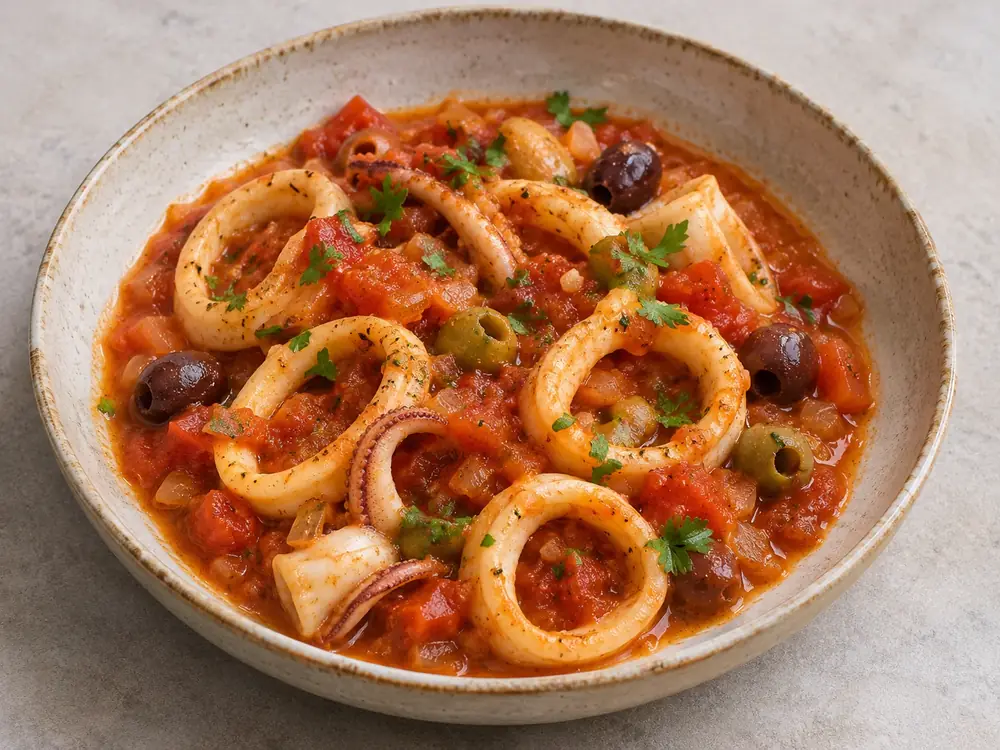
Squid simmered with tomatoes and olives
Squid simmers in tomato and onion before late-added olives. Long gentle cooking gives tenderness distinct from a very quick sear. Rings stay recognisable and juices coat rice or bread. Avoid fierce boiling that reduces sauce before flesh is tender. Product and size affect duration; checking texture is more useful than automatically stopping at a fixed time.
Ingredients
- 700 g cleaned squid
- 500 g chopped tomatoes
- 1 onion
- 80 g pitted, drained olives
- 100 ml water
- 25 ml oil
- 2 garlic cloves
- 2 g salt
- parsley
Preparation
Method at a glance — Soften onion in oil 7 minutes, briefly add garlic, then tomatoes and water. Simmer 10 minutes. Cut squid into broad rings, add and simmer gently 30–40 minutes until tender. Add olives for the final 5 minutes, then parsley and salt after tasting.
Culinary context — This contemporary coastal composition claims no traditional South African origin. Tomato, olives and squid occur in several maritime repertoires without proving a single provenance. Rings simmered without filling distinguish it from stuffed squid in this volume. Preserve cleaned squid in translation instead of automatically substituting octopus or another cephalopod with different preparation and cooking.
Preparing squid — Choose fresh product from an identifiable source or frozen squid thawed under refrigeration according to packaging. Have whole squid cleaned or use reliable preparation to remove hard and unused parts. Check tentacles for beak and mantle for cartilage. Cut broad rings and manageable tentacle pieces. Tiny pieces contract and disappear in sauce. Blot excess liquid without leaving raw squid at room temperature for a prolonged period.
Making sauce first — Slice onion and soften in oil about 7 minutes. Add chopped garlic briefly, then tomatoes and water and simmer 10 minutes to begin uniting flavours. Garlic should not burn throughout onion cooking. Retain liquid because squid needs further simmering. Excessive initial reduction forces later large water additions and risks catching. Aromas should be clear, without blackened-juice bitterness.
Choosing gentle cooking — Add squid, separate pieces and restore a calm simmer. Part-cover and cook roughly 30–40 minutes, sometimes longer for size. Squid can pass through a firm stage before becoming tender in this method; early rubberiness does not automatically mean failure. Continue gently and check regularly. Vigorous boiling chiefly concentrates sauce and reduces control rather than usefully speeding tenderness.
Controlling liquid — Stir occasionally, gently reaching the base. If sauce thickens before squid softens, add a little hot water and continue covered. If squid is ready but sauce thin, lift flesh out temporarily and reduce liquid alone, then return briefly to heat. This avoids unnecessary cooking of already tender pieces. The 100 ml water is an initial guide adjusted to tomato and actual evaporation.
Adding olives late — Drain pitted olives and halve large ones. Add for the last 5 minutes to warm and spread flavour without prolonged simmering. Taste before salt. Strong brine may justify quick rinsing and draining. Do not pour the whole jar liquid into the pan: it changes salt, acidity and volume beyond the recipe's proportions.
Checking tenderness — Cool and taste a ring and thicker piece. Flesh should chew pleasantly without excessive elastic resistance; it need not fall apart like shredded meat. Uneven readiness suggests harmonising cutting size next time. Wash, dry and chop parsley and add near the end to retain aroma. Extra herbs cannot fix still-firm flesh, so tenderness remains the first check.
Serving and accompaniments — Divide squid, olives and sauce among four deep plates, stirring to the bottom before ladling so olives do not all remain for later portions. Plain rice, simple polenta or bread can accompany separately. Sauce should coat, not become a large tomato soup. Lemon is an optional adaptation if balance needs it, though tomatoes and olives already add acidity: taste together first.
Variations and organisation — A measured, identified amount of chilli may complement sauce. Mixed olives remain a variation of this recipe. Wine is not required; adding it changes ingredients and reduction. Make sauce the previous day if useful, cool promptly and refrigerate, then cook squid on meal day. Correctly chilled cooked stew may also serve next day without prolonged lukewarm holding between meals.
Storage and conclusion — Cool leftovers promptly, refrigerate and consume the next day. Reheat gently until hot throughout, adding water if sauce thickened. Freezing suitability depends on original product and instructions; avoid careless refreezing of previously thawed food. Record source and packaging for leftover planning. Long calm cooking, monitored liquid and late olives preserve aromatic sauce and easily eaten pieces. Enjoy your meal!
Introduction
Squid simmers in tomato and onion before late-added olives. Long gentle cooking gives tenderness distinct from a very quick sear. Rings stay recognisable and juices coat rice or bread. Avoid fierce boiling that reduces sauce before flesh is tender. Product and size affect duration; checking texture is more useful than automatically stopping at a fixed time.
Cultural context
The 700 g means cleaned usable squid, so whole purchase weight may be greater: ask the fishmonger. Four portions assume an accompaniment counted separately. Olives weigh 80 g without stones or brine and contribute variable salt, explaining cautious final seasoning. Already seasoned tomatoes also require reassessment rather than treating each salt source as neutral.
Planning
Serves 4; preparation 20 min; cooking approximately 50 min.
Enjoy your meal
Enjoy your meal!