Amberjack en papillote with fennel and orange
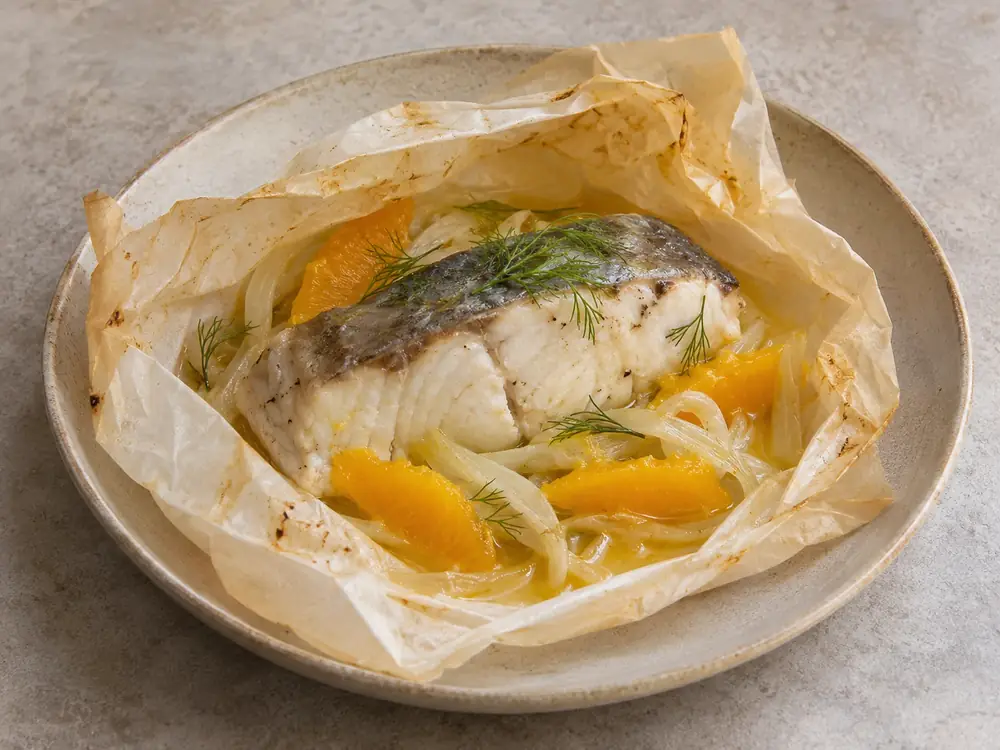
Each parcel contains fish, thin fennel, orange juice and segments. Steam keeps flesh supple and joins aromas in modest juices. This is not prolonged citrus marination: fruit accompanies baking without deliberately changing raw flesh beforehand. Seek fish cooked at the centre and fennel tender or lightly crisp according to cut. Thick vegetable wedges cannot finish alongside fish in the same short time.
Ingredients
- 4 amberjack portions of 150 g each
- 1 fennel bulb
- 2 oranges
- 20 ml oil
- 3 g salt
- pepper
- 5 g dill
Preparation
Method at a glance — Slice fennel very finely. Segment one orange and juice the other. Divide fennel and fish over four baking-paper sheets. Add oil, 60 ml orange juice in total, segments, salt, pepper and dill. Seal parcels tightly and bake 18–22 minutes at 190 °C according to thickness.
Culinary context — This contemporary citrus fish dish evokes coastal repertoires and produce available in South Africa without claiming parcel cooking exclusively local. Confirm the seller's commercial fish identity rather than assuming all English coastal fish names mean the same species. Another firm fish is an adaptation with revised title and timing. Sustainability is not automatic without specific provenance and supply-chain information.
Preparing fennel — Trim very hard base and damaged areas, wash and slice extremely thinly, ideally about 1 mm. Fresh fronds can finish optionally. Thicker slices may be briefly steamed or boiled beforehand and thoroughly drained as an identified adaptation. Do not overcook fish while waiting for raw fennel. Cutting thickness is therefore a technical choice, not merely presentation.
Segmenting oranges — Wash fruit, remove first orange's peel and external white membrane, then cut segments over a bowl to catch juice. Remove pips. Juice the second and measure total useful liquid, including captured juice. Keep segments intact for sharing. Tough membranes can feel hard or bitter in tender food. Sweetness varies, so taste before automatically adding more citrus.
Checking fish — Blot and remove bones, choosing similar thickness for comparable cooking. Thaw frozen portions under refrigeration as packaging directs and drain. Skin can remain if intended by the fishmonger, but will not become crisp in a moist parcel. Describe it honestly rather than promising grilled skin. Refrigerate fish while preparing fruit and herbs, using clean equipment for assembly ingredients.
Forming parcels — Cut four sufficiently large baking-paper sheets with closure margins. Divide fennel, fish, segments, measured juice, oil, salt, pepper and dill. The 20 ml oil belongs to all four. Close with several firm folds appropriate to the paper. Small sheets open and release steam. Arrange parcels on a tray before moving so a wet base is not pulled unsupported.
Baking without constant opening — Preheat to 190 °C and bake approximately 18–22 minutes according to thickness. Keep closure intact for most cooking; opening every few minutes loses steam and makes timing unreliable. Check one near completion, protecting hands and face from hot steam. Flesh must be cooked centrally without raw translucency. Reseal and extend briefly if needed rather than serving by timer alone.
Observing juices and vegetables — Juices should be aromatic and moderate, not a large liquid bowl. Firm fennel beside ready fish chiefly suggests excessive slice thickness; cut thinner or precook next time. Dry fish can indicate thin portions or a poorly sealed parcel. Strong bitterness may come from orange membranes or hard fennel, not missing sugar. Specific corrections are preferable to rich sauce masking ingredients.
Serving carefully — Place each parcel on a plate and open near eating, or gently transfer fish and garnish with a spatula. Warn about hot steam. Distribute juices around flesh rather than discarding their aromas. Plain rice, another grain or vegetables can accompany, counted separately. Keep fish and fruit visible; abundant raw-leaf decoration complicates eating without fixing imperfect fennel cooking.
Variations and advance work — Mandarin can replace some orange with juice still measured. Another herb changes aroma without another recipe count. Prepare fruit and fennel ahead and refrigerate separately; assemble near cooking. Brief chilled holding of assembled parcels is possible, but prolonged raw fish contact with citrus alters surfaces and is not intended. Neither orange nor lemon is complete cooking or preservation.
Storage and conclusion — Best immediately. Promptly cooled leftovers can be refrigerated for the next day and reheated thoroughly but gently. Flesh becomes firmer, so avoid unnecessary heating just for an extremely hot surface. Freezing cooked parcels is less suitable for orange texture and presentation. Very thin fennel, measured juice and a well-sealed parcel unite fish and citrus without erasing their textures. Enjoy your meal!
Introduction
Each parcel contains fish, thin fennel, orange juice and segments. Steam keeps flesh supple and joins aromas in modest juices. This is not prolonged citrus marination: fruit accompanies baking without deliberately changing raw flesh beforehand. Seek fish cooked at the centre and fennel tender or lightly crisp according to cut. Thick vegetable wedges cannot finish alongside fish in the same short time.
Cultural context
Four approximately 150 g portions make four individual parcels. Share fennel and measured juice between them. Two oranges do not require pouring all juice into every parcel: one supplies segments, the other juice, with surplus used separately. Excess liquid almost boils fish and complicates sealing. Parcels retain steam rather than contain soup.
Planning
Serves 4; preparation 20 min; cooking about 20 min.
Enjoy your meal
Enjoy your meal!