Baked hake with a macadamia crust
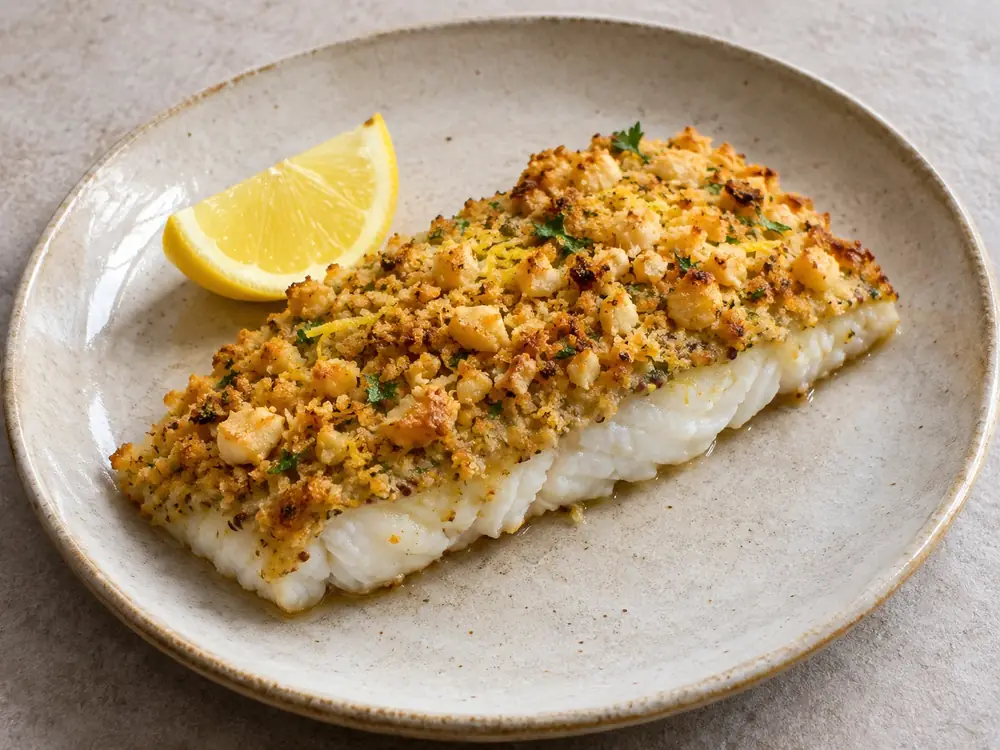
Hake bakes beneath chopped macadamias, crumbs, parsley and lemon zest, held by mustard. Seek tender fully cooked fish and a lightly golden surface retaining nut fragments, not oily paste or a thick cover obscuring fish. Bake four portions on a tray or shallow dish without abundant liquid that would soak crumbs. Surface appearance must remain secondary to fish cooking.
Ingredients
- 4 hake fillets of 150 g each
- 70 g plain macadamias
- 30 g breadcrumbs
- 20 g mustard
- 1 lemon
- 15 ml oil
- 3 g salt
- parsley
Preparation
Method at a glance — Chop nuts without making paste. Mix with breadcrumbs, oil, parsley and finely grated zest of half the lemon. Blot fish, season moderately and spread tops with mustard then crumbs. Bake on a tray 15–20 minutes at 190 °C according to thickness, until cooked through. Serve with remaining lemon.
Culinary context — This is a contemporary coastal creation. SAMAC represents South Africa's macadamia agricultural sector, and hake is sold in the market. These references locate ingredients, not the age of our formula. For fish purchasing consult provenance and guidance such as WWF SASSI instead of automatically calling every hake portion sustainable. No particular traditional recipe is claimed.
Preparing fish — Refrigerate until preparation. Thaw frozen product as directed under suitable cold conditions, then drain and blot so mustard and crumbs adhere. Check flesh with fingers and remove remaining bones using clean tweezers. Avoid prolonged rinsing that waterlogs surfaces. Wet portions produce steam and a less distinct crust even when breadcrumbs are correctly measured.
Chopping macadamias — Choose plain unsalted nuts without rancid smell. Knife-chop or pulse very briefly: their fat promotes paste when blending continues. Keep small even fragments; large pieces fall off and fine powder can become dense. Mix with crumbs, washed dried parsley, half-lemon zest and oil. Aim for lightly damp crumbs rather than a compact ball, sharing the 15 ml oil throughout.
Choosing crumbs and mustard — Fine ordinary crumbs provide even cover; coarser crumbs add relief but may need light pressure to adhere. Check their salt before seasoning fish. Spread mustard thinly, 20 g across four portions. Abundance adds dominant heat and moisture. Use a familiar product initially. Retain relevant allergen information for crumbs and mustard, including cereals and mustard rather than treating coating as invisible seasoning.
Assembling without overload — Preheat to 190 °C. Place fillets on suitable baking paper or a lightly greased dish using a reserved fraction of measured oil. Salt moderately, spread mustard and nut mixture and press gently without crushing flesh. Keep coating on top, not underneath where moisture remains. Fold a very thin tail slightly under to approximate thickness if useful, but check the doubled area during cooking.
Watching the bake — Cook 15–20 minutes according to thickness and initial temperature. Crust should be golden, not dark brown. Check thickest flesh for loss of raw translucency and easy separation, without an uncooked core. If nuts colour rapidly, loosely protect and continue gently. Do not dry ready fish for a more dramatic crust; a brief watched finish may suffice, with fish doneness taking priority.
Understanding differences — Sliding coating may reflect wet fish, excess mustard or coarse nuts. A greasy surface suggests prolonged nut blending or excessive oil. Dry flesh may be too thin for chosen timing. Extra serving sauce cannot fix every fault. Record piece thickness and coating behaviour next time: oven duration alone cannot compare very different portions.
Serving without breaking — Rest 1–2 minutes and lift with a broad spatula supporting fish and crust. Offer remaining lemon as wedges, adding juice last to avoid wetting all crumbs before service. Plain grain, green beans or salad can accompany, counted separately. Avoid thick sauce hiding macadamia. Modest garnish leaves fish and nuts their respective place in a bite.
Variations and organisation — Another firm white fish needs adjusted cooking and an identified title. Different nuts change flavour and agricultural context without guaranteed equivalence. These remain variations. Prepare crumbs ahead and refrigerate covered, assembling shortly before baking. Fresh zest and moist parsley mean this mixture is not long-keeping dry breadcrumbs. Keep fish properly chilled until assembly.
Storage and conclusion — Prefer the meal's required quantity. Promptly cooled leftovers may be refrigerated for use the next day and reheated completely but gently to limit drying. Crust loses some crispness; accept this rather than hardening fish through prolonged heating. Freezing cooked portions is not ideal for presentation. Nuts chopped without paste, blotted fillets and checking the thickest point provide consistency. Enjoy your meal!
Introduction
Hake bakes beneath chopped macadamias, crumbs, parsley and lemon zest, held by mustard. Seek tender fully cooked fish and a lightly golden surface retaining nut fragments, not oily paste or a thick cover obscuring fish. Bake four portions on a tray or shallow dish without abundant liquid that would soak crumbs. Surface appearance must remain secondary to fish cooking.
Cultural context
Four 150 g fillets mean about 600 g flesh, without troublesome bones and with skin identified or absent according to supply. Similar thickness cooks more evenly than thin tails alongside thick pieces. Share nuts and crumbs among all four. Putting everything on one large fillet does not give comparable flavour or portions elsewhere.
Planning
Serves 4; preparation 20 min; cooking 15–20 min.
Enjoy your meal
Enjoy your meal!