Roasted vegetables with lemon peanut sauce
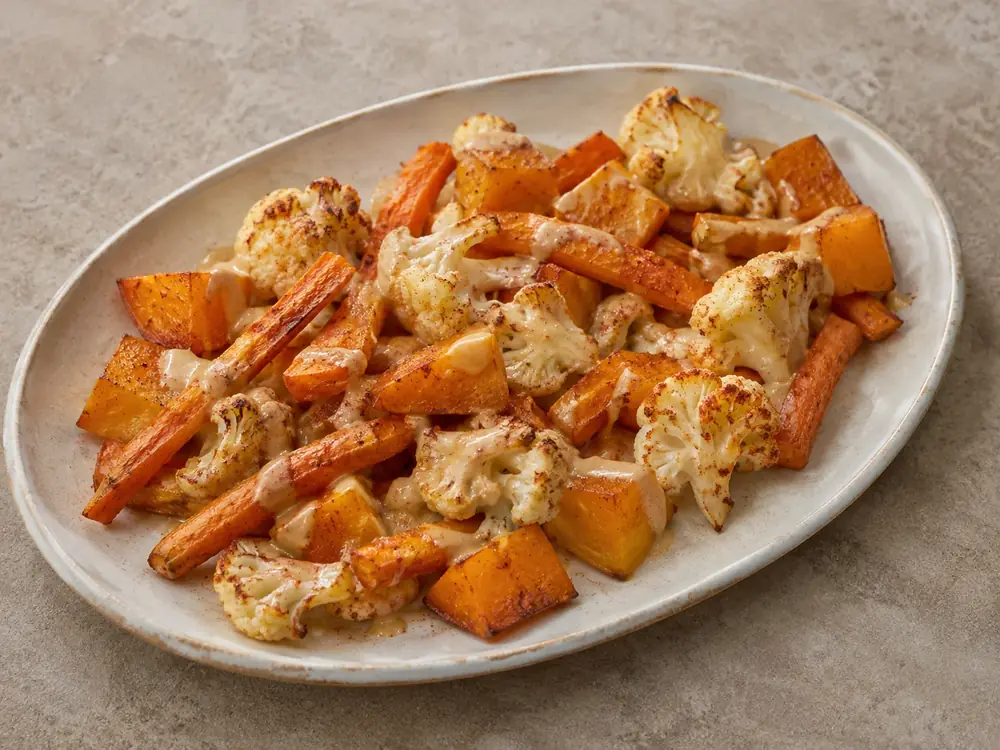
Roasted carrots, squash and cauliflower meet a separate peanut and lemon sauce. A single tray layer gives coloured edges; sauce stays supple and accompanies without covering everything. Seek vegetable sweetness, light browning and contrasting acidity. Peanut butter does not coat the whole tray in the oven: it could burn or form a heavy crust before vegetables tenderise.
Ingredients
- 400 g trimmed carrots
- 400 g peeled, deseeded squash
- 300 g trimmed cauliflower
- 25 ml oil
- 60 g plain peanut butter
- 1 lemon
- 70 ml hot water
- 4 g salt
- 2 g paprika
Preparation
Method at a glance — Cut vegetables to sizes suited to similar cooking. Toss with oil, paprika and 3 g salt. Roast 35–40 minutes at 200 °C, turning halfway. Gradually loosen peanut butter with hot water, 20 ml lemon juice and remaining salt after tasting. Lightly sauce vegetables at serving.
Culinary context — This contemporary combination claims no named traditional South African speciality. Peanut sauces in various African repertoires do not automatically establish an origin for every sauced vegetable preparation. Title remains descriptive and method keeps roasting separate. Distinguish peanut butter, whole peanuts and dairy butter in translation: their texture roles and allergens differ.
Cutting for cooking — Peel carrots and squash, deseed squash and divide cauliflower into florets. Match sizes to cooking speed rather than identical geometry: very thick carrots can stay firm while cauliflower browns. Cut them slimmer, squash around 2 cm and florets medium. Avoid tiny cauliflower crumbs among large chunks because they burn early. Consistent preparation helps components finish together.
Seasoning before roasting — Toss vegetables with oil, paprika and 3 g measured salt in a broad bowl. Coat lightly and evenly. Sweet or lightly smoked paprika works; hot paprika changes intensity and must be identified. More oil does not replace space on the tray. Dry washed vegetables before oiling so residual water does not create excessive steam.
Arranging trays — Preheat to 200 °C and spread one layer with gaps. Use two trays instead of a heap if needed, switching positions during uneven cooking. Deep dishes retain moisture and stew rather than roast. Baking paper may simplify cleaning if rated for the temperature. Do not add tray water in this version except a very limited correction for a beginning scorch.
Checking vegetables separately — Roast about 35–40 minutes, turning halfway. Test each vegetable type with a knife. Remove ready cauliflower to brief warm holding if carrots need longer, instead of blackening it. Watery squash may need extra time. Golden edges and tender flesh, not blackness, establish the intended contrast. Timing depends on actual piece size and oven behaviour.
Choosing peanut butter — Use plain unsweetened paste and check salt. Stir separated oil through the jar before weighing for consistent composition. Smooth paste makes an even sauce; crunchy gives rustic texture and may need more liquid. Clearly identify peanuts to relevant diners, as diluted sauce may look like an unspecified cream. Do not describe it as neutral or dairy sauce when peanuts are present.
Loosening gradually — Place paste in a bowl and add hot water gradually while stirring or whisking. It may thicken initially before loosening: continue small additions rather than pouring all at once. Incorporate measured lemon and remaining salt after tasting. The 70 ml water guides a coating consistency, adjusted to the product. Sauce should flow gently, neither remain a lump nor become thin brown water.
Tasting together — Test sauce on roasted vegetable because sweetness changes perceived acidity and salt. Something sharp alone may balance on the plate. Add extra lemon gradually if needed, not automatically the whole fruit. Paprika should remain recognisable beneath peanuts. Water alone correcting excess salt also thins sauce; unsalted paste may help with changed yield. Record product salt and actual additions next time.
Serving and variations — Divide hot vegetables among four plates or a sharing dish, sauce lightly and offer remainder alongside. Roasted edges remain visible and diners control quantity. Fresh herbs are optional. Other roasting vegetables require adjusted cuts and timing. Another nut or seed butter changes flavour and allergens and requires an adapted title. These remain variations of this recipe, not additional counts.
Storage and conclusion — Cool promptly, refrigerate and use within 48 hours, preferably keeping sauce separate. Reheat vegetables in the oven until hot through; loosen sauce with hot water at serving. Freezing chiefly softens squash and cauliflower. For advance work, cut vegetables and prepare sauce components under refrigeration, then roast near the meal. An uncrowded tray and gradually loosened sauce let peanuts accompany instead of hide vegetables. Enjoy your meal!
Introduction
Roasted carrots, squash and cauliflower meet a separate peanut and lemon sauce. A single tray layer gives coloured edges; sauce stays supple and accompanies without covering everything. Seek vegetable sweetness, light browning and contrasting acidity. Peanut butter does not coat the whole tray in the oven: it could burn or form a heavy crust before vegetables tenderise.
Cultural context
Net trimmed weights total about 1.1 kg, making four generous vegetable portions. The 60 g peanut butter belongs to the whole recipe, not a large spoonful per piece. Grain, beans or meat may accompany separately. Yield alone supplies neither nutritional analysis nor assurance that this one dish fulfils every meal requirement.
Planning
Serves 4; preparation 20 min; cooking 40 min.
Enjoy your meal
Enjoy your meal!