Gem squash with sweetcorn and cream
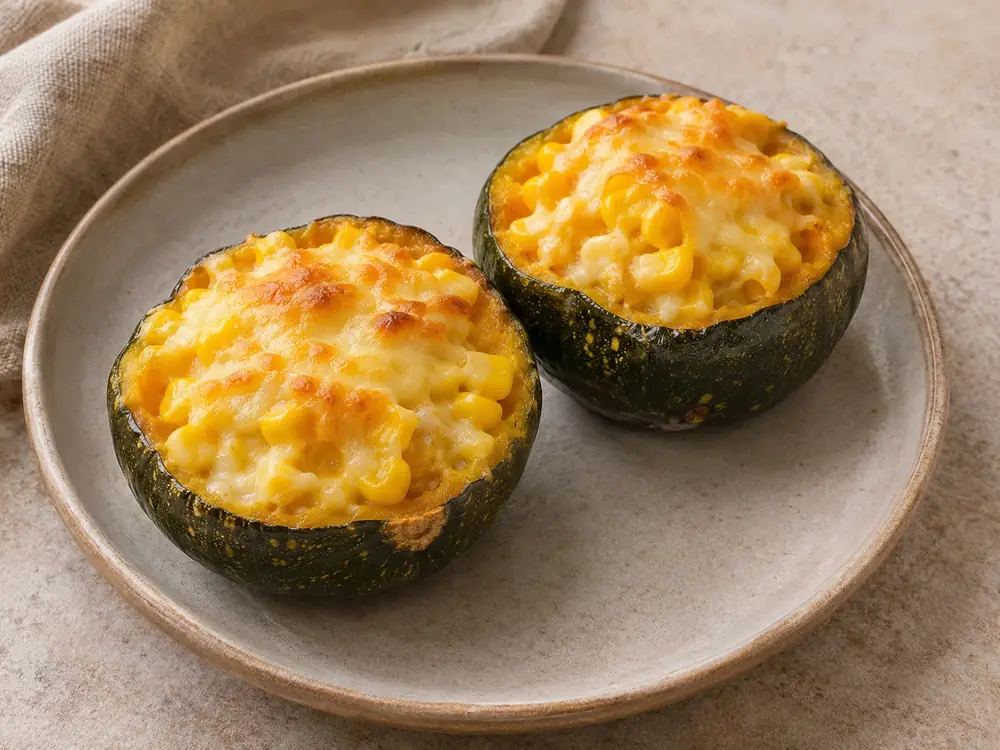
Gem squash is steamed then filled with its own flesh, corn, cream and butter beneath cheddar. Small individual shells should contain spoon-tender flesh and fairly thick filling. Corn is already cooked. Aim for melted, lightly browned surfaces rather than dry crust above liquid centres. Steaming and baking have separate roles, not interchangeable cooking times.
Ingredients
- 4 small gem squash
- 250 g cooked sweetcorn
- 100 ml cream
- 80 g cheddar
- 15 g butter
- 2 g salt
- pepper
Preparation
Method at a glance — Halve squash, remove seeds and steam halves 15–20 minutes. Carefully scoop some flesh and roughly mash with butter, cream, corn and seasoning. Share between shells, add cheddar and bake 15 minutes at 190 °C.
Culinary context — Corn- and cheese-filled gem squash appears in South African domestic repertoires in varied forms. This is a home version, not the unique formula or a specific family's heritage. Keep gem squash with its description as a small round squash to avoid accidental substitution. Butternut is a possible flavour adaptation with different shape and timing. Creamy corn filling and side-dish service distinguish it from lentil-stuffed squash here.
Choosing and opening squash — Select four firm, similarly sized fruits without soft patches. Wash and halve on a stable board using a suitable knife. Resistant skin calls for controlled work, not force on a rolling squash. Spoon out seeds and fibres without piercing walls. Shells must remain sturdy enough for cooking and service. Support an accidentally pierced half in a small individual dish rather than letting filling escape onto a tray.
Preliminary steaming — Arrange halves in a steamer with space for circulation. Cook about 15–20 minutes according to size. Check flesh near edges and in thick areas: tender but still handleable. Water should not boil inside cavities. Use batches if equipment is small; a tightly piled stack can cook unevenly and take longer between lower and upper shells.
Scooping with restraint — Cool briefly, then spoon out some flesh while keeping an even supporting layer against skin. Do not completely hollow shells into fragility. Roughly mash removed flesh. Moisture varies with size and variety; drain briefly if very watery before cream joins. This controls filling without automatically increasing cheese to absorb free liquid.
Preparing corn — Use cooked well-drained sweetcorn. Cans suit with drained weight and existing salt checked. Frozen kernels must cook according to their packet before assembly. Raw kernels from a cob do not necessarily tenderise in 15 minutes of baking; precook separately if choosing them. Corn should retain its identity against mashed squash rather than be blended completely smooth.
Mixing filling — Combine mashed flesh, butter, cream and corn, then some salt and pepper. Warm flesh disperses butter. Taste before all salt because cheddar and cans contribute some. Filling should be supple but hold in a small spoonful. If liquid, remove some juice or reduce briefly in a pan before assembly. Raw flour added at the end is not part of this version and changes flavour and texture.
Filling and browning — Share among eight halves without hard packing or overfilling. Stand securely in a dish and distribute grated cheddar. Bake around 15 minutes at 190 °C until filling is hot and cheese melts. Previously chilled shells need longer at moderate temperature, covered initially if useful. Fast cheese browning cannot establish a cold centre is hot; check one of the thickest portions.
Presenting and sharing — Serve two small halves per person, or one within a larger meal with yield clearly adjusted. Skin may not be pleasant to eat depending on variety and maturity; scoop flesh with a spoon. Warn that dish and filling are hot. Separate salad or greens provides contrast. Alongside a braai, consider other starchy sides instead of automatically multiplying rich portions.
Variations and organisation — Finely sliced spring onion is an optional adaptation; another cheese changes flavour and salt. These remain variations. Replacing cream, butter and cheese for a plant version needs suitable products and reassessment, not promised identity. Prepare shells and filling ahead, cool promptly and refrigerate. Assemble before final heating or keep filled halves chilled with cooking adjusted for starting temperature.
Storage and conclusion — Use refrigerated leftovers within 48 hours and reheat until hot at the centre, covering to limit drying. Freezing may soften shells and release water; fresh preparation better preserves neat presentation. Do not leave filled squash lukewarm on a buffet for a prolonged wait before storing. Tender supporting shells, already cooked corn and measured cream allow browning to finish rather than repair wet filling. Enjoy your meal!
Introduction
Gem squash is steamed then filled with its own flesh, corn, cream and butter beneath cheddar. Small individual shells should contain spoon-tender flesh and fairly thick filling. Corn is already cooked. Aim for melted, lightly browned surfaces rather than dry crust above liquid centres. Steaming and baking have separate roles, not interchangeable cooking times.
Cultural context
Four small squash make eight halves, two per person at the stated yield. Larger fruit may provide one half as a side and change diner numbers. Record size or weight during testing. Corn, cream and cheese are shared across every shell, not measured per fruit. Correct portion interpretation matters as much as the final colour.
Planning
Serves 4; yield 8 half-shells, 2 per person; preparation 15 min; cooking 35–40 min.
Enjoy your meal
Enjoy your meal!