Squash and white bean lasagne
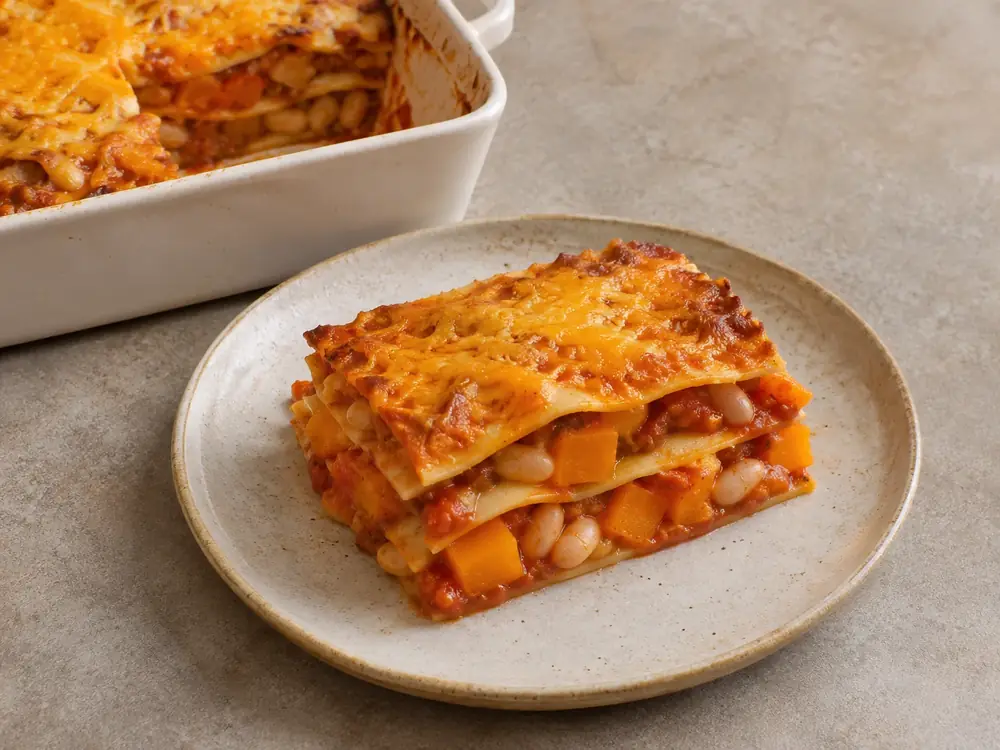
Roasted squash, cooked white beans and tomato sauce sit beneath cheddar. This version has no béchamel, so tomato sauce must supply enough moisture to cook pasta without leaving a watery dish. Beans provide substance and squash sweetness against tomato. Seek tender layers that cut after a short rest, with recognisable pieces. Never trap dry sheets between insufficiently moist fillings.
Ingredients
- 9 lasagne sheets
- 700 g peeled, deseeded squash dice
- 480 g cooked, drained white beans
- 500 g chopped tomatoes
- 1 onion
- 100 g cheddar
- 25 ml oil
- 150 ml water
- 4 g salt
- oregano
Preparation
Method at a glance — Roast squash with half the oil 25 minutes at 200 °C. Fry onion in remaining oil, add tomatoes, water, oregano and salt and simmer 10 minutes, incorporating beans to heat through. Assemble three layers of sauce, squash and pasta. Finish with sauce and cheddar. Bake covered 25 minutes at 180 °C, then uncovered 10 minutes.
Culinary context — This contemporary family dish claims no traditional South African origin. Ingredients fit the volume, while lasagne belongs to a broader culinary history. No community attribution is invented. Preserve cooked versus dry beans and oven-ready versus pre-boil pasta in translation. Those details govern success more directly than a generic description as vegetable gratin.
Roasting squash — Cut roughly 2 cm dice, toss with half the oil and a little measured salt, and spread in one layer. Roast about 25 minutes at 200 °C, turning once, until tender and lightly coloured. Watery squash may need longer surface drying; dry squash should stay supple without burnt edges. Roasting develops flavour and avoids trapping excessive vegetable water inside layers.
Preparing beans — Use fully tender cooked white beans. Cans suit with drained weight checked; rinse according to taste and salt, then drain. Dry beans require separate soaking and appropriate cooking beforehand: 35 minutes of baking will not cook them. Mash a small proportion if useful for sauce binding, keeping most whole for texture and even distribution rather than uniform purée.
Making sufficiently fluid sauce — Fry onion in remaining oil, add tomatoes, water, oregano and some salt. Simmer about 10 minutes and add beans to warm and combine flavours. Keep sauce looser than a reduced condiment because sheets absorb liquid. The 150 ml water is a starting guide alongside pasta directions. Very thick sauce can leave hard corners beneath an apparently finished top.
Checking pasta — Read the packet before assembly. Some dry sheets cook directly in moist filling; others need preliminary boiling. Fresh pasta often needs less time and liquid. If precooking is required, do so separately and avoid sticking sheets together in a compact pile. Break dry sheets only to fill gaps, avoiding repeated overlaps that require more moisture.
Layering evenly — Start with a little sauce, then pasta, sauce and squash. Continue while reserving enough sauce to cover the final sheets completely, then add cheddar. Do not concentrate all squash centrally or beans in one layer. Even distribution gives comparable portions and cooking. Leave headroom for bubbling sauce rather than filling the dish to its rim.
Covered then uncovered baking — Bake about 25 minutes at 180 °C under oven-safe covering, then uncover around 10 minutes. Covering limits drying and helps hydration. Test sheets centrally and near corners with a thin knife. If resistant, continue covered, adding a little hot water around edges if needed. Browned cheese alone proves neither tender pasta nor heating through every layer.
Resting before cutting — Rest approximately 10 minutes out of the oven so sauce stabilises and layers hold under a spatula. Immediate cutting can suggest excessive liquid when resting would help. Rest cannot repair a dry dish containing hard pasta. Record dish size, sheet type and actual added water for future batches: these explain differences better than isolated oven time.
Variations and serving — Offer separately prepared crunchy salad or greens. Pasta, beans and squash are already present, so another large starch is unnecessary. Different cheese changes salt. Some squash may be replaced by less watery roasted vegetables as an explicit variation. For buffets, cut smaller side portions and identify that yield rather than automatically calling them six meals. Variations remain attached to this recipe.
Storage and conclusion — Cool leftovers promptly in shallow portions, refrigerate and use within 48 hours. Reheat covered until hot at the centre, adding water if pasta has absorbed sauce during rest. Portion freezing suits, sometimes with softer squash after thawing. Prepare sauce and squash ahead, cool and refrigerate, then assemble before final baking. Tender beans and enough sauce moisture cook sheets properly; cheddar finishes without masking dry pasta. Enjoy your meal!
Introduction
Roasted squash, cooked white beans and tomato sauce sit beneath cheddar. This version has no béchamel, so tomato sauce must supply enough moisture to cook pasta without leaving a watery dish. Beans provide substance and squash sweetness against tomato. Seek tender layers that cut after a short rest, with recognisable pieces. Never trap dry sheets between insufficiently moist fillings.
Cultural context
Nine sheets assume a dish covered by three per layer; brands differ, so adapt to actual coverage rather than number alone. Squash is weighed peeled and beans cooked and drained. Six portions are the stated yield. Total cooking includes roasting and the assembled dish's 35 minutes, partly overlapping with sauce preparation.
Planning
Serves 6; preparation 25 min; total cooking 60–70 min, including roasting and baking the assembled dish.
Enjoy your meal
Enjoy your meal!