Crisp white polenta with mushroom ragout
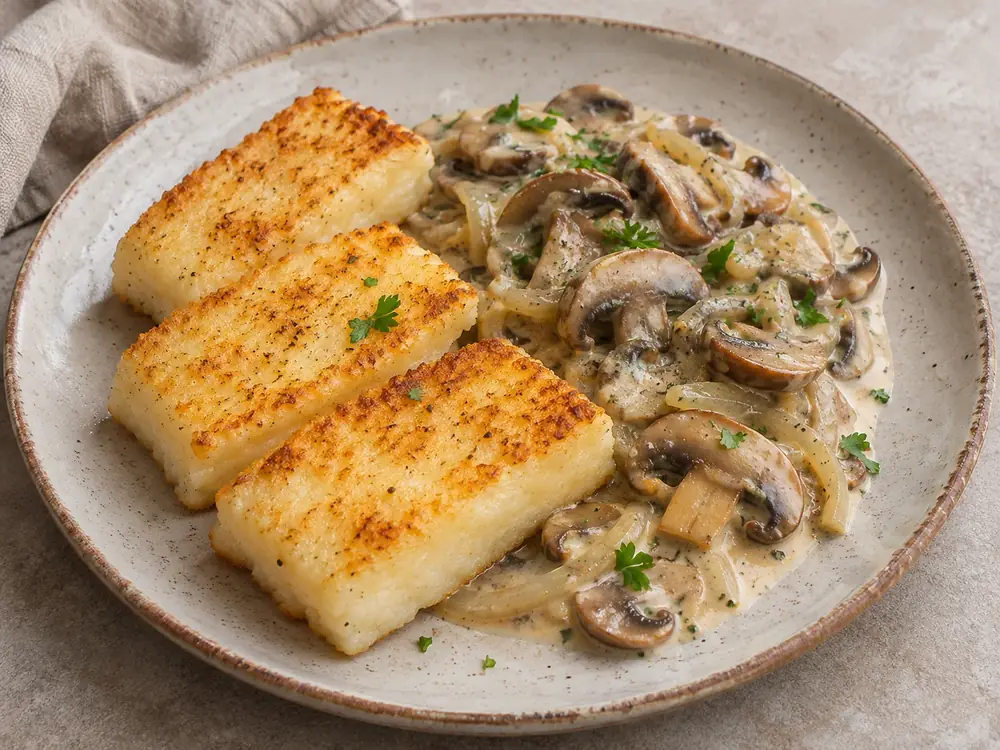
White maize porridge becomes golden pan-fried rectangles served with creamy mushrooms. First cooking tenderises grain; cooling provides cutting strength; final cooking makes a crisp surface. These stages are not interchangeable. Warm soft maize deforms in the pan, while undercooked meal keeps a raw sensation after browning. Prepare sauce separately to control moisture without softening rectangles before plating.
Ingredients
- 180 g white maize meal
- 750 ml water
- 400 g mushrooms
- 1 onion
- 100 ml cream
- 30 ml oil
- 4 g salt
- parsley
Preparation
Method at a glance — Cook maize meal gently in water with half the salt for 25 minutes. Spread 2 cm thick, cool promptly and refrigerate 1 hour. Cut rectangles and brown in 20 ml oil, about 4 minutes per side. Fry onion and mushrooms in remaining oil 10 minutes, add cream and remaining salt and cook 3 minutes. Serve together with parsley.
Culinary context — “White polenta” here describes cooked, cooled, pan-fried maize. This contemporary composition is not presented as a traditional South African name. Products may resemble some pap meals, but crisp rectangles differ from freshly served pap. Preserve white maize and this transformation in translation. Cornflour or maize starch is not equivalent: it forms a different gel rather than the same grain texture.
Choosing meal — Use food-grade meal suitable for porridge and read its packet. Fine, coarse and instant products need different timing and water. The 25 minutes guides an ordinary non-instant product. Keep hot water available if the mixture dries before tender. It must spread while hot without crumbling and be thick enough to set later. Product directions and actual tenderness govern adjustments.
Cooking the base — Boil water with half the salt, then gradually pour meal in while stirring. Lower heat as it thickens and cook gently, scraping base and corners. A lid may limit splashes depending on grind, but keep monitoring. Taste a small cooled amount for raw grains or uncooked flour flavour. Pulling away from the pan does not alone prove readiness if still gritty; tenderness determines final duration.
Spreading and chilling — Line a dish with baking paper, or grease with a clearly reserved small fraction of measured oil. Spread hot maize 2 cm thick with a lightly damp spatula. Release initial heat, cool promptly and refrigerate at least 1 hour, longer if not firm. Time does not replace observation: the slab should lift or cut without flowing. Do not leave a large lukewarm pan for hours before deciding to spread and chill.
Preparing mushrooms — Clean and slice mushrooms fairly thickly and slice onion. Fry in the sauce's reserved oil in a broad pan so moisture evaporates. Extend the 10 minutes if mushrooms release much water. Wait until free liquid is almost gone before cream. Light browning adds flavour; blackened residue tastes bitter. Simmer cream briefly to bind, avoiding excessive reduction into a greasy paste.
Cutting and pan-frying — Cut chilled maize into eight or twelve similar rectangles and gently dry any condensation. Heat part of the frying oil in a broad pan and add spaced pieces. Brown around 4 minutes on the first side without constant movement: crust must form before turning. Support with a broad spatula, cook the second side and share oil between batches rather than pouring all initially.
Checking firmness — Collapsing pieces may mean insufficient chilling or a watery base. Immediate sticking can mean a cool pan or premature turning. A dark crust and cold centre call for gentler heat and slightly longer cooking. Deep-frying is unnecessary for colour. Centres must heat thoroughly and stay supple. Transfer cooked pieces to a rack without a lid that traps steam and softens crust.
Finishing sauce and plating — Reheat creamy mushrooms, add remaining salt gradually and washed, chopped parsley. Taste first because reduction concentrates flavour. Serve sauce beside or under only part of the rectangles rather than covering their entire surface. This preserves contrast between crisp maize and soft topping. Serve promptly on warm plates; prolonged waiting with sauce already poured undoes some pan-frying work.
Variations and organisation — Cooked squeezed spinach may replace some mushrooms. Plain plant cream changes taste and composition; vary aromatics without counting additional recipes. For advance preparation, make maize slab the previous day, refrigerate and cut before eating. Mushroom topping can also be cooked, cooled promptly and kept separately. Final pan-frying is best near service when plates and accompaniments are ready.
Storage and conclusion — Refrigerate leftovers and use within 48 hours, preferably keeping sauce and rectangles separate. Reheat rectangles in pan or oven until hot at the centre, and sauce gently while stirring, adding water if thickened. Freezing the base can alter texture after thawing; a freshly chilled slab cuts more predictably. Fully cooked maize, sufficient chilling and separately reduced sauce produce the intended transformation of texture. Enjoy your meal!
Introduction
White maize porridge becomes golden pan-fried rectangles served with creamy mushrooms. First cooking tenderises grain; cooling provides cutting strength; final cooking makes a crisp surface. These stages are not interchangeable. Warm soft maize deforms in the pan, while undercooked meal keeps a raw sensation after browning. Prepare sauce separately to control moisture without softening rectangles before plating.
Cultural context
Quantities give four portions with mushroom topping. Meal is weighed dry and water belongs to its initial cooking. The 2 cm thickness matters for strength and browning time: a broad tray's thin layer breaks, while a deep mould needs longer final heating. Choose the container before starting rather than improvising once the mixture thickens.
Planning
Serves 4; preparation 25 min; cooking 55 min; chilling 1 h.
Enjoy your meal
Enjoy your meal!