Thin tomato and mustard puff pastry tart
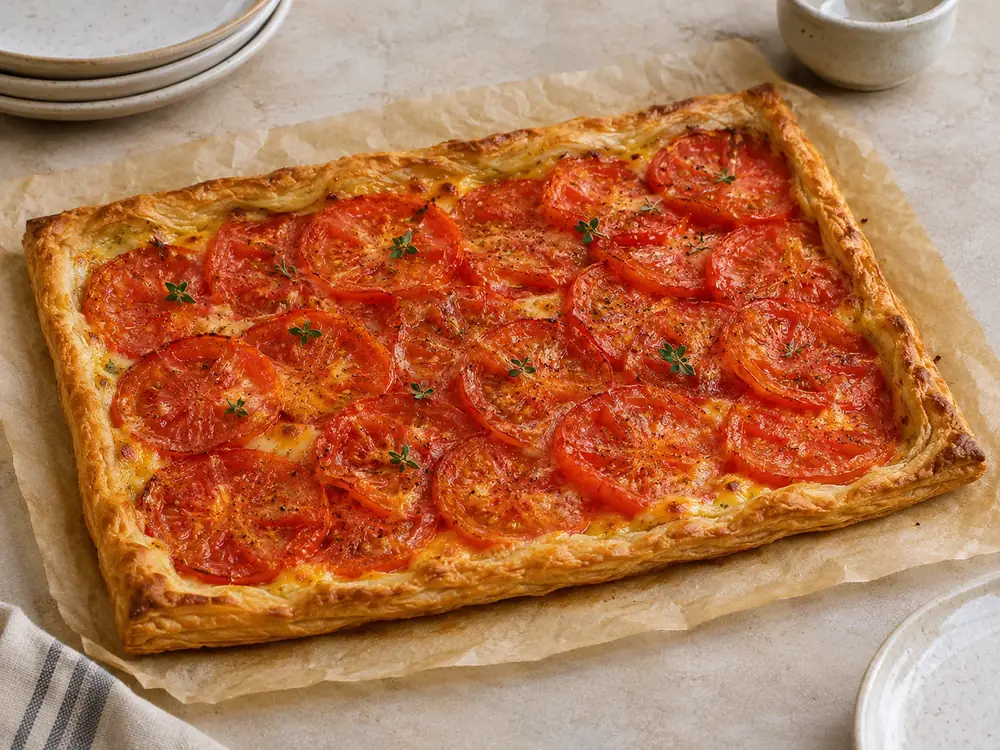
A thin puff pastry base carries mustard, cheddar and sliced tomatoes. An unfilled border rises while the centre must cook enough to support fruit without sogginess. Thyme gives restrained aroma and oil a measured drizzle. Tomato water and heat beneath pastry chiefly determine success. A golden top is insufficient if the underside remains pale and soft: inspect both before finishing.
Ingredients
- 1 sheet puff pastry weighing 230 g
- 600 g trimmed tomatoes
- 30 g mustard
- 100 g cheddar
- 10 ml oil
- 2 g salt
- thyme
- pepper
Preparation
Method at a glance — Unroll pastry on its baking tray and prick the centre, leaving a 2 cm border. Spread mustard, add cheddar and sliced, blotted tomatoes. Season, drizzle with oil and scatter thyme. Bake 25–30 minutes at 200 °C until the underside is crisp.
Culinary context — This contemporary family recipe claims no exclusively South African origin. Tomato puff pastry tarts circulate widely; cheddar is a flavour and availability choice. The descriptive title avoids an undocumented heritage name. An open, thin, tomato-led tart differs from closed pies in the first manuscript. Preserve puff pastry versus shortcrust in translation because behaviour and results are different.
Choosing tomatoes — Select ripe but firm fruit that slices evenly. Very juicy tomatoes need more draining and may soak the centre. Remove stalk areas and hard parts, then slice around 4–5 mm thick. Blot on a clean cloth or suitable paper without completely drying flesh. Unripe firm fruit is not automatically better; it can lack aroma and stay acidic despite correct cooking.
Keeping pastry cold — Refrigerate until assembly and preheat oven to 200 °C. Unroll on its baking paper over a rigid tray. If very soft during preparation, chill briefly again. Warm puff pastry handles poorly and may lose some lift. Do not knead into a ball and reroll without need: this recipe uses an even sheet with layers already formed by the maker or earlier preparation.
Making a useful border — Prick the centre with a fork, leaving roughly 2 cm untouched. This limits central puffing under tomatoes while allowing the edge to rise. Lightly mark the boundary with a knife's back if useful without cutting through. Too narrow a border catches juice and rises poorly; too wide reduces filling per portion. Regular proportions make sharing more comparable.
Spreading mustard and cheese — Apply measured mustard thinly over the centre. A thick layer brings dominant strength and moisture. Use familiar mustard and adjust unusually pungent products. Spread grated cheddar without large heaps. It flavours and creates an interface between pastry and fruit, but cannot guarantee a dry base beneath dripping tomatoes. Both ingredients already contain salt; use the additional 2 g cautiously after considering them.
Arranging tomatoes — Lay slices slightly overlapping in one even layer, not a thick central pile, keeping border free. Add pepper, some salt and thyme, then drizzle measured oil. Strip woody thyme stems; hard fragments are unpleasant in a slice. Abundant oil does not replace draining and can make pastry greasy. Light assembly allows heat through filling to cook the base.
Cooking underside and top — Bake on a lower-middle shelf according to oven behaviour to encourage base cooking. The 25–30 minutes is guidance. Check border and lift a corner gently with a spatula: underside should be golden and firm. If tomatoes colour before pastry, lightly protect top and continue lower in the oven. A preheated tray can help as an adaptation, handled carefully and within baking-paper instructions.
Resting and cutting — Rest briefly on a rack or with space beneath the tray so steam does not collect under pastry. Cut with a sharp knife or wheel without crushing border. Share tomatoes and cheese evenly. Serve hot or warm with separate fresh salad. A few minutes' rest makes molten cheese and very hot juices more comfortable without cooling the entire dish.
Variations and common problems — Different mustard or cheese gives different flavour and salt. Mixed-colour tomatoes vary presentation without making another recipe. For a wet base, improve draining, filling thickness and shelf position before adding more cheese, which may simply make it heavier. Excess central puffing may mean too few fork holes or bare filling patches. Record tray format and shelf to reproduce the next bake.
Storage and conclusion — Cool leftovers promptly, refrigerate and use within 48 hours. Reheat in the oven until hot through for a firmer base; microwave-only reheating softens layers. Freezing an assembled tart can make tomatoes release water, so fresh preparation suits the intended contrast. For advance work slice and drain fruit, keep pastry cold and assemble shortly before baking. Thin filling, well-chosen tomatoes and a truly cooked underside make the tart coherent. Enjoy your meal!
Introduction
A thin puff pastry base carries mustard, cheddar and sliced tomatoes. An unfilled border rises while the centre must cook enough to support fruit without sogginess. Thyme gives restrained aroma and oil a measured drizzle. Tomato water and heat beneath pastry chiefly determine success. A golden top is insufficient if the underside remains pale and soft: inspect both before finishing.
Cultural context
The 230 g sheet is an ordinary ready-to-unroll format. Tomato weight excludes unusable parts, before optional draining. Four light-meal portions can accompany salad, or cut more small aperitif pieces with different portion meaning. A very broad thin format may need shorter monitoring; a small deep dish produces another result rather than a thin tart.
Planning
Serves 4; preparation 15 min; cooking 30 min.
Enjoy your meal
Enjoy your meal!