Peppers stuffed with rice and peanuts
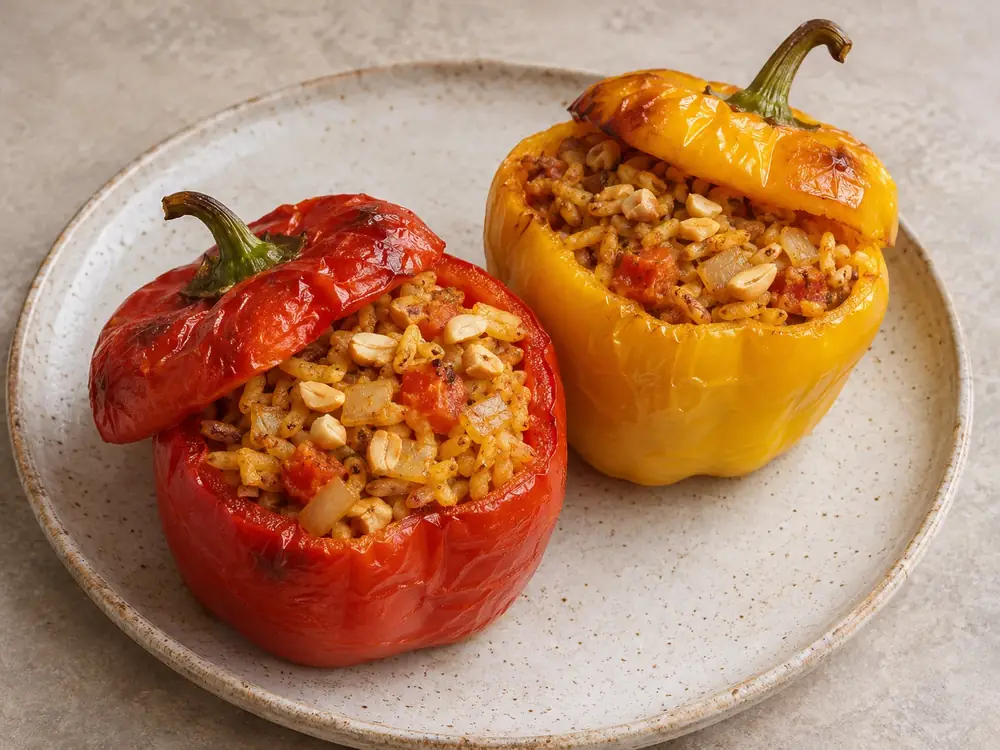
Cooked rice, tomato, onion, mild curry and peanuts fill tender baked pepper shells. Grains remain recognisable in moist rather than liquid filling. Tops reduce drying slightly without making airtight lids. Peanuts supply measured crunch, not a dry central mass. Each pepper makes a light-meal portion completed according to the menu.
Ingredients
- 4 peppers
- 150 g dry rice
- 1 onion
- 250 g chopped tomatoes
- 60 g unsalted roasted peanuts
- 20 ml oil
- 3 g salt
- 2 g mild curry powder. Allow 100 ml water around peppers in the baking dish
Preparation
Method at a glance — Cook rice and drain. Cut tops from peppers and remove seeds and membranes. Fry onion, add tomatoes, curry and salt and simmer 10 minutes. Mix with rice and roughly chopped peanuts. Fill peppers, replace tops and stand in a dish with 100 ml water. Bake 35 minutes at 180 °C.
Culinary context — This is a contemporary stuffed-vegetable creation. Curry and peanuts provide flavours found in various repertoires without proving a particular South African origin. No undocumented traditional name is attached. Pepper shells, rice and peanuts distinguish it from other stuffed vegetables here. Retain roasted plain peanuts versus peanut butter: paste would change binding and remove the expected crunch.
Choosing peppers — Select firm fruits without soft areas or deep cracks. Wash, cut tops near stalks and remove seeds and white membranes. Keep each top with its shell. If unstable, shave a very thin slice from the base without piercing flesh, or support against neighbours in a suitable dish. A hole leaks juice and filling. Mixed colours are possible with different sweetness.
Cooking rice before assembly — Choose rice retaining reasonably separate grains and follow its packet. Drain as necessary and release steam in a shallow dish. Rice must already be cooked: the 100 ml around peppers would not properly cook dry-grain stuffing. If prepared ahead, cool promptly and refrigerate instead of leaving lukewarm in a saucepan for several hours while awaiting assembly.
Preparing peanuts — Use unsalted roasted peanuts without rancid smell. Knife-chop roughly or pulse briefly, not to powder. Small fragments may bind slightly, but pieces should remain perceptible. The 60 g is shared across four portions. Salted peanuts are an identified adaptation requiring less final salt. Clearly disclose peanuts to relevant diners: a closed pepper can conceal them until the first bite.
Making binding sauce — Fry finely sliced onion in oil until tender. Add mild curry briefly, then chopped tomatoes. Simmer around 10 minutes to reduce juice. Sauce should coat rice, not leave it swimming. Curry strength and salt vary by brand, so weigh 2 g and begin moderately. Acidic sauce does not automatically need sugar; cooked pepper and onion sweetness also help final balance.
Combining and tasting — Mix rice, sauce and chopped peanuts. Taste and salt gradually. Filling should spoon easily and remain slightly moist because baking dries it further. Loosen dryness with cooked tomato or a little hot water. Reduce watery sauce before mixing, or gently evaporate surplus. Do not add raw flour to absorb juice at the last moment. Keep rice and peanut identity rather than compact paste.
Filling and arranging — Fill without strong compression, leaving room beneath tops, then replace them. Stand peppers securely in a suitable dish. Pour 100 ml water around, not over filling. This maintains moisture and protects the base rather than submerging fruit. Cover the dish for the first half if peppers are thick or the oven dries rapidly; uncover later for light colour.
Baking until tender — Bake at 180 °C around 35 minutes, longer for large firm fruit. Test side flesh with a knife: tender but able to stand. Check thoroughly hot filling, especially with chilled rice. Slightly wrinkled skin is normal; blackened tops and hard shells suggest excessive heat or insufficient moisture. Add a little hot water around peppers if the dish dries before completion.
Serving and variations — Serve one pepper each with separately prepared salad or greens. Rice is already present, so another large starch is unnecessary. Fresh herbs may finish an adaptation. Walnuts or seeds replacing peanuts alter flavour and allergens and require a revised title. These remain variations. Cut buffet portions after baking only if shells hold; declare half-portions instead of implying four large portions remain unchanged.
Storage and conclusion — Cool leftovers promptly, refrigerate and consume within 48 hours. Reheat covered until hot at the centre, with water around to reduce drying. Freezing is possible but softens shells after thawing. For advance preparation keep rice and sauce refrigerated, then assemble before baking; do not hold rice filling lukewarm for hours. Cooked rice, reduced tomato and tender standing shells allow peanuts to supply the promised contrast. Enjoy your meal!
Introduction
Cooked rice, tomato, onion, mild curry and peanuts fill tender baked pepper shells. Grains remain recognisable in moist rather than liquid filling. Tops reduce drying slightly without making airtight lids. Peanuts supply measured crunch, not a dry central mass. Each pepper makes a light-meal portion completed according to the menu.
Cultural context
Rice is weighed dry then cooked separately. Choose four similarly sized peppers with bases that stand. Tiny and very large fruits do not make equivalent portions. Cavities may leave some extra filling, served alongside after thorough heating. Hard compression makes dense stuffing and encourages overflow; a small separate portion is preferable to distorting shells.
Planning
Serves 4; preparation 20 min; cooking 50 min.
Enjoy your meal
Enjoy your meal!