Cabbage gratin with lentils and cheddar
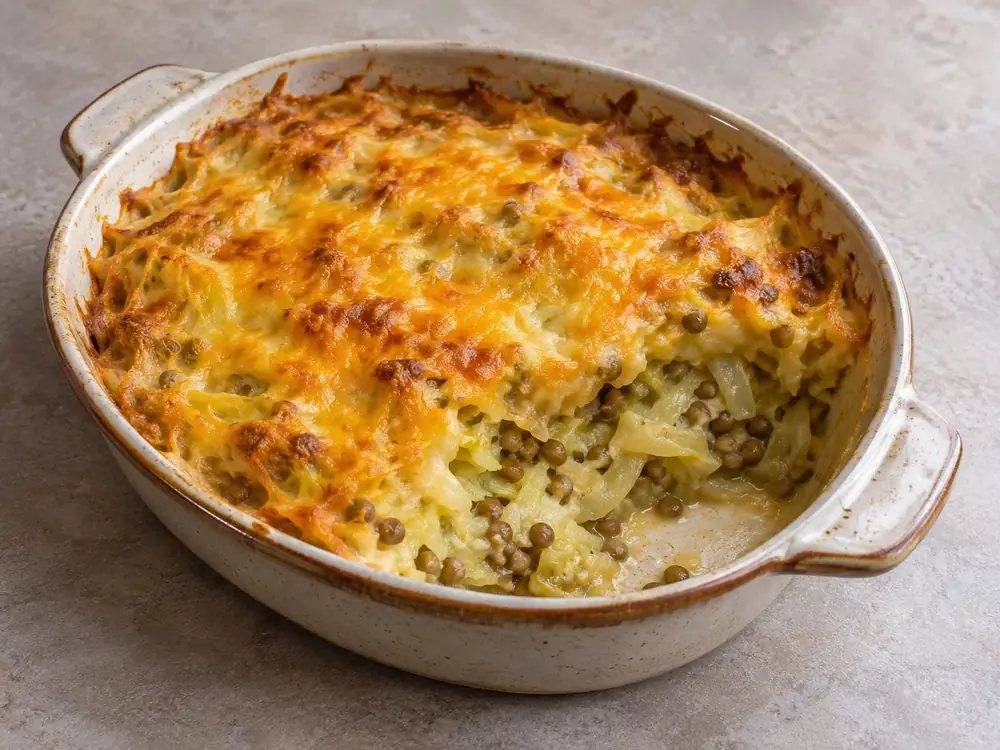
Shredded cabbage and already cooked lentils combine with light béchamel under cheddar. Some lentils remain whole, and cabbage should cut easily. Sauce connects rather than turns filling into soup. Cheese provides a golden surface, not a disguise for watery liquid or firm vegetables. Preparing filling before baking is essential: browning finishes an assembly already nearly ready.
Ingredients
- 600 g trimmed cabbage
- 400 g cooked, drained lentils
- 1 onion
- 200 ml milk
- 20 g flour
- 25 g butter
- 100 g cheddar
- 3 g salt
- nutmeg. Allow 60 ml water for cooking cabbage as specified in the method
Preparation
Method at a glance — Shred cabbage and onion; soften with 10 g butter and 60 ml water for 15 minutes. Make béchamel with remaining butter, flour and milk and simmer 3 minutes. Mix with lentils, cabbage, salt and a pinch of nutmeg. Transfer to a dish, cover with cheddar and bake 20 minutes at 190 °C.
Culinary context — This contemporary family gratin claims no particular historical South African speciality. Cooked pulses distinguish it from cabbage and potatoes in the first manuscript. Béchamel and cheddar are formulation choices, not proof of local origin. Preserve cooked versus dry lentils and shredded cabbage versus whole stuffed leaves in translation. Accurate terms prevent more errors than an undocumented cultural story.
Preparing cabbage — Remove damaged leaves, quarter and cut away hard core. Shred finely enough to soften in roughly 15 minutes; dense cabbage may need longer. Wash as needed and drain well. Slice onion similarly to mix with leaves. Raw cabbage looks bulky but collapses, so start with a broad pan instead of tightly packing a small one or adding excessive water.
Cooking without waterlogging — Melt 10 g of the butter with cabbage and onion. Add the method's 60 ml water, cover and cook gently around 15 minutes, stirring. Leaves should tenderise without heavy browning. Uncover towards the end to evaporate residual liquid. If draining afterwards, do not return that water to béchamel. Moist but non-dripping filling preserves sauce and makes cleaner portions.
Preparing lentils — Use cooked green or brown lentils, tender but whole. Well-drained cans suit, with salt checked. Homemade lentils must have been promptly cooled and correctly refrigerated. Broken-down red lentils give another structure. Weigh directly after draining to retain 400 g. Taste before assembly: brief baking in thick filling will not easily correct a hard centre.
Making smooth béchamel — Melt remaining butter in a small pan. Stir in flour over low heat 1–2 minutes without browning. Whisk milk in gradually, initially making a smooth paste, then adding the remainder. Bring to a simmer and cook about 3 minutes, stirring, until thick without lumps or raw-flour taste. Brief vigorous off-heat whisking may help persistent lumps; adding dry flour at the last moment worsens them.
Seasoning filling — Add a small nutmeg pinch, some salt and optional pepper to béchamel. Mix with lentils and drained cabbage and taste a complete bite. Cheddar contributes salt later, so remain moderate. Mustard or stock cubes are not included and would change seasoning. Sauce should coat grains and leaves. A little hot milk loosens excessive thickness; very wet filling first suggests checking cabbage drainage.
Assembling and browning — Grease a dish if needed with a small amount reserved from the measured butter. Spread filling without hard compression and cover evenly with grated cheddar. Bake about 20 minutes at 190 °C until uniformly hot with melted surface. This assumes warm components. Refrigerator-cold ingredients need longer at moderate temperature, initially covered. Quickly browned cheese under a grill cannot guarantee a properly heated centre.
Checking consistency — Rest 5–10 minutes to stabilise sauce slightly. Serve with a broad spoon or spatula rather than expecting firm cake-like slices. Runny gratin suggests insufficient cabbage evaporation or undrained lentils. Very dry texture suggests thick béchamel or excessive baking. Correct these before doubling cheese to hide the problem. The topping finishes filling, not repairs it.
Serving and variations — Serve separately prepared tomato salad or raw vegetables. Reduce portions if accompanying meat or poultry. Another cooked pulse is an adaptation with changed texture and possibly title. Firmer cabbage or kale needs specific preparation, including tough rib removal. Keep variations attached to the same recipe. Extra ingredients must not silently enter nutritional estimates claiming to represent the basic formula.
Storage and conclusion — Cool leftovers promptly in small portions, refrigerate and consume within 48 hours. Reheat covered until hot at the centre, uncovering briefly if desired. Freezing is possible, often softening cabbage and sauce after thawing. Prepare filling ahead separately and assemble before baking, accounting for starting temperature. Properly cooked béchamel, tender non-watery cabbage and drained lentils give coherence beneath cheddar. Enjoy your meal!
Introduction
Shredded cabbage and already cooked lentils combine with light béchamel under cheddar. Some lentils remain whole, and cabbage should cut easily. Sauce connects rather than turns filling into soup. Cheese provides a golden surface, not a disguise for watery liquid or firm vegetables. Preparing filling before baking is essential: browning finishes an assembly already nearly ready.
Cultural context
The 400 g refers to cooked drained lentils, never the same dry weight, which would make much more. Cabbage is weighed after removing damaged leaves and very hard core. Four portions can be a light main or side. A dish around 20 by 25 cm keeps depth moderate; a narrow deep dish needs longer centre heating.
Planning
Serves 4; preparation 20 min; cooking 45 min.
Enjoy your meal
Enjoy your meal!