Bambara groundnut and pumpkin stew
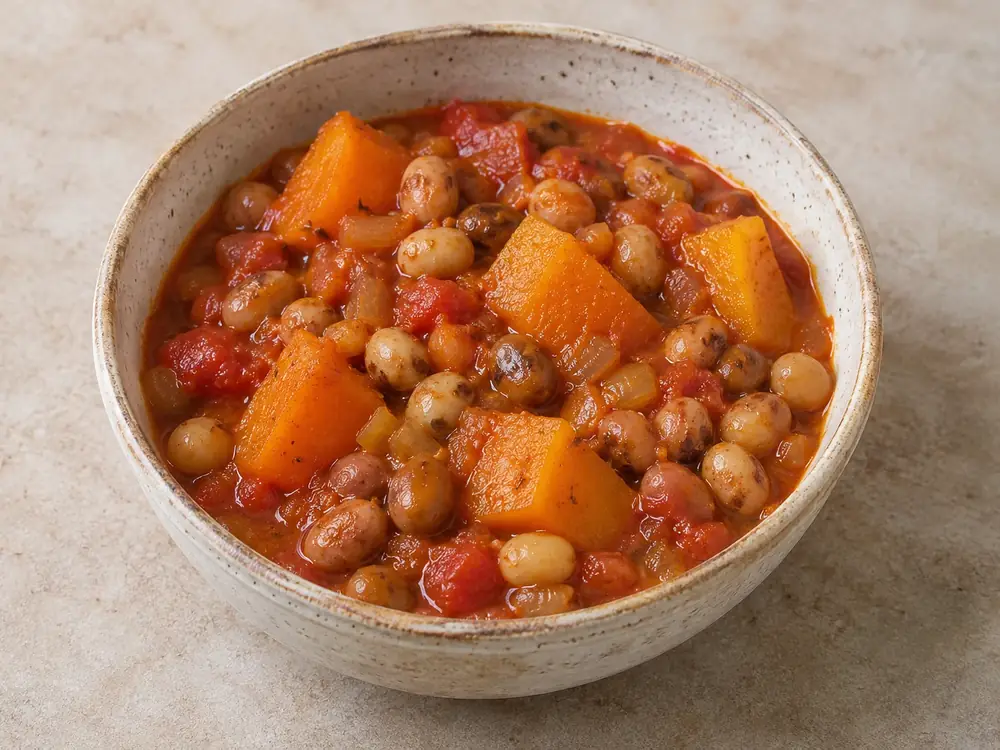
Bambara groundnuts combine with pumpkin cubes in a tomato and onion base. Seeds must be fully tender before joining squash, which then cooks in moderate juices to bind rather than make soup. This demands more planning than lentil recipes: dry seeds can cook slowly with substantial variation. The developed timing deliberately avoids promising a finished stew with hard-centred seeds.
Ingredients
- 250 g dry shelled Bambara groundnuts, also sold as Bambara beans
- sufficient soaking and cooking water
- 500 g peeled, deseeded pumpkin flesh
- 1 onion
- 250 g tomatoes
- 20 ml oil
- 1 garlic clove
- 4 g salt
- 2 g cumin
Preparation
Method at a glance — Sort and soak seeds in cool conditions 12 hours; discard water and rinse. Cook in abundant fresh water with vigorous boiling according to product directions; lacking more specific directions, allow at least 30 minutes boiling, then continue until completely tender. Total cooking can take 2–4 hours or longer. Reserve clean cooking liquid. Fry onion, garlic and cumin in oil, add tomatoes and cook 10 minutes. Add cooked seeds, pumpkin dice and about 300 ml cooking liquid. Simmer 20 minutes or until pumpkin is tender; adjust salt and consistency.
Documentary context — The Agricultural Research Council describes Bambara groundnut as an underused crop grown particularly in northern and eastern South Africa. That locates ingredient production, not traditional origin for our pumpkin and cumin stew. This composition is contemporary. Bambara groundnut is a different plant from ordinary peanut despite confusing commercial names. An explanatory name and, where useful, Vigna subterranea help prevent unintended substitution in translation.
Buying and sorting — Buy food-grade seeds from an identifiable supplier. Check they are dry and shelled and read preparation instructions. Remove debris, badly damaged seeds and foreign matter before rinsing. Old seeds may resist softening despite an ordinary appearance. A small first trial reveals behaviour before planning a large meal. Do not promise the same timing for every batch and variety.
Soaking and renewing water — Cover generously with cold water and soak about 12 hours under cool conditions, refrigerated in a warm kitchen. Swelling seeds must remain submerged. Discard soaking water, rinse and cover with fresh water in a sufficiently large pan. Soaking neither cooks seeds nor automatically makes them ready to eat. Follow product instructions for vigorous boiling before complete tenderising; absent more specific guidance, retain at least 30 minutes boiling followed by full cooking, not lukewarm holding.
Allowing realistic time — Depending on batch and pretreatment, cooking can take 2–4 hours or more. This broad guide replaces an excessively narrow short-recipe expectation. Keep seeds covered and add hot water as the level drops. Do not start with tomatoes: acidity does not resolve hard grain. A pressure cooker requires its own manufacturer and product guidance for volume and time; no universal timing for all equipment is invented here.
Checking before assembly — Cool and taste several differently sized seeds. Centres must be soft and pleasant without hard or chalky cores. Skins may remain perceptible but flesh should not firmly resist. Drain when ready and reserve around 300 ml clean cooking liquid, with extra available. Twenty minutes alongside pumpkin will not rescue undercooked seeds. Completing plain cooking first is the decisive step.
Making tomato base — Fry sliced onion in oil briefly, then add chopped garlic and cumin. Stir shortly before diced tomatoes and simmer about 10 minutes to a supple aromatic base. Do not blacken garlic throughout onion cooking. Cumin remains a nuance, not a mask for seeds. Watery tomatoes may need longer reduction. Salt moderately after combining, particularly if seeds were precooked in salted water.
Cooking pumpkin in the stew — Dice pumpkin about 2 cm. Add to tomato with cooked seeds and reserved liquid. Cover and simmer around 20 minutes until tender, stirring gently to retain some cubes. A little broken squash naturally binds juices. If drying before tenderness, add hot liquid; if thin, finish uncovered while watching the base. This stage cooks squash, not hard seeds.
Adjusting and serving — Taste seed, squash and juice together before final salt. Preserve contrast between mild seeds and slightly sweet pumpkin. Offer chilli separately rather than imposing abundant heat throughout. Serve hot with simple grain or leafy greens, counted separately. Do not claim the stew meets every nutritional need without analysis; its culinary value is precise handling of a less familiar pulse.
Variations and storage — Another dense squash can replace pumpkin, adjusting moisture. Ordinary beans change the principal ingredient and require an appropriate title. Seeds can be cooked the previous day, cooled promptly and refrigerated with liquid. Refrigerate finished stew and use within 48 hours, or freeze portions. Reheat thoroughly with water as needed, avoiding repeated cooling and reheating cycles.
Conclusion — The main demand is planning seed cooking rather than many complicated operations. Prepare pumpkin and tomato while waiting, joining them only once seeds are tender. Record supplier, soaking and actual duration to improve repeatability. Honest timing is preferable to serving a hard-centred stew. Keep final garnish simple and allow the two principal ingredients to complement one another. Enjoy your meal!
Introduction
Bambara groundnuts combine with pumpkin cubes in a tomato and onion base. Seeds must be fully tender before joining squash, which then cooks in moderate juices to bind rather than make soup. This demands more planning than lentil recipes: dry seeds can cook slowly with substantial variation. The developed timing deliberately avoids promising a finished stew with hard-centred seeds.
Cultural context
The 250 g is dry shelled seed, not whole pods or cooked weight. Pumpkin is peeled and deseeded flesh. Four plant-based portions can be completed with separately prepared grain or leafy vegetables. Reserve some clean cooking liquid after draining. This does not mean reusing soaking water, which is discarded.
Planning
Serves 4; preparation 20 min; soaking 12 h; indicative cooking 2–4 h or longer according to product.
Enjoy your meal
Enjoy your meal!