Sorghum pilaf with mushrooms and peas
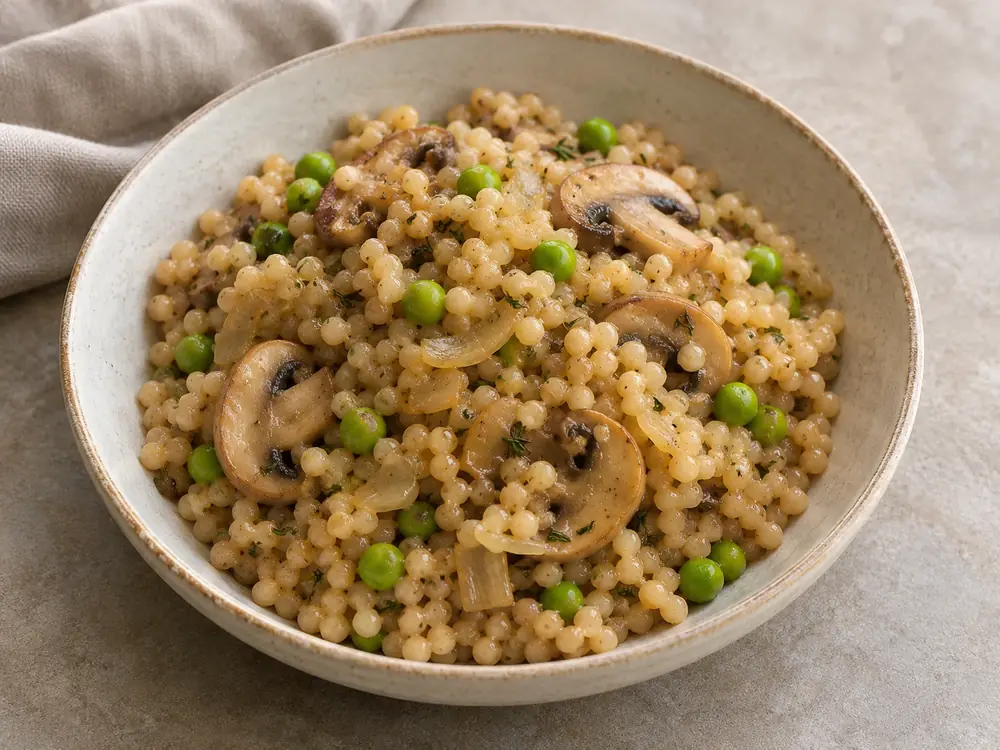
Sorghum cooks in a mushroom and onion base, with peas added near the end. Grains should remain distinct, tender and lightly coated rather than floating in abundant broth. “Pilaf” describes the organisation, not identical behaviour to white rice. Sorghum absorption and timing vary considerably with the product, so observe the pan and adjust liquid instead of relying entirely on a timer.
Ingredients
- 220 g dry whole sorghum
- 300 g mushrooms
- 150 g shelled peas
- 1 onion
- 800 ml water, adjusted as needed
- 25 ml oil
- 3 g salt
- thyme
Preparation
Method at a glance — Fry onion in oil 5 minutes. Add sliced mushrooms and cook 7 minutes. Add rinsed sorghum, water, thyme and salt. Cover and simmer 45–60 minutes according to grain, adding hot water as needed. Add peas for the final 8 minutes, following their packet. Rest 5 minutes, then fluff.
Culinary context — This is contemporary simmered-grain cooking without a traditional South African dish name or claim that pilaf belongs specifically to sorghum. Grain provides a concrete connection to the project; mushrooms and peas add familiar textures. Less free liquid and side-dish service distinguish it from sorghum broth. Variations should preserve this result instead of multiplying titles for garnish changes.
Reading the packet first — Use food-grade whole sorghum. Check hulling, soaking requirements and recommended duration. The 45–60 minutes is approximate; some grains need longer, affecting overall time. Flour is unsuitable. If the manufacturer recommends abundant-water cooking and draining, follow separately and combine with vegetables for a more controlled adaptation. Declare that change because grain no longer directly absorbs the same flavoured cooking liquid.
Preparing vegetables — Slice onion and mushrooms, keeping mushroom slices reasonably substantial. Clean without prolonged soaking, trim tough parts and dry as needed. Wet mushrooms release substantial initial liquid and resist browning. Keep peas aside until late rather than cooking them an hour and losing colour and texture. Frozen products follow packet cooking directions. Their 150 g is without pods, ready to cook.
Building flavour — Heat oil in a heavy lidded saucepan. Fry onion 5 minutes, then mushrooms about 7 minutes or longer if their water has not evaporated. Light colour flavours the cooking liquid; blackened residue tastes bitter. Stir then allow brief contact with the base instead of constant agitation. Use a little thyme, leaves or an easily removed sprig, without scattering tough stems among grains.
Adding grain and water — Add rinsed sorghum, water and some salt. Bring to a simmer, stir to distribute, cover and maintain gentle but active cooking. Check liquid level and tenderness regularly. A close-fitting lid limits evaporation; a wide, partly open pan loses more. Small hot-water additions are normal while grain remains firm. Do not let the base dry merely to preserve the exact starting volume.
Observing texture — Cool and taste several grains. Centres should be tender with slight chew, not hard. If grain is almost ready with abundant liquid, uncover and reduce gently. If firm and dry, add water and continue covered. Aim for neither soup nor a stuck mass. Stir carefully to avoid catching, without working like risotto to maximise starch release. Separable grains remain the intended texture.
Finishing with peas — Add peas near completion according to their packaging. Eight minutes guides a common product, but packet directions take priority. Distribute and check they are cooked, not merely thawed. Adjust salt and remove thyme stems. If grain absorbs all liquid before peas finish, add a little hot water rather than burn the base. Late addition preserves texture better than cooking peas from the beginning.
Resting and serving — Turn off heat, cover and rest 5 minutes, then gently fluff with a fork. This distributes moisture and eases serving. Taste a complete bite before adding salt. Serve hot in a shallow dish or individual portions, reaching the bottom to distribute mushrooms and peas. Do not press hard into a mould to imply a bound preparation; the natural grain texture is part of its appeal.
Variations and accompaniments — A little parsley is an optional finish. Other cultivated mushrooms vary aroma; wild varieties are unnecessary and require reliable identification. Salted stock may replace water with an explicit reduction in added salt. Keep variations attached to this recipe. Poultry, fish or bean preparations can accompany according to the menu, separately counted rather than silently included in portions or future nutrition values.
Storage and conclusion — Cool leftovers promptly in shallow layers, refrigerate and use within 48 hours. Reheat with a few spoonfuls of water, stirring until hot throughout. Portion freezing is possible, sometimes with softer grain after thawing. Separately cooking sorghum ahead and combining during thorough reheating is an identified organisational adaptation. Correctly identified grain, lightly browned mushrooms and liquid adjusted to actual cooking provide consistency. Enjoy your meal!
Introduction
Sorghum cooks in a mushroom and onion base, with peas added near the end. Grains should remain distinct, tender and lightly coated rather than floating in abundant broth. “Pilaf” describes the organisation, not identical behaviour to white rice. Sorghum absorption and timing vary considerably with the product, so observe the pan and adjust liquid instead of relying entirely on a timer.
Cultural context
The dry grain makes four side or light-meal portions. Mushrooms and peas increase volume without settling the dish's menu role. Add separately prepared pulses or another accompaniment for a fuller meal. The 800 ml is an initial guide checked against the packet. Record actual additions during testing to improve repeatability in the final edition and translations.
Planning
Serves 4; preparation 20 min; cooking approximately 60 min, with packet directions and grain tenderness taking priority.
Enjoy your meal
Enjoy your meal!