Aubergines stuffed with sorghum and tomato
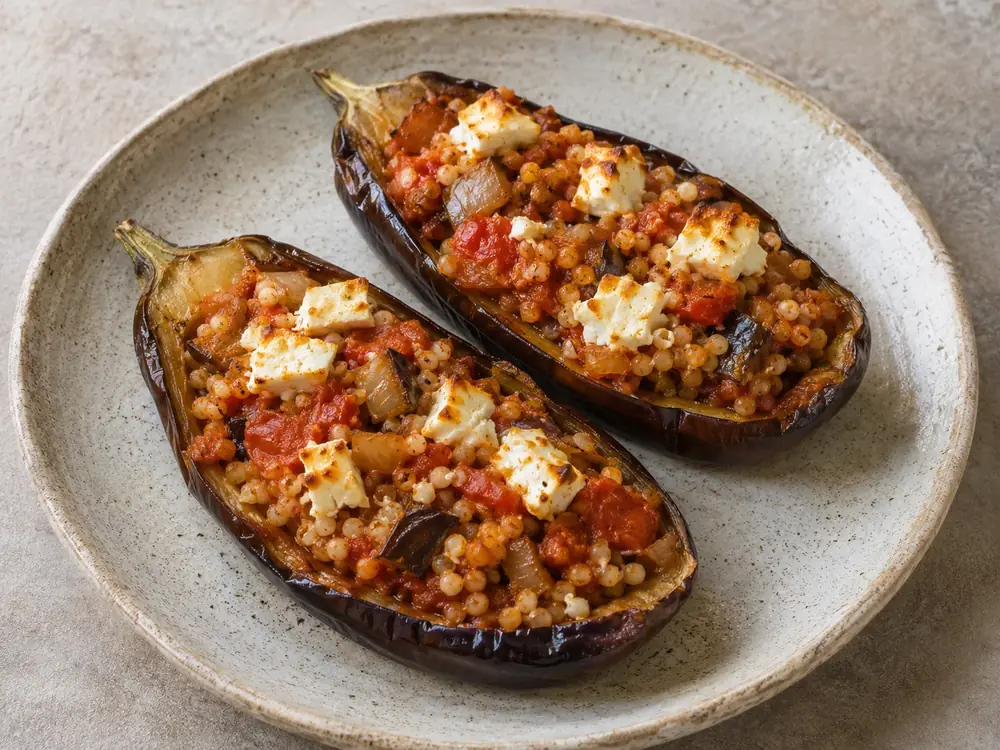
Aubergines roast as half-shells before receiving sorghum, tomato, onion and their own flesh. Feta adds salt during the final baking. Seek tender shells that still support serving and filling that holds together without scattering. Sorghum remains grain rather than purée; tomato gives moisture without turning each half into a container of watery sauce. Prepare filling components during the first roasting stage.
Ingredients
- 2 aubergines
- 140 g dry whole sorghum
- 400 g chopped tomatoes
- 1 onion
- 80 g feta
- 25 ml oil
- 2 g ground coriander
- 3 g salt
Preparation
Method at a glance — Cook sorghum according to its packet. Halve aubergines, score flesh, oil and roast 30 minutes at 190 °C. Scoop out some flesh. Fry onion 5 minutes, add tomatoes, coriander and salt and simmer 15 minutes. Mix with sorghum and aubergine flesh, fill shells, top with feta and bake another 15 minutes.
Culinary context — This is a contemporary stuffed-vegetable creation. Sorghum provides an identifiable grain, not evidence of a traditional South African speciality. Cheese and tomato belong to many repertoires, with no invented family origin here. Preserve dry whole grains cooked separately in translation; sorghum flour would make a pasty binder. Roasted shells and a second oven stage distinguish the recipe from pilaf or salad.
Cooking grain — Read packet directions, including soaking if required. Rinse and cook in abundant water until tender, often 45–60 minutes or longer depending on variety. Drain well. Centres must be tender with a little chew. Brief baking in relatively thick tomato will not finish hard sorghum, so complete separate cooking first. If made the previous day, cool promptly and refrigerate until assembly.
Preparing aubergines — Wash, trim a hard stalk area if obstructive and halve lengthways. Score flesh without piercing skin. Share part of the oil across surfaces and lightly salt from the measured allowance. Place flesh upwards and roast about 30 minutes at 190 °C until a knife enters easily. A very large vegetable needs longer. Flesh should scoop readily, not remain spongy beneath dried skin.
Scooping without damage — Cool briefly for handling. Spoon out some flesh, leaving a wall around 1 cm thick, adjusted to shape. This supports filled shells. Roughly chop removed flesh and retain for filling. If skin is accidentally pierced, support that half in its dish and avoid overfilling. A fragile shell can be served in a small individual baking dish instead of repeatedly transferred.
Preparing tomato — Fry sliced onion in remaining oil, then add coriander and chopped tomatoes. Simmer about 15 minutes to a fairly thick sauce, evaporating some water before grains join. Already salty canned tomato calls for less final salt. Coriander stays in the background; coarse seed fragments can impede texture. Cooked onion sweetness may balance acidic tomato without automatic sugar addition.
Combining filling — Gently mix drained sorghum, chopped aubergine flesh and tomato sauce. Taste before salting because feta brings more salt later. Filling should be moist and hold on a spoon, without a liquid pool. Loosen dryness with a little sauce or hot water. Reduce very runny filling briefly in the pan before stuffing. Adjustment is easier now than after overflow into the baking dish.
Filling and finishing — Share between four shells without hard compression. Crumble feta on top and return to the oven about 15 minutes to heat through and lightly colour cheese. Refrigerator-cold components need longer at moderate temperature, possibly covered initially, until centres are thoroughly hot. Browned feta alone does not prove filling is hot. Check a central portion before serving.
Serving a balanced plate — Transfer each half with a broad spatula supporting its length. Separately prepared salad leaves or raw vegetables contrast with hot filling. Grain is already included, so another large rice accompaniment is unnecessary. For a buffet, cut portions only after assessing firmness: very tender shells can collapse. Distribute cheese and grains comparably instead of concentrating them on the most visible halves.
Variations and organisation — Fresh herbs can complement ground coriander. Another cooked grain requires a revised title and timing; it remains a variation, not an additional speciality. For advance preparation, cook grain, sauce and aubergines, cool promptly and refrigerate, then stuff before final reheating. Assembly ahead is also possible with properly cooled components and adjusted heating time. Do not leave filled halves lukewarm on the worktop for a prolonged wait.
Storage and conclusion — Refrigerate leftovers and use within 48 hours. Reheat covered until centres are hot, uncovering briefly if the surface is wet. Freezing is possible with softer skin and flesh after thawing. Keep excess filling separately and reheat with a little water. Fully cooked grain, reduced tomato and shells sturdy enough for serving allow final baking to unite ingredients instead of attempting to repair incomplete cooking. Enjoy your meal!
Introduction
Aubergines roast as half-shells before receiving sorghum, tomato, onion and their own flesh. Feta adds salt during the final baking. Seek tender shells that still support serving and filling that holds together without scattering. Sorghum remains grain rather than purée; tomato gives moisture without turning each half into a container of watery sauce. Prepare filling components during the first roasting stage.
Cultural context
Two medium vegetables make four halves, one per person with an accompaniment or another meal element. Sorghum is weighed dry. Filling capacity varies: serve surplus alongside instead of forcing it into small shells. Yield remains four portions. Timing assumes sorghum and aubergines begin cooking in parallel, not consecutively in one pan.
Planning
Serves 4; preparation 25 min; cooking 75 min.
Enjoy your meal
Enjoy your meal!