Squash and sweetcorn umxhaxha
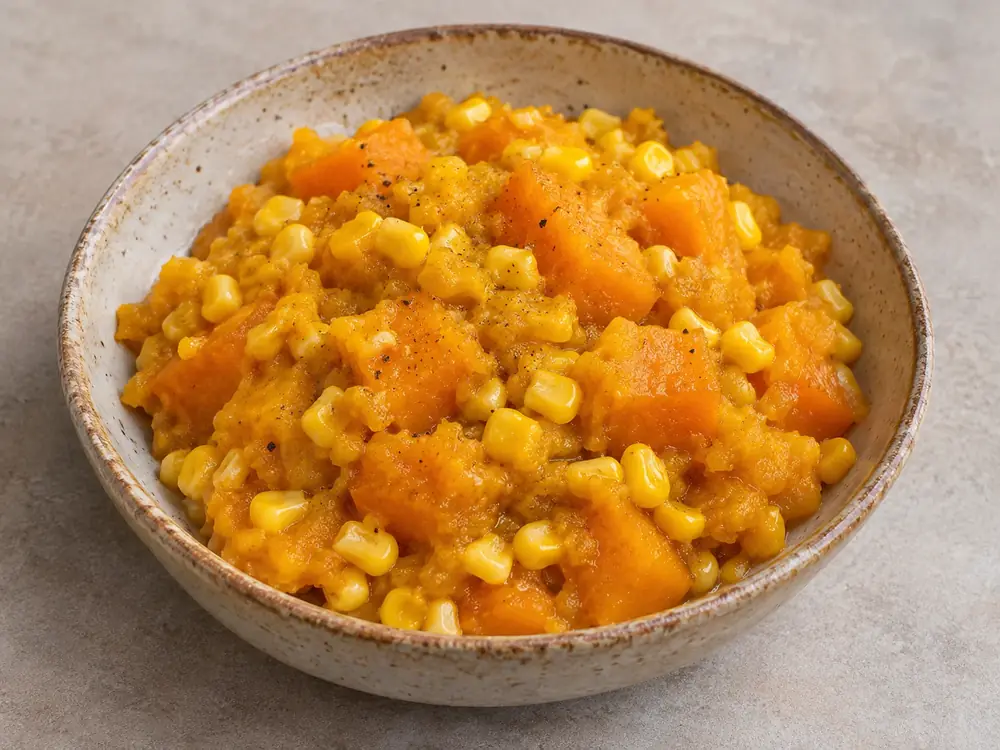
Squash and maize kernels cook gently and are partly mashed. Squash binds grains without maize flour, retaining enough rustic texture to recognise both ingredients. Butter rounds texture at the end, with restrained salt. Serve as a side or plant-based foundation with separate beans. It is not a porridge in which ground maize absorbs liquid.
Ingredients
- 700 g peeled, deseeded squash flesh
- 350 g sweetcorn kernels
- 150 ml water
- 20 g butter
- 3 g salt
- pepper
Preparation
Method at a glance — Cut squash evenly. Put in a saucepan with water, cover and cook gently 20 minutes. Add corn and cook another 10–15 minutes until tender. Mash only part of the squash to bind kernels. Fold in butter and season.
Choosing squash — Choose flesh that becomes tender while retaining some body. Butternut or another dense edible squash works. Peel, deseed, weigh usable flesh and dice evenly about 2 cm. Watery squash needs less added water or longer reduction; dry flesh may need more. Colour alone does not predict behaviour, so observe rather than follow liquid volume rigidly.
Identifying maize — Sweetcorn makes this adaptation accessible and reasonably quick. Frozen kernels must cook according to their packet; drain canned corn, which needs only heating rather than equal tenderising time. Fresh kernels vary greatly in maturity. Hard dry maize cannot enter squash with an expectation of tenderness in 15 minutes. Product type determines when corn joins the pan. Precook firm fresh kernels separately until nearly tender, then drain before assembly. This extends total time and should be recorded. Add already cooked canned kernels later and heat only as needed. The aim is to finish both together without completely dissolving squash while maize remains hard. Read the short method alongside the product explanation, not as a universal rule for all maize.
Cooking squash gently — Put cubes and measured water in a heavy saucepan. Cover and cook gently, stirring occasionally to prevent bottom pieces catching. Steam and released squash liquid assist cooking. Check with a knife around 20 minutes: cubes should be almost tender before corn. If still resistant, continue and add a little hot water if the pan dries.
Combining and binding — Add prepared corn at the appropriate stage and continue until both are tender. Mash only some squash with the spoon's back: pulp naturally binds grains while pieces remain visible. A blender is unnecessary and too uniform for this version. Stir gently without breaking everything into paste. If abundant free liquid remains, finish uncovered briefly, watching the rapidly thickening base.
Finishing moderately — Fold in butter once vegetables are cooked, then salt gradually and pepper. Butter should disperse through hot squash without a separate surface pool. Taste corn and squash together. Canned maize may already contain salt; fresh contributes little. Natural sweetness does not automatically call for sugar: this is a savoury side. A markedly sweet version is an announced adaptation, not a compulsory correction.
Observing and correcting — Excess liquid often means watery squash or a lid left on to the end. Gentle reduction is preferable to flour, which changes the dish's nature. Loosen a dry compact mixture with a little hot water and gentle stirring. If maize remains hard, precook separately next time rather than repeatedly extending until squash disappears. Record variety or packaging for consistent results.
Serving and variations — Serve hot or freshly warm with beans, leafy vegetables or meat as the menu requires, separately counted. Reduce side portions if several starches already appear. Mild oil can replace butter for a dairy-free adaptation, with different taste; it remains a variation. Taste the simple version before adding numerous spices: squash and maize themselves are central.
Storage and conclusion — Cool leftovers promptly, refrigerate and use within 48 hours. Reheat gently with a little water, stirring until hot throughout. Squash may break down more, changing appearance without requiring full blending. Freeze portions if desired, accepting softer texture after thawing. Umxhaxha remains clear when both ingredients are properly cooked and bound without excess liquid. Identifying the precise corn product is the first guide to retain. Enjoy your meal!
Introduction
Squash and maize kernels cook gently and are partly mashed. Squash binds grains without maize flour, retaining enough rustic texture to recognise both ingredients. Butter rounds texture at the end, with restrained salt. Serve as a side or plant-based foundation with separate beans. It is not a porridge in which ground maize absorbs liquid.
Four generous side portions use 700 g peeled, deseeded flesh and 350 g kernels ready for the chosen cooking. Whole squash and cobs weigh differently, an important shopping and translation detail. Final volume depends on squash moisture. Added 150 ml water starts cooking without catching but should not produce a flooded dish.
Cultural context
South African Tourism describes umxhaxha as squash and maize within the Xhosa repertoire. This recipe follows that documented family with a domestic sweetcorn adaptation, not the only traditional formula or a universally required squash variety. Firmer maize needs different organisation. These proportions, butter and cooking guides are our formulation, not attributed to a particular family or source recipe.
Planning
Serves 4; preparation 15 min; cooking 35 min.
Enjoy your meal
Enjoy your meal!