Pea and mint fritters
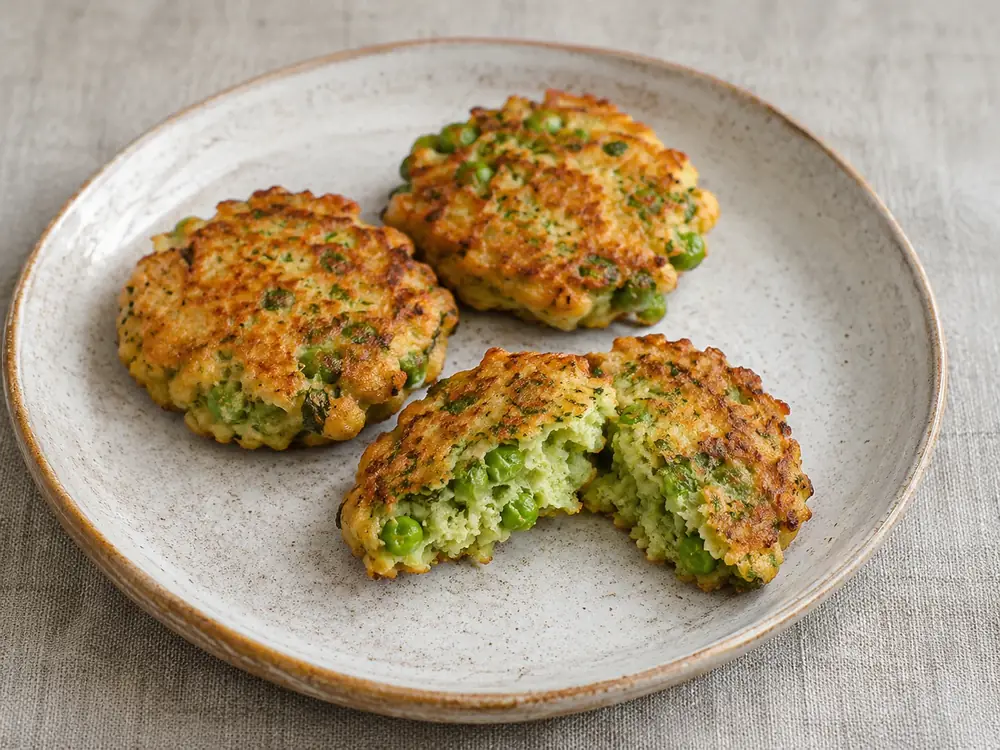
These “fritters” are thick small patties pan-cooked in measured oil, not deep-fried. Roughly mashed peas retain texture; mint is finely sliced. Batter should hold small mounds, spread slightly with heat and set in the centre. Seek a golden surface and tender crumb with distinct pea flavour. Runny batter makes flat discs that tear when turned.
Ingredients
- 300 g shelled peas
- 120 g flour
- 1 egg
- 70 ml milk
- 5 g baking powder
- 10 g usable mint leaves
- 2 g salt
- 40 ml oil
Preparation
Method at a glance — Cook peas 4 minutes, drain and roughly mash. Combine flour, baking powder, egg and milk; add peas, mint and salt. Heat oil in a large pan. Cook twelve small portions over medium heat, about 3 minutes per side, in two batches. Drain and serve hot.
Culinary context — This contemporary preparation differs from dhaltjies or chilli bites already treated in the first volume. Peas and wheat flour form the base, with mint prominent. “Fritter” describes shape and surface cooking, not exclusively South African origin. Translation must explain the small-oil pan method so readers do not inadvertently deep-fry with different results.
Choosing peas — Use fresh shelled or frozen peas, weighed without pods. Cook as packaging requires until tender and drain well. Frozen peas intended for cooking cannot simply be thawed and added raw because brief frying follows. Canned peas are an adaptation with softer texture and salt to reassess. In all cases release surface water before mashing to avoid unnecessarily thinning batter.
Preserving vegetable texture — Fork-mash or use a potato masher without making completely smooth purée. Opened peas and larger fragments give bite. A blender may be used briefly, but prolonged work makes an even paste and can warm it. Cool peas to lukewarm before egg to avoid local coagulation. Very cold peas work but may require longer centre monitoring.
Preparing mint — Wash and dry leaves, remove tough stems and slice finely. The 10 g means useful leaves, not a stem-heavy bunch. Add shortly before cooking to retain aroma. A powerful variety may need slightly less. Large amounts cannot properly compensate for old mint; fresh leaves give clearer flavour. Another herb changes the recipe and should be identified rather than retaining the mint title artificially.
Mixing batter — Combine flour, baking powder and salt. Beat egg and milk separately, then add to dry ingredients. Fold in mashed peas and mint evenly. The measured 70 ml milk is a small amount, not a large glass. Rest briefly and observe. Batter should stay on a tilted spoon before falling as a soft mass, rather than immediately pouring like liquid.
Testing one fritter — Heat part of the oil over medium heat and cook a small flattened test. If it spreads rapidly, check draining and milk measurement. If a dry ball, flatten more or add a small spoonful of milk to remaining batter. Correct gradually and record changes. A large flour addition makes heavy crumb and hides peas, even if turning becomes easier.
Cooking without burning — Let the first side set about 3 minutes, then turn with full-width spatula support. Avoid constant moving before a crust forms. Cook second side golden and check the first fritter's centre: egg and flour must not remain raw. If outside darkens quickly, reduce heat and continue gently. Divide 40 ml oil across batches; fritters are not intended to float. Remove accumulated burnt crumbs after each batch or they bitter the next. Add some reserved oil, heat briefly and resume. Transfer cooked fritters to a rack or absorbent paper without piling under a steam-trapping lid. Brief holding in a low oven is possible, but serve near completion. Preparing plates and sides during the first batch prevents later fritters cooling.
Serving and variations — Offer crunchy salad and separate lemon yoghurt or mild sauce without drowning the surface. Lemon zest can complement mint if recorded among ingredients. Chilli may be offered separately or added to part of the batter. Variations remain attached to this recipe. For buffets, keep pieces small and announce bite-size yield separately from four light-meal portions.
Storage and conclusion — Cool leftovers promptly, refrigerate and use within 48 hours. Reheat in a pan or oven until hot at the centre; extended microwaving softens surfaces more. Cooked fritters can be frozen, accepting texture changes. Do not leave raw batter at room temperature for a long wait between services. Well-drained peas, thick batter and moderate heat preserve both vegetable and mint identity. Enjoy your meal!
Introduction
These “fritters” are thick small patties pan-cooked in measured oil, not deep-fried. Roughly mashed peas retain texture; mint is finely sliced. Batter should hold small mounds, spread slightly with heat and set in the centre. Seek a golden surface and tender crumb with distinct pea flavour. Runny batter makes flat discs that tear when turned.
Cultural context
Twelve small pieces mean three per person for four light-meal or side portions. The 15-minute cooking allowance assumes successive batches. A large pan fits more but needs gaps. Giant fritters do not necessarily reduce work: they cook longer and crust may brown before the centre sets. About 1 cm thickness keeps cooking predictable.
Planning
Serves 4; preparation 20 min; cooking 15 min.
Enjoy your meal
Enjoy your meal!