Sorghum salad with grapes and cucumber
Tender but chewable sorghum, juicy grapes, crunchy cucumber and salty feta provide distinct contrasts, connected rather than drowned by lemon dressing. Fully cook and cool grains before adding raw vegetables: hot grain softens cucumber and removes grapes' freshness. This is a grain salad, not cooled porridge renamed and sliced.
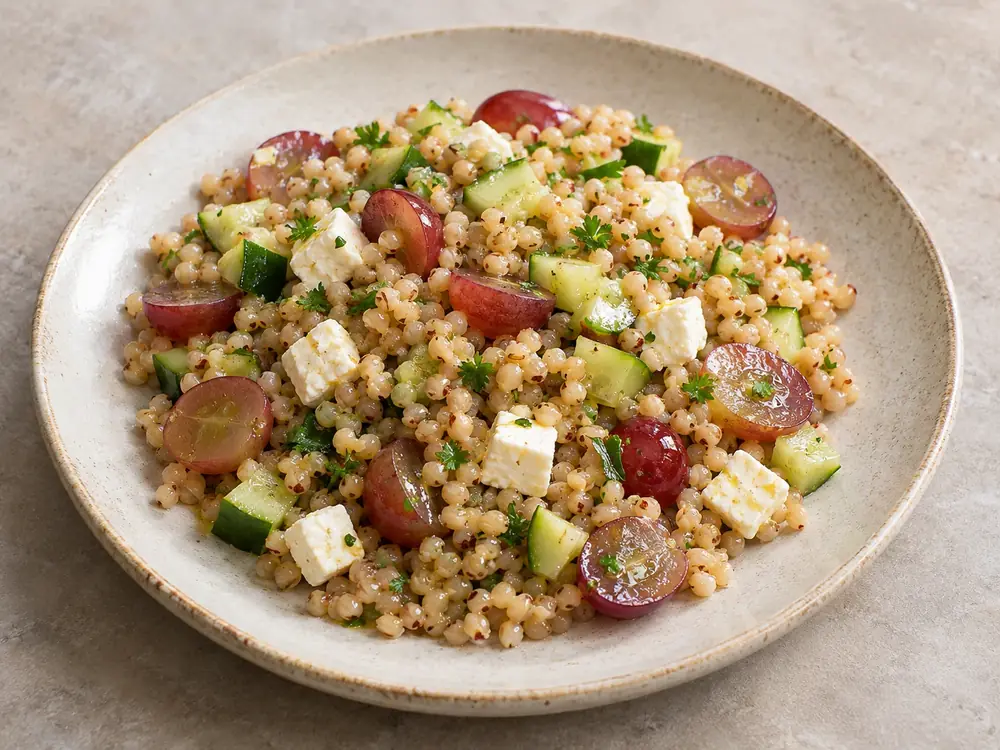
Ingredients
- 180 g dry whole sorghum
- 200 g fresh grapes
- 1 cucumber
- 80 g feta
- 25 ml oil
- 20 ml lemon juice
- 10 g parsley
- 2 g salt
Preparation
Method at a glance — Cook sorghum according to the packet, drain and spread in a dish to cool promptly. Halve grapes, dice cucumber and cube feta. Mix oil, lemon and salt. Combine ingredients, add parsley and serve chilled.
Culinary context — This contemporary combination joins a grain used in the region with fruit and cheese shared across other repertoires. It has no traditional South African name or claimed community origin. Grapes may evoke Cape produce but do not prove an old recipe. Cultural description remains restrained. Preserve fresh grapes versus raisins in translation: their sweetness and textures differ.
Cooking sorghum — Choose food-grade whole grains and read packet directions, including any soaking. The 45–60 minutes is approximate and may be exceeded. Rinse and cook in enough water to stay submerged. Taste cooled samples: centres should be tender with no hard resistance, though some outer-layer chew may remain. Flour or meal would make a compact binder, not separate grains.
Cooling properly — Drain and spread in a large shallow dish to release steam promptly. The 30-minute cooling stage is an organisational guide, not a requirement to leave the entire volume at room temperature for a long wait. Refrigerate as soon as feasible if not serving immediately. A deep, packed bowl cools more slowly. Properly chilled grain made the previous day simplifies assembly.
Preparing grapes — Wash, dry and halve, preferably choosing seedless fruit; remove troublesome seeds otherwise. Whole grapes roll on the plate and mix less well. Halves release some juice into dressing without turning this into fruit salad. Discard damaged or overly soft grapes. Very ripe ones bring more sweetness; judge lemon on a complete bite before adding more.
Preparing cucumber and feta — Wash and trim cucumber, removing large watery seeds if necessary. Dice around the size of half a grape. Keep thin skin, peel thick or bitter skin. Drain briefly if needed. Cube or roughly crumble feta without mashing so it remains identifiable. Salt varies with brand and brine; taste before adding all 2 g.
Making dressing — Mix oil, measured 20 ml lemon juice and some salt. Wash, dry and separately chop parsley. Do not pour in abundant feta brine, which changes salt and liquid volume. Taste dressing with sorghum, not alone. Grain absorbs sauce and may need a brief rest before final judgment. Salad should not sit in a pool.
Assembling gently — Put cool sorghum in a bowl, add cucumber, grapes and dressing and lift gently with two spoons. Add feta and parsley last to avoid crushing. Briefly refrigerate, then stir before serving. Heavy elements distribute unevenly unless mixing reaches the bottom. Ensure each shared portion gets fruit and cheese, not only the first plates.
Understanding defects — Hard salad first suggests undercooked sorghum; extra oil cannot soften it. Wateriness may come from poorly trimmed cucumber or wet cooked grains. Pasty texture can mean overcooking and rough stirring. Improve cooking and cooling rather than hide defects with additions. For excess salt, check feta before dressing. More unsalted grain can rebalance but changes yield.
Variations and accompaniments — Firm diced apple can replace grapes with less juiciness and different acidity. Vary herbs moderately without masking grain. These remain variations of one recipe. Serve with fish, poultry or a plant-based preparation. Replacing feta for an entirely plant-based meal needs an adapted composition and title, not a claim of nutritional identity. Sorghum continues to organise texture.
Storage and conclusion — Refrigerate and preferably eat the same day, no later than 24 hours after assembly to preserve raw vegetables. For flexible advance work, refrigerate grain, dressing and toppings separately and combine before eating. Freezing assembled salad is unsuitable for texture. Tender cooled grain, halved grapes and less watery cucumber produce freshness without excess dressing, with measured cheese connecting flavours. Enjoy your meal!
Introduction
Tender but chewable sorghum, juicy grapes, crunchy cucumber and salty feta provide distinct contrasts, connected rather than drowned by lemon dressing. Fully cook and cool grains before adding raw vegetables: hot grain softens cucumber and removes grapes' freshness. This is a grain salad, not cooled porridge renamed and sliced.
Cultural context
The 180 g is dry sorghum shared into four portions; 200 g grapes means washed, detached fruit. Feta is 80 g total or 20 g each, enough for flavour without a large cheese serving. State whether salad is a light meal or side so bread, meat or other dishes are decided separately.
Planning
Serves 4; preparation 20 min; cooking 45–60 min; cooling 30 min.
Enjoy your meal
Enjoy your meal!