Chilled cucumber and amasi soup
Cucumber, amasi, yoghurt and mint make an uncooked soup that should remain fresh, light and even, with restrained acidity. Cucumber supplies most water, yoghurt slight thickness and amasi fermented flavour. This is neither foam nor dense sauce. Judge dairy acidity before dosing lemon. An hour's refrigeration unites flavours and improves serving temperature compared with immediately pouring after blending.
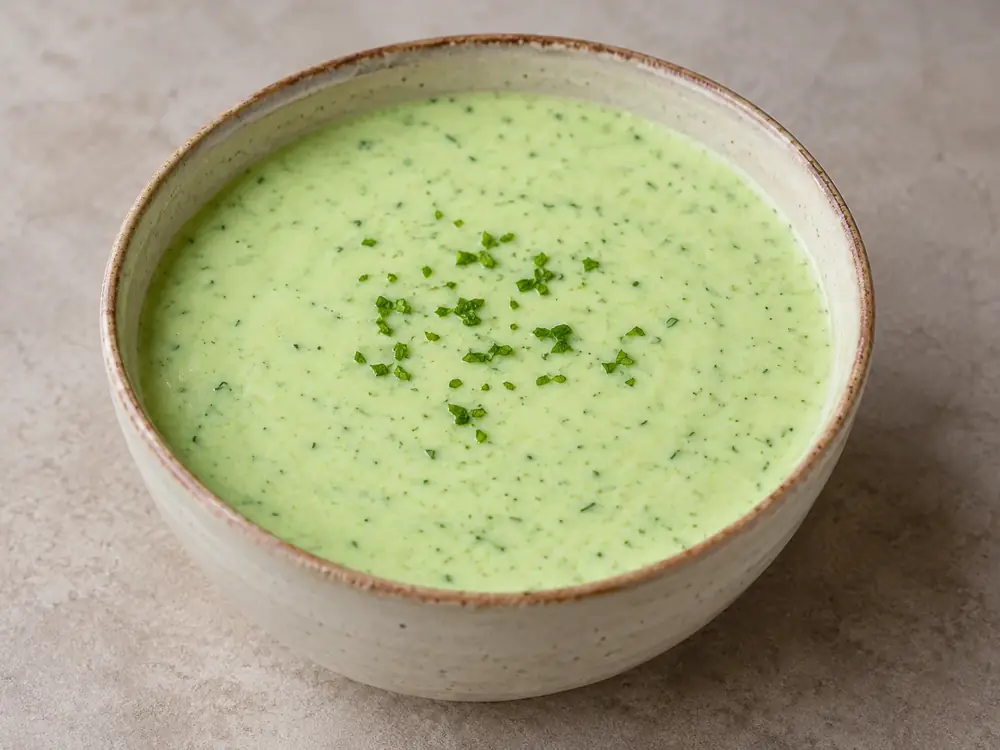
Ingredients
- 2 cucumbers, approximately 700 g before trimming
- 400 ml pasteurised amasi
- 100 g plain yoghurt
- 1 lemon
- 10 g mint
- 2 g salt
- pepper
Preparation
Method at a glance — Peel thick-skinned cucumbers and remove large seeds. Blend with amasi, yoghurt, 15 ml lemon juice, half the mint and salt. Refrigerate 1 hour. Stir, adjust pepper and serve well chilled with remaining chopped mint.
Documentary context — Amasi, sometimes called maas, is fermented milk eaten in southern Africa. Rediscover Dairy describes commercial manufacture from pasteurised milk and culinary uses. This concerns the product, not proof that cucumber soup belongs to a specific local tradition. The combination is contemporary without invented heritage name. Retain amasi with an explanation, not silently substitute ordinary yoghurt or fresh milk acidified with lemon.
Choosing dairy — Use plain pasteurised amasi and unsweetened plain yoghurt, refrigerated until preparation. Stir amasi before measuring to even out separation. Fairly thick yoghurt stabilises soup. Pasteurised cultured buttermilk can substitute with different texture and taste. Do not make this by uncontrolled raw-milk fermentation. It is cold assembly with ready-to-eat products, not a fermentation method.
Preparing cucumber — Wash carefully and trim ends. Peel thick or bitter skin; some thin skin may remain for green colour. Halve lengthways and remove large watery seeds. Cut usable flesh into blender-friendly pieces. Trimming controls water better than correcting dilution with excessive yoghurt. Taste a small piece first for bitterness that could dominate everything.
Preparing mint — Wash and dry leaves thoroughly and remove tough stems that leave fibres. Blend roughly half and reserve half for service, combining integrated flavour with a fresher finish. Abundant mint blended too long can dull colour and make flavour strongly grassy. The 10 g is a guide: note any slight adjustment for an unusually powerful variety.
Blending without extra water — Place cucumber, amasi, yoghurt, half mint and some salt in the blender. Add part of the lemon juice first and blend evenly. Cucumber already releases plenty of liquid; no initial water is needed. If the machine struggles, scrape sides and pulse instead of adding a large glass. Soup should retain more body than a diluted drink.
Adjusting before chilling — Taste and increase lemon towards 15 ml if balance calls for it. Salt gradually and add a little pepper. Do not settle seasoning definitively before chilling, since temperature alters flavour perception. Cover in a clean container and refrigerate 1 hour. Resting is not deliberate further fermentation; keep cold and respect product dates and storage conditions.
Checking after rest — Stir before serving as water may separate slightly. Loosen overly thick soup with a little amasi or cultured milk used as an adaptation, not abundant water. Thick yoghurt may help thin soup, with changed yield and proportions recorded. Straining removes large skin fragments with some solids loss. Better cucumber selection and trimming remain the first adjustment.
Simple presentation — Divide into four preferably chilled bowls. Chop reserved mint at the last moment and distribute, optionally adding fresh pepper. Serve bread or small toasts separately without soaking them in advance. Ice cubes are unnecessary and progressively dilute texture. For buffet glasses, announce smaller starter portions and keep reserves refrigerated until serving.
Variations and limits — Chives can replace some mint; lime gives another citrus note and needs the same gradual tasting. These are adaptations, not additional recipes. Plant yoghurt and fermented plant drink do not automatically reproduce amasi's flavour, texture or context; reformulation needs an appropriate title. Culinary acidity and texture explain its value without therapeutic claims.
Storage and conclusion — Prefer preparation on the meal day with continuous refrigeration. Use within 24 hours to preserve cucumber and herb freshness. Freezing is poorly suited because raw vegetables and dairy may separate considerably after thawing. Do not return soup left lukewarm on a buffet for a long time to the reserve. Cold ingredients, controlled cucumber water and gradual lemon give a simple starter that preserves amasi's fermented taste. Enjoy your meal!
Introduction
Cucumber, amasi, yoghurt and mint make an uncooked soup that should remain fresh, light and even, with restrained acidity. Cucumber supplies most water, yoghurt slight thickness and amasi fermented flavour. This is neither foam nor dense sauce. Judge dairy acidity before dosing lemon. An hour's refrigeration unites flavours and improves serving temperature compared with immediately pouring after blending.
Cultural context
Four portions are starters, not automatically complete meals. They can precede cereals, toasts or hot food. Two cucumbers mean around 700 g before optional peeling and deseeding. Record actual usable flesh on the first attempt. Very large watery vegetables produce different final volume from firm ones despite an identical count.
Planning
Serves 4; preparation 15 min; chilling 1 h; no cooking.
Enjoy your meal
Enjoy your meal!