Creamy cauliflower soup with toasted seeds
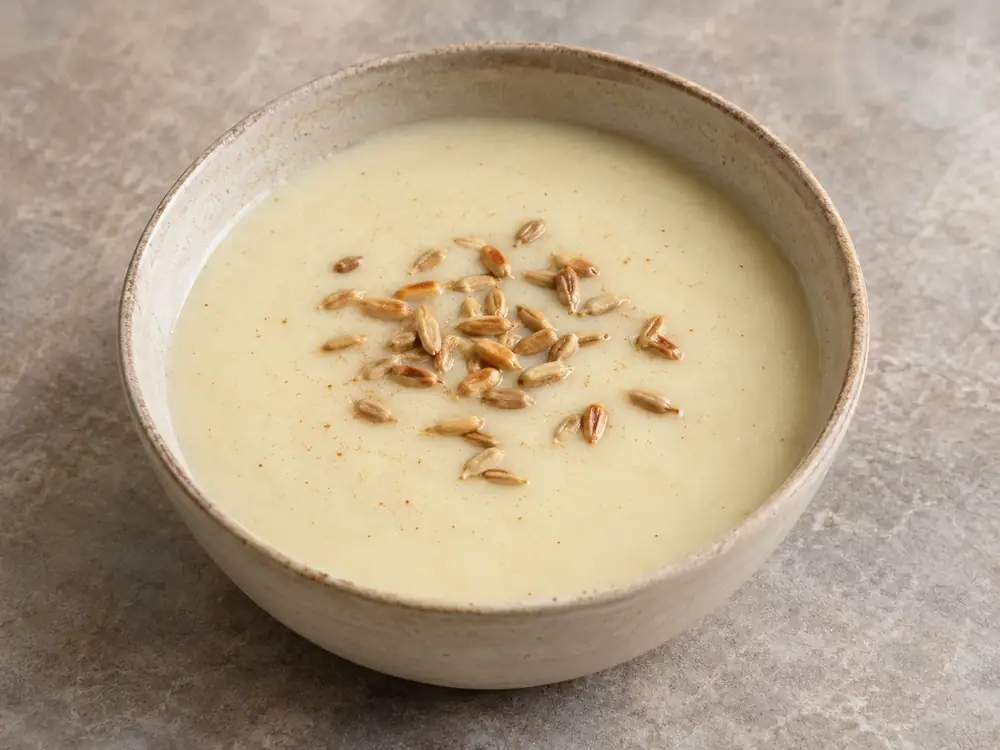
Cooked cauliflower blended with a little milk supplies creaminess without much cream. Separately toasted sunflower seeds keep their crunch when added at serving. Onion gives a gentle foundation and nutmeg a subtle note. Aim for a smooth, easily poured soup: excessive thickness or nutmeg hides the principal ingredient.
Ingredients
- 800 g trimmed cauliflower
- 1 onion
- 700 ml water
- 150 ml milk
- 20 g butter
- 30 g shelled sunflower seeds
- 3 g salt
- nutmeg
Preparation
Method at a glance — Soften onion in butter 5 minutes. Add florets, water and salt; cook 20 minutes. Add milk and blend. Season with a small pinch of nutmeg. Dry-toast seeds about 3 minutes, stirring, and divide over bowls at service.
Culinary context — This is contemporary family cooking. Cauliflower soups occur widely and this formula is not claimed as a historical South African speciality. Its clearly described texture and seed finish distinguish it in the collection. A brief accurate note is preferable to an undocumented community, date or local origin. Preserve that restraint in translation.
Choosing cauliflower — Select firm cauliflower without widespread browning or abnormal smell. Trim damage, separate florets and rinse debris away. Tender stalk can be used after removing tough exterior and dicing finely because it cooks more slowly. Fibrous leaves are not included: although usable elsewhere, unselected additions change colour and smoothness.
Preparing an even base — Slice onion and gently soften in butter about 5 minutes until translucent, not brown. Strong colour darkens soup and changes its intended mildness. Add cauliflower, water and some salt; simmer, partly covered. Liquid may seem insufficient before pieces settle: wait and observe rather than immediately adding large quantities.
Cooking without excess — After about 20 minutes, check thick pieces with a knife. Vigorous boiling is unnecessary. Stir occasionally to bring upper florets into contact with liquid. Once easily mashed, blend. Prolonged cooking beyond tenderness can strengthen sulphurous odours and reduce fresh flavour. The thickest piece's tenderness matters more than the timer.
Blending with milk — Remove from heat and add milk. Blend in short bursts with the head submerged until smooth. Late milk rounds texture without enduring the full simmer. Follow jug blender instructions for hot liquids and never abruptly seal a steam-filled container. A stable pan and immersion blender simplify the task. Check flow with a ladle before adding hot water. Soup should pour continuously, not as a heavy mass. If thick, add hot water and retaste. If thin, gently reduce uncovered without raw flour. Creaminess need not mean purée-like density: fine blending and full cooking matter more than extra butter. Adjust salt after volume correction so seasoning does not become concentrated unnecessarily.
Measuring nutmeg — Grate or add a very small pinch, stir and taste. Aroma spreads quickly; a large spoon of powder dominates. “Pinch” is deliberately qualitative, but for repeated large-scale cooking, weigh the successful test dose. Cinnamon, curry or other spices are unnecessary in this base; such flavour changes should be declared adaptations.
Toasting seeds — Choose unsalted shelled sunflower seeds. Stir in a dry pan over medium heat 2–3 minutes until lightly coloured and fragrant. Immediately transfer to a bowl because residual pan heat continues browning. Watch continuously: small seeds quickly go from golden to burnt. No extra oil is necessary. Already toasted salted seeds need gentler heating and their salt counted.
Serving and variations — Divide hot soup among four bowls and add seeds just before serving, not to the saucepan where they soften. Chive is an optional adaptation. Plain plant milk changes flavour and composition; avoid sweetened or vanilla products. Bread or pulse salad can complete the meal. Seeds provide contrasting texture, not the equivalent of a meat portion.
Planning and storage — Cook base the previous day if useful, cool promptly and refrigerate. Keep seeds separately dry until service. Reheat stirring until thoroughly hot, adjusting water if thickened. Use within 48 hours or freeze portions. After thawing, gentle mixing or brief blending can reunite separation without repeated fat additions. Reheat only what is needed.
Conclusion — Cauliflower benefits from attentive cooking rather than automatic prolonged boiling. Uniform pieces, smooth blending and restrained nutmeg preserve its character. Last-minute toasted seeds give clear contrast. Recording net vegetable weight, actual water and equipment-specific time helps reproduce texture. Serve simply with seeds shared across all four portions. Enjoy your meal!
Introduction
Cooked cauliflower blended with a little milk supplies creaminess without much cream. Separately toasted sunflower seeds keep their crunch when added at serving. Onion gives a gentle foundation and nutmeg a subtle note. Aim for a smooth, easily poured soup: excessive thickness or nutmeg hides the principal ingredient.
Cultural context
The 800 g is usable florets and optionally tender stalk. Purchase whole weight will be higher when leaves and base are discarded. Quantities make four portions: smaller before a rich main, or with separately prepared sides for a light meal. Divide the measured 30 g seeds fairly rather than treating them as unlimited topping.
Planning
Serves 4; preparation 15 min; cooking 30 min.
Enjoy your meal
Enjoy your meal!