Mussels in tomato and fennel broth
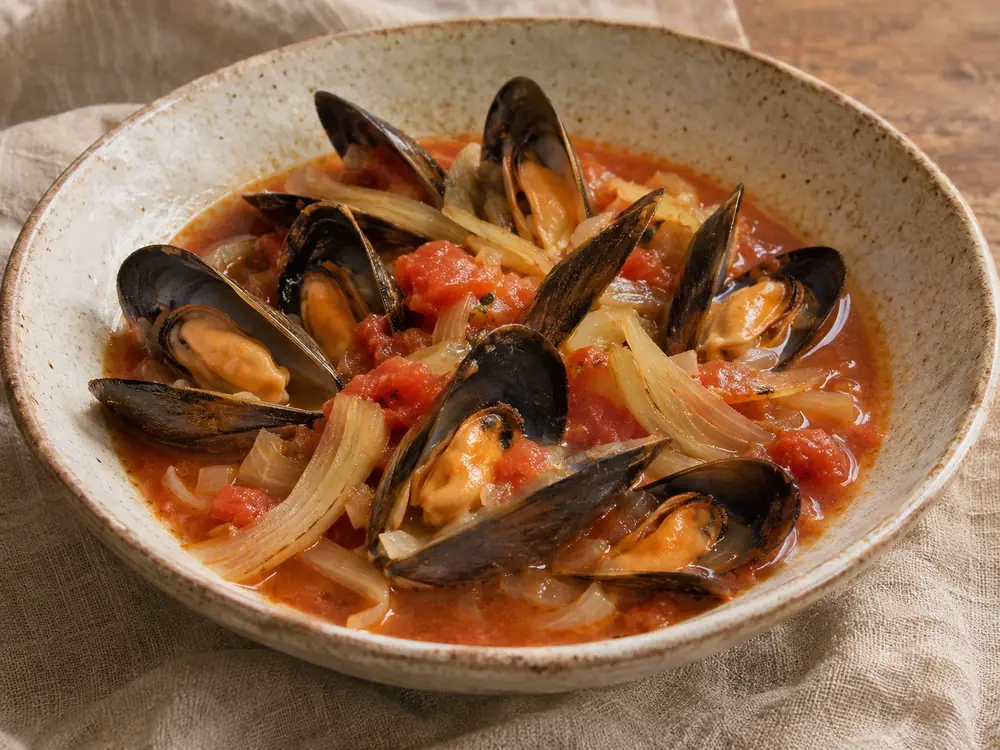
Mussels open in tomato, onion and fennel, enriching a fragrant broth. This differs from the first manuscript's curry mussels: fennel and tomato are the aromatic guides. Flesh should cook without drying and sauce remain fluid for bread. Salt is deliberately cautious because mussels release naturally salty liquid, so seasoning cannot be settled before adding them.
Ingredients
- 1.5 kg fresh live mussels in shells
- 1 fennel bulb
- 1 onion
- 400 g chopped tomatoes
- 200 ml water
- 20 ml oil
- 1 garlic clove
- 1 g salt
- pepper
Preparation
Method at a glance — Sort and clean mussels, discarding broken shells and open ones that do not close when gently tapped. Soften sliced onion and fennel in oil 8 minutes. Add garlic, tomatoes and water; simmer 8 minutes. Add mussels, cover and cook 4–6 minutes, shaking. Discard those still closed and adjust seasoning.
Culinary context and purchasing — This is a contemporary coastal creation without historical attribution. Choose an identifiable commercial source and follow supplier storage directions. Local purchase alone does not prove sustainability: species, area and production method matter. WWF SASSI is a possible purchasing guide in South Africa. The recipe does not involve wild gathering or deciding yourself whether harvesting waters are open and monitored.
Sorting before cooking — Refrigerate as packaging directs and prepare promptly. Discard broken shells. Gently tap live mussels remaining open; discard those that fail to close. This concerns fresh live products, not cooked or frozen mussels in the same way. Clean shells and remove beards following supplier advice without prolonged soaking in fresh water. Organise work to move directly from cleaning to cooking. Strong sauce cannot correct abnormal smell or doubtful storage, and visual sorting cannot replace a reliable supply chain. Keeping the batch label until service is useful for group meals. Precooked shucked mussels need another reheating method; do not automatically apply the stated opening time or call the substitution identical.
Preparing vegetables — Trim hard fennel parts and thinly slice the bulb. Thick layers cook more slowly, so regular slicing helps tenderness. Slice onion, chop garlic and prepare tomatoes. Washed, dried fennel fronds may be an optional finish. Discard a very hard core rather than leaving a large piece in spoonable sauce or broth for bread.
Cooking the base separately — Heat oil in a large lidded casserole. Soften onion and fennel about 8 minutes, stirring. Add garlic without burning, then tomatoes and water. Simmer until fennel is sufficiently tender. The 8-minute sauce stage is guidance: prolong before adding mussels if slices remain firm. Their short cooking must not finish raw vegetables; separating stages protects shellfish texture.
Opening mussels — Add cleaned mussels to the thoroughly hot base, cover and use sufficient heat to make steam. Shake the closed casserole or stir with a large spoon after a few minutes to distribute heat. Shells need room to open; do not pack a small pan to the rim. Double quantities require batches or a much larger casserole. Check after 4 minutes and continue until shells open and flesh cooks, without unnecessarily prolonging already-ready pieces.
Checking and seasoning — Discard mussels still closed after cooking, the practical criterion retained in Food Standards Agency shellfish guidance. Taste broth before adding salt; the stated gram may be unnecessary. Pepper moderately. If liquid is excessive, temporarily remove cooked mussels, reduce sauce alone and return them briefly. Long boiling to concentrate broth toughens flesh.
Serving neatly — Share mussels and vegetables between four deep plates, then broth. Check for shell fragments in sauce at the pan's bottom. Serve plain bread separately, a broth spoon and a shell bowl. Chop reserved fronds at the last moment rather than using bulky raw bunches that obstruct eating. Serve immediately while flesh and broth retain their just-cooked texture.
Variations and planning — Offer chilli separately. Lemon can supplement service if needed, though tomato already adds acidity. Wine sauce changes this water-based version's ingredients and profile. Prepare vegetable base the previous day if useful, cool promptly and refrigerate. Prepare mussels at the last moment and thoroughly reheat sauce before adding, avoiding prolonged time in a lukewarm base.
Leftovers and conclusion — Prefer cooking the quantity required. Cool any leftovers promptly, remove shells and refrigerate flesh with a little broth for use the next day. Reheat the required portion thoroughly once only. Do not leave the serving dish lukewarm for a long time before deciding to store it. Reliable sourcing, careful sorting, tender fennel and brief but complete final cooking bring success. Enjoy your meal!
Introduction
Mussels open in tomato, onion and fennel, enriching a fragrant broth. This differs from the first manuscript's curry mussels: fennel and tomato are the aromatic guides. Flesh should cook without drying and sauce remain fluid for bread. Salt is deliberately cautious because mussels release naturally salty liquid, so seasoning cannot be settled before adding them.
Cultural context
The 1.5 kg is shell-on weight, not shucked flesh. Four portions suit a dish with bread or smaller plates within a larger menu. Yield varies with shellfish size and discarded pieces. Buy according to the dish's role rather than promising identical flesh weight every batch. Provide a container for empty shells.
Planning
Serves 4; preparation 20 min; cooking 20 min.
Enjoy your meal
Enjoy your meal!