Butternut soup with honeybush
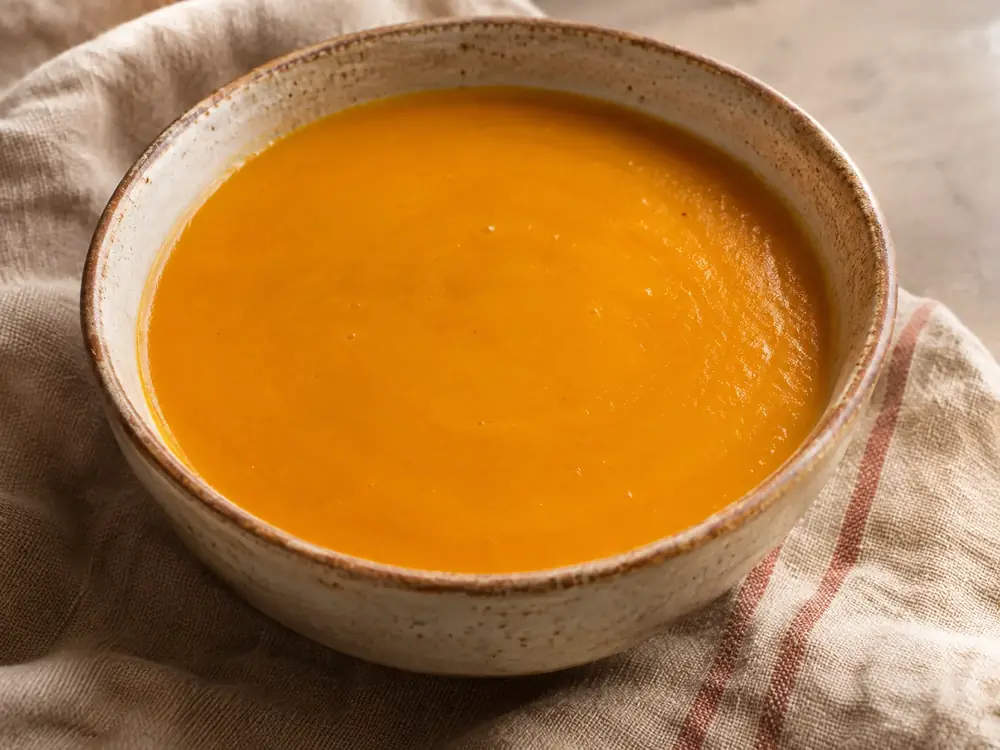
Butternut cooks in honeybush infusion before a coconut milk finish. Honeybush supplies a subtle aromatic note and ginger gentle warmth. Squash remains foremost: this is neither sweetened tea turned into soup nor a heavily spiced curry. Smooth, fluid texture lets all three elements appear without masking one another. Brew and strain separately to exclude hard plant particles.
Ingredients
- 800 g peeled, deseeded butternut flesh
- 1 onion
- 700 ml brewed, strained honeybush
- 100 ml coconut milk
- 15 ml oil
- 5 g fresh ginger
- 3 g salt
Preparation
Method at a glance — Sweat onion in oil for 5 minutes. Add diced squash and grated ginger, stirring 2 minutes. Add honeybush infusion and salt. Simmer gently for 25 minutes until tender. Add coconut milk and blend smoothly. Reheat gently, adjusting with a little water if necessary.
Documentary context — Honeybush is an infusion from plants of the Cyclopia genus; South African industry bodies describe several species and beverage uses. This identifies the ingredient, not a documented traditional honeybush butternut soup. The combination is contemporary. Honeybush and rooibos are distinct: do not exchange their names in translation, even though both infusions can be used in cooking.
Preparing honeybush — Choose a plain food product, loose or bagged, from an identifiable commercial supplier. The recipe does not call for wild harvesting or identifying plants yourself. Brew according to the packet and measure 700 ml strained infusion. Start at moderate strength so squash remains recognisable. Vanilla- or fruit-flavoured blends change the result and should be identified if used instead. If the bag or filter retains water, top up after brewing to the stated volume; initial water alone is not the measure. Hot infusion speeds the return to simmering. It can also be prepared ahead, cooled and refrigerated. Do not boil leaves with vegetables for a long time to extract extra flavour: strength becomes harder to control and particles complicate blending.
Cutting squash — Use a stable board and suitable knife, removing skin and seeds. If the skin resists, work in sections rather than forcing a rolling fruit. Weigh usable flesh and cut evenly into about 2 cm cubes for uniform cooking. Reserve seeds only for another preparation if desired; neither seeds nor cavity fibres belong in the stated flesh weight or soup.
Starting cooking — Slice onion and finely grate peeled ginger. Sweat onion in oil over medium heat for 5 minutes without strong browning. Add squash and ginger, stirring 2 minutes to distribute aroma. Pour infusion, add some salt and simmer gently. Part-cover to limit evaporation while observing liquid. The 25 minutes is indicative: cubes must mash easily with a spoon before blending. Firm squash remains grainy despite a cooked-looking exterior.
Blending and finishing — Remove from heat, add coconut milk and blend smooth. Shake the can or mix separated fat and liquid first so the measured 100 ml is homogeneous. Keep blender submerged and use short bursts. Reheat gently without prolonged reduction. Add hot water if too thick, or briefly simmer uncovered if genuinely too thin. Taste before using all salt.
Adjusting aromas — Honeybush should remain a nuance, not a dominant unidentified flavour. For overstrong infusion, a little water and extra cooked squash can rebalance, but record the changed yield. More salt cannot remove excessive ginger. Next time slightly reduce its weight while keeping cube size: 5 g is a moderate guide, but rhizome strength and freshness vary.
Variations and serving — Another dense-fleshed squash can replace butternut, with water adjusted to moisture; watery squash may need less initial liquid. Dairy cream may replace coconut milk, changing flavour and allergens. Serve a separately prepared crunchy garnish such as toasted seeds without multiplying sweet finishes. Add garnish quantities to the shopping list if chosen.
Organising for more diners — For eight, double ingredients, use a wider saucepan and allow longer to regain simmering. Do not automatically double cooking: tenderness remains the test. Blend in batches if necessary without overloading. Follow a jug blender's hot-liquid instructions; do not trap steam abruptly under a sealed lid. An immersion blender in a stable pan often simplifies home preparation.
Storage and conclusion — Cool promptly for storage, refrigerate and use within 48 hours, or freeze portions. Stir during reheating because coconut milk may separate slightly. Separation alone does not assess freshness; storage conditions determine quality. Heat only the required amount until thoroughly hot. Tender squash, measured plain infusion and restrained coconut milk bring balance. Enjoy your meal!
Introduction
Butternut cooks in honeybush infusion before a coconut milk finish. Honeybush supplies a subtle aromatic note and ginger gentle warmth. Squash remains foremost: this is neither sweetened tea turned into soup nor a heavily spiced curry. Smooth, fluid texture lets all three elements appear without masking one another. Brew and strain separately to exclude hard plant particles.
Cultural context
The 800 g means peeled, deseeded flesh, so buy a heavier whole squash. Final volume makes four portions adjusted to the menu: small starters before several dishes, or meal bowls with bread and a separate pulse dish. Measure 100 ml coconut milk, not automatically a whole can, which would change balance and consistency.
Planning
Serves 4; preparation 15 min; cooking 35 min.
Enjoy your meal
Enjoy your meal!