Split pea ertjiesop
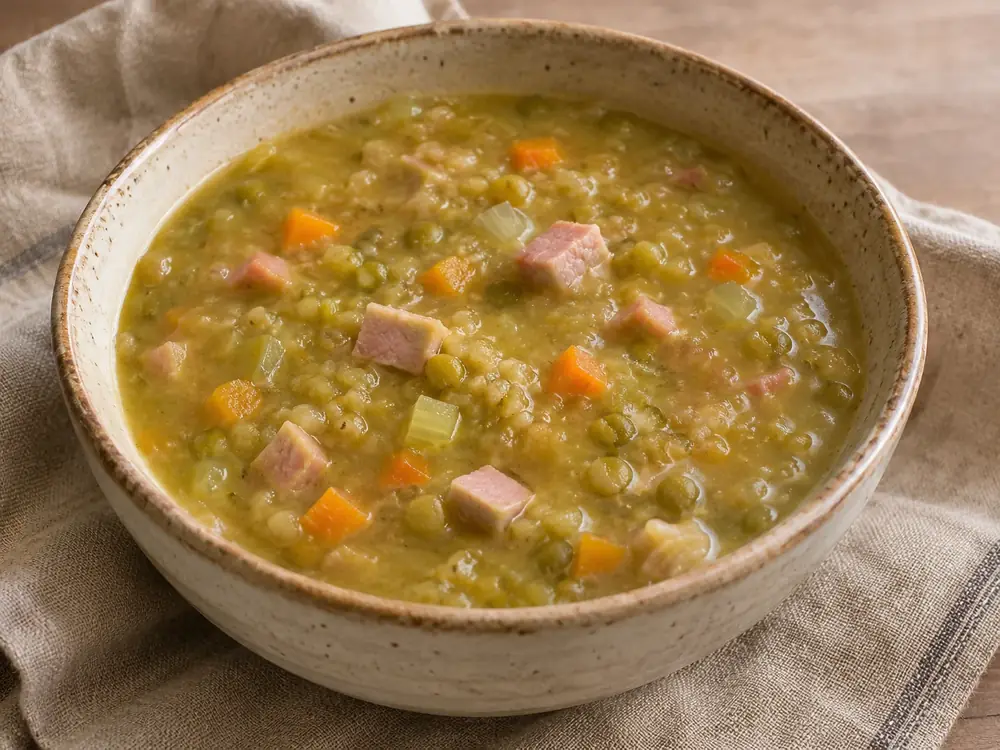
This ertjiesop is a thick split pea, vegetable and cooked ham soup. Peas gradually collapse while simmering, thickening without flour. Carrot gives mild sweetness, celery vegetable aroma and ham spoon-sized pieces. Smooth or rustic, it should not become an immobile paste. Hot water at the end adjusts this without changing pea quantity.
Ingredients
- 300 g split peas
- 1 onion
- 2 carrots
- 1 celery stalk
- 150 g cooked ham
- 1.5 litres water
- 15 ml oil
- 1 bay leaf
- 3 g salt
- pepper
Preparation
Method at a glance — Rinse peas. Fry diced onion, carrots and celery in oil for 8 minutes. Add peas, water and bay. Simmer 60 minutes, stirring and adding water as needed. Remove bay, blend partly, add diced ham and cook another 5 minutes. Adjust seasoning.
Culinary context — Afrikaans recipe collections use ertjiesop for pea soups with various vegetable or meat garnishes. This manuscript chooses already cooked ham, separating long pea cooking from preparation of a smoked hock. It is not the only formula bearing the name. A repertoire term does not attribute these proportions to an identified family or establish an undocumented date of origin.
Choosing split peas — Use dry green or yellow split peas, one colour per batch for uniformity. Colour and flavour vary slightly, but the method remains simmering until breakdown. Remove debris and rinse in a fine sieve. Soaking is generally unnecessary, though follow differing packet instructions. Fresh green peas are not a direct replacement: they make a greener, lighter soup with different timing and thickening. Old peas can take well over an hour. Purchase age and storage affect cooking despite a normal appearance. Crush a cooled sample against the palate or with a spoon; there should be no hard, floury centre. Tomato or acidic vinegar is not part of the initial cooking: it changes flavour and can complicate tenderness control.
Preparing vegetables and ham — Dice onion, carrots and celery evenly and small, distributing them through bowls and retaining rustic texture if minimally blended. Remove coarse celery strings and wash the base carefully. Weigh ham ready to eat, without bone or tough rind. Dice small enough for a spoon. Smoked or very salty ham gives stronger character and requires less added salt after tasting.
Starting without browning — Heat oil in a heavy saucepan of at least 3 litres. Sweat vegetables over medium heat about 8 minutes, stirring, until fragrant and softened without dark colour. Add rinsed peas, bay and water and bring to a simmer. Too small a pan risks overflow when peas foam. Skim initially if needed, leaving the lid slightly ajar for gentle, observable cooking.
Attending the simmer — Cook gently about an hour, stirring increasingly often as it thickens and reaching the bottom corners. Peas can settle and catch while the surface remains liquid. Keep hot water nearby and add small amounts if the level drops. Vigorous boiling chiefly increases evaporation and splashes, not useful tenderising speed. The time is a monitoring guide, not permission to leave unattended. If the base catches without burnt flavour, lower heat and stir gently. If it smells burnt, transfer the upper soup to a clean pan without scraping the stuck layer, then taste. Mixing that layer through spreads bitterness. Next time use a heavier pan, more starting water or gentler heat. Cream cannot truly repair burning and is not included here.
Choosing final texture — Remove bay before blending. For texture, blend only part or use short pulses; peas can also be mashed with a spoon. Small carrot cubes remain visible. Add ham and heat 5 minutes to combine flavours. Taste, salt gradually and pepper. Ham chiefly determines salt requirements, so wait until now rather than heavily salting the initial water.
Variations and accompaniments — For a pork-free adaptation, use cooked poultry ham or omit meat and offer a separate garnish. Taste again if using a salty plant-based substitute. These are variations of the same recipe. Serve plain bread or separately toasted seeds; a creamy side is unnecessary for an already thick soup. Before a main course, reduce serving size rather than diluting until pea flavour disappears.
Storage and conclusion — Cool leftovers promptly in shallow containers, refrigerate and use within 48 hours. Stir while reheating until hot throughout, adding water to restore soup consistency. Properly cooled soup freezes well in portions. Date labels and avoid reheating the whole pot repeatedly. Gentle cooking gives thoroughly tender peas, soft vegetables and ham added near the end: a simple, consistent bowl. Enjoy your meal!
Introduction
This ertjiesop is a thick split pea, vegetable and cooked ham soup. Peas gradually collapse while simmering, thickening without flour. Carrot gives mild sweetness, celery vegetable aroma and ham spoon-sized pieces. Smooth or rustic, it should not become an immobile paste. Hot water at the end adjusts this without changing pea quantity.
Cultural context
The 300 g peas and 1.5 litres water provide six soup portions, with volume depending on evaporation. Add bread and perhaps salad for a main meal, outside the basic yield. Before several courses, use smaller bowls and announce more small servings without claiming increased total quantity. Pulse-rich soup keeps thickening off the heat; its appearance at the end of simmering is not final.
Planning
Serves 6; preparation 15 min; cooking 70 min.
Enjoy your meal
Enjoy your meal!