Lemon and celery sardine toasts
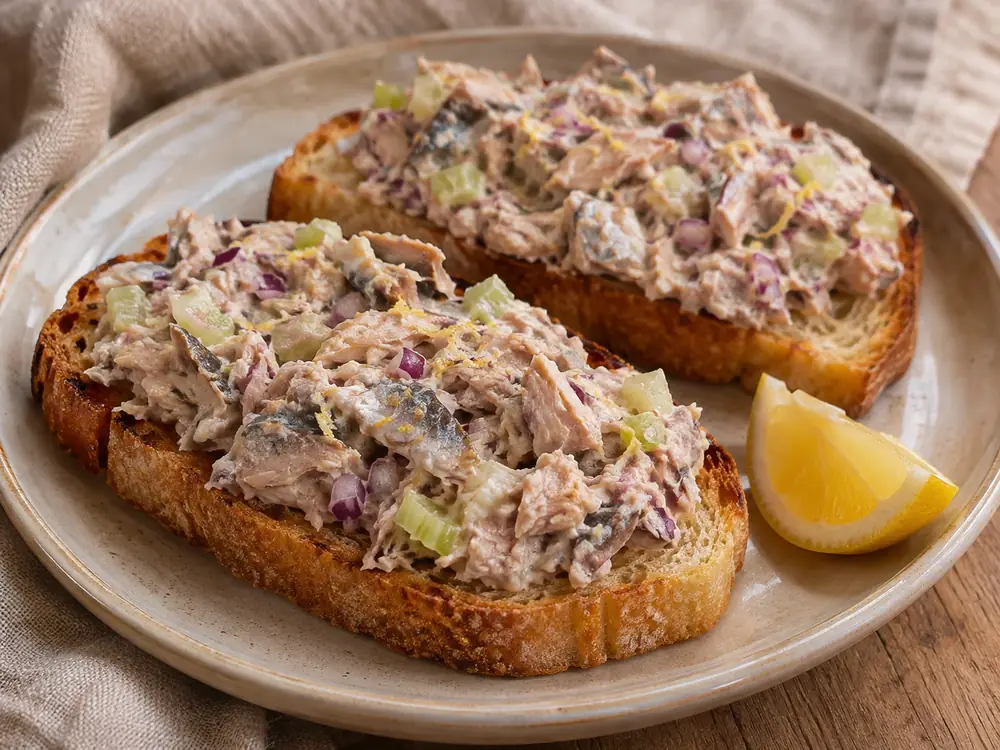
Ready-to-eat canned sardines are simply mashed with yoghurt, lemon, celery and red onion. Keep the mixture coarse enough for fish to remain identifiable. Toast bread separately and top at the last moment. Aim for crisp bread, soft fish and small crunchy celery pieces. This is neither whipped mousse nor baked pâté, but a direct preparation depending chiefly on draining and fine cutting.
Ingredients
- 8 slices bread
- 240 g canned sardines, drained weight
- 1 celery stalk
- 80 g plain yoghurt
- 1 lemon
- 1 small red onion
- up to 1 g salt
- pepper
Preparation
Method at a glance — Roughly mash sardines with yoghurt, 15 ml lemon juice and a little zest. Fold in very finely diced celery and onion. Add pepper and adjust salt after tasting. Toast bread for 3–5 minutes, then distribute topping. Add a little lemon at serving.
Culinary context — This contemporary creation offers a quick, economical meal. Canned fish has many domestic uses, but that alone does not give these toasts an exclusively South African origin. They are explicitly a new assembly for the collection, distinct from the first volume's snoek pâté, which uses another product and preparation. Translations must distinguish canned sardines, smoked fish and fresh fish to keep instructions coherent.
Choosing cans — Sardines in oil or water both work, with different results. Oil-packed fish needs more thorough draining to avoid excessive fat; water-packed lets yoghurt and lemon show more clearly. Tomato- or chilli-flavoured cans change the dish and seasoning. Check packaging integrity and follow manufacturer instructions. An opened tin should not sit at room temperature throughout preparation of an entire buffet. Examine drained fish. Softened small bones in some cans may be edible, but remove according to desired texture and diners. Remove any other parts that impede chewing without turning fish into perfectly smooth purée. Work with a fork in a broad bowl. Keep yoghurt refrigerated until mixing; choose plain unsweetened yoghurt thick enough to bind without running.
Preparing celery and onion — Wash celery, strip pronounced strings if needed and dice very finely. Thick pieces dominate bites and make toast awkward to cut. Finely slice red onion too. If very pungent, rinse briefly in cold water and drain thoroughly; do not add that water. Celery provides fresh crunch and should accompany rather than replace fish flavour. A very large stalk need not be used whole if proportions become unbalanced.
Measuring lemon — Wash and dry lemon before taking a little zest, avoiding bitter white pith. Start with the measured 15 ml juice and taste. Yoghurt and lemon acidity combine; a very sharp fruit may call for less. Reserve remaining lemon for wedges or drops at service. A whole fruit on the ingredient list does not require using all its juice.
Making the topping — Mash sardines with yoghurt, measured juice and zest. Fold in celery and onion without prolonged beating. Pepper, then taste before salting: canned sardine salt varies. The stated gram is an initial maximum to adjust, not an automatic dose. Topping should spread while retaining pieces. If runny, check draining first; adding bread or flour to the bowl does not properly correct it.
Choosing and toasting bread — Use fairly close-textured slices able to support topping. Wholemeal, country bread or thick sandwich bread can suit. Toast both faces and let steam escape briefly on a rack. Very hot bread beneath cold topping softens quickly; a short rest reduces this. Aim for crisp, unburnt surfaces, as blackened bread bitterness masks fish easily.
Plating and serving — Distribute topping across eight slices to the edges without a central mound. Halve if easier to serve. Offer remaining lemon and a separately prepared tomato or cucumber salad, outside the basic ingredients. For an aperitif, use smaller bread pieces and announce yield as bites. For a meal, keep adequate topping per slice instead of stretching portions by merely adding bread.
Variations and planning — A little parsley or chive can complement celery. Mild mustard may replace some juice for a sharper variation, with salt reassessed. These remain adaptations of the same recipe. For takeaway, refrigerate fish topping in a box and pack bread dry; assemble at the meal. Toast assembled hours earlier loses contrast and still needs refrigeration because of fish and yoghurt.
Storage and conclusion — Prefer preparing only what is needed; eat topping the same day, keeping it refrigerated until serving. Use clean utensils and do not return toast already handled at the table to the container. Yoghurt and raw vegetables make freezing less suitable because thawing changes texture. Freshness and speedy assembly are the point. Well-drained sardines, finely cut celery and measured lemon give a balanced toast. Enjoy your meal!
Introduction
Ready-to-eat canned sardines are simply mashed with yoghurt, lemon, celery and red onion. Keep the mixture coarse enough for fish to remain identifiable. Toast bread separately and top at the last moment. Aim for crisp bread, soft fish and small crunchy celery pieces. This is neither whipped mousse nor baked pâté, but a direct preparation depending chiefly on draining and fine cutting.
Cultural context
Eight slices give four portions of two. Cooking time covers only toasting because sardines are already prepared, not raw fish to which this method could be applied. Two 120 g tins here mean a target total of approximately 240 g drained sardines. Front-of-pack net weight is not necessarily drained weight; read labels and adjust tin numbers before starting, particularly for groups.
Planning
Serves 4; preparation 15 min; cooking 5 min.
Enjoy your meal
Enjoy your meal!