Warm egg and lentil salad with mustard
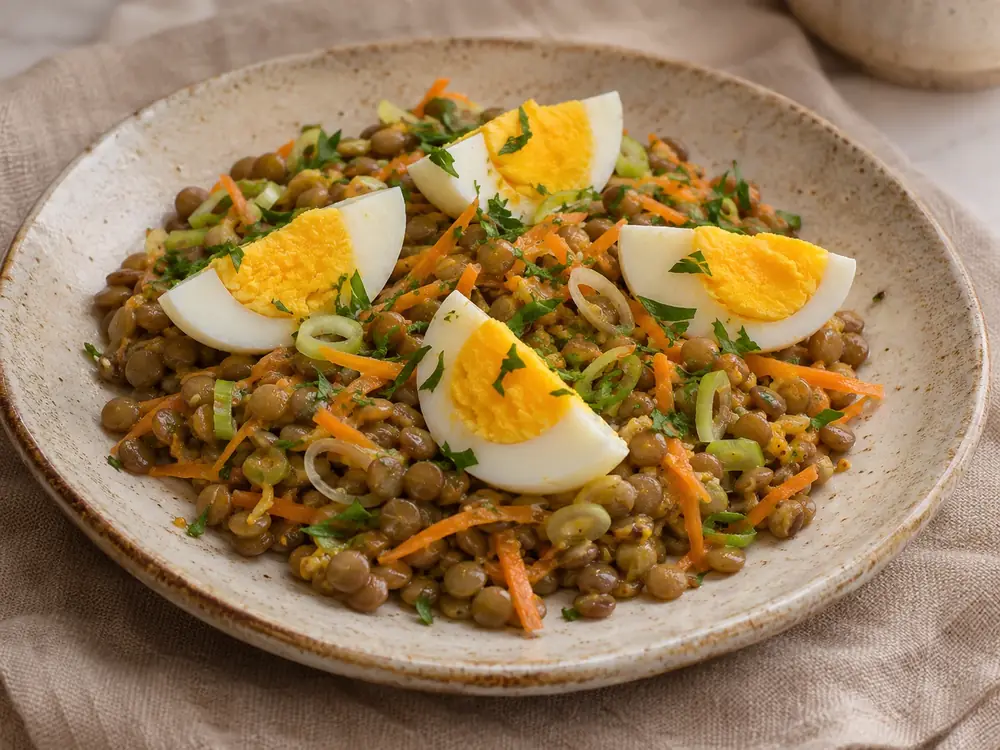
Warm green lentils meet hard-boiled eggs, raw carrot and mustard dressing. Keep lentils whole to contrast with egg wedges and carrot strands. “Warm” describes temperature when dressing and serving, not prolonged holding on the table. The recipe provides four light-meal portions. Distribute an egg, lentils and vegetables to each plate rather than concentrating the garnish on top of a shared bowl.
Ingredients
- 200 g dry green lentils
- 4 eggs
- 1 carrot
- 1 spring onion
- 25 ml oil
- 15 ml vinegar
- 15 g mustard
- 3 g salt
- 10 g parsley
Preparation
Method at a glance — Cook lentils in plenty of unsalted water for 20–25 minutes and drain. Cook eggs for 9 minutes in simmering water, cool and peel. Mix oil, vinegar, mustard and salt. Dress warm lentils, adding grated carrot and sliced onion. Top with quartered eggs and parsley.
Culinary context — This is contemporary family cooking. Lentils, eggs and mustard belong to widely shared repertoires; consulted documents do not attribute this exact combination to a South African community. It is presented as a new proposal, not a renamed local classic. Cooked pulses and eggs create a practical meal distinct from the potato and bean salads already in the first manuscript.
Choosing lentils — Use sorted, rinsed dry green lentils. The 200 g means uncooked weight, not drained canned weight. Canned lentils can make a quicker adaptation, but choose an appropriate cooked quantity and reassess preparation time. Red split lentils break down, making them better for soups than a whole-grain salad. Brown lentils may work with adjusted cooking and sometimes softer texture. Use enough water to keep lentils submerged throughout. Bring to a simmer and maintain gentle movement: vigorous boiling damages skins before centres soften. Start testing after about 20 minutes by tasting a cooled lentil. It should be tender without becoming pasty. Drain immediately, leaving the colander over the pan briefly to release residual water. Wet lentils quickly dilute dressing.
Cooking and preparing eggs — Place eggs in a suitable saucepan and cover with water. The short method allows 9 minutes from simmering for ordinary eggs, but size and initial temperature affect results. Seek set yolks that quarter neatly. Cool quickly in cold water and peel from the broader end. Cracked eggs require particular attention; selecting intact shells beforehand makes neat presentation and appropriate keeping easier. Cut with a clean knife, wiping between cuts if yolk sticks. Keep wedges separate until plating to avoid crumbling in the bowl and to count portions. Eggs are not decoration alone: each person should receive a comparable quantity. Refrigerate in a covered container if prepared ahead, taking them out at assembly rather than leaving them at room temperature while lentils cook.
Preparing raw vegetables — Peel and finely grate carrot so it mixes with grains without long, awkward ribbons. Wash spring onion, discard tough parts and slice whites and tender greens. Wash parsley, dry thoroughly and chop just before mixing. Dripping herbs add water without extra flavour. Adjust an exceptionally large carrot to the dish rather than overwhelming the lentils with raw vegetables.
Making an emulsified dressing — Put mustard in a bowl, add vinegar and some salt, then whisk in oil. Mustard helps disperse oil evenly. Taste before using all 3 g salt, because mustard already contributes some. Vinegar may seem sharp alone; judge it on a spoonful of lentils. Do not replace all vinegar with extra mustard: they differ in texture and role in the balance.
Assembling at the right moment — Pour dressing onto drained, still-warm lentils and mix gently. Warmth helps seasoning without excessive oil. Add carrot, onion and parsley, divide onto plates and top with egg wedges. For a shared bowl, reserve a few herbs for the top but mix the rest of the sauce thoroughly through the grains. Surface-only dressing leaves initial spoonfuls too acidic and the bottom unseasoned.
Variations and common problems — Loosen dry salad with a small spoonful of warm water and a few drops of vinegar or oil after tasting. Very watery salad mainly calls for better draining next time, not raw flour to absorb dressing. Finely diced celery can complement carrot as a variation of this recipe. Red onion replacing spring onion has a stronger flavour; slice very finely, perhaps rinse briefly and drain.
Planning and conclusion — For preparation the day before, cool lentils promptly and refrigerate eggs, vegetables and sauce, preferably separately. Serve cold next day or reheat only lentils before assembly; avoid repeatedly cooling and holding the complete salad warm. Consume assembled salad within 48 hours under proper refrigeration. Tender intact grains, fairly distributed eggs and enough dressing to connect components give precision. Plain bread can accompany without being essential. Enjoy your meal!
Introduction
Warm green lentils meet hard-boiled eggs, raw carrot and mustard dressing. Keep lentils whole to contrast with egg wedges and carrot strands. “Warm” describes temperature when dressing and serving, not prolonged holding on the table. The recipe provides four light-meal portions. Distribute an egg, lentils and vegetables to each plate rather than concentrating the garnish on top of a shared bowl.
Cultural context
Separate cooking is the main practical advantage. Eggs and lentils need different pans and times but can cook alongside one another. Meanwhile grate carrot, slice onion and prepare dressing. Parallel work explains the short overall time. If your lentils take longer, follow tenderness rather than forcing the stated 25 minutes. Extra sauce cannot make a hard grain pleasant.
Planning
Serves 4; preparation 15 min; cooking 25 min.
Enjoy your meal
Enjoy your meal!