Sorghum and yoghurt waffles
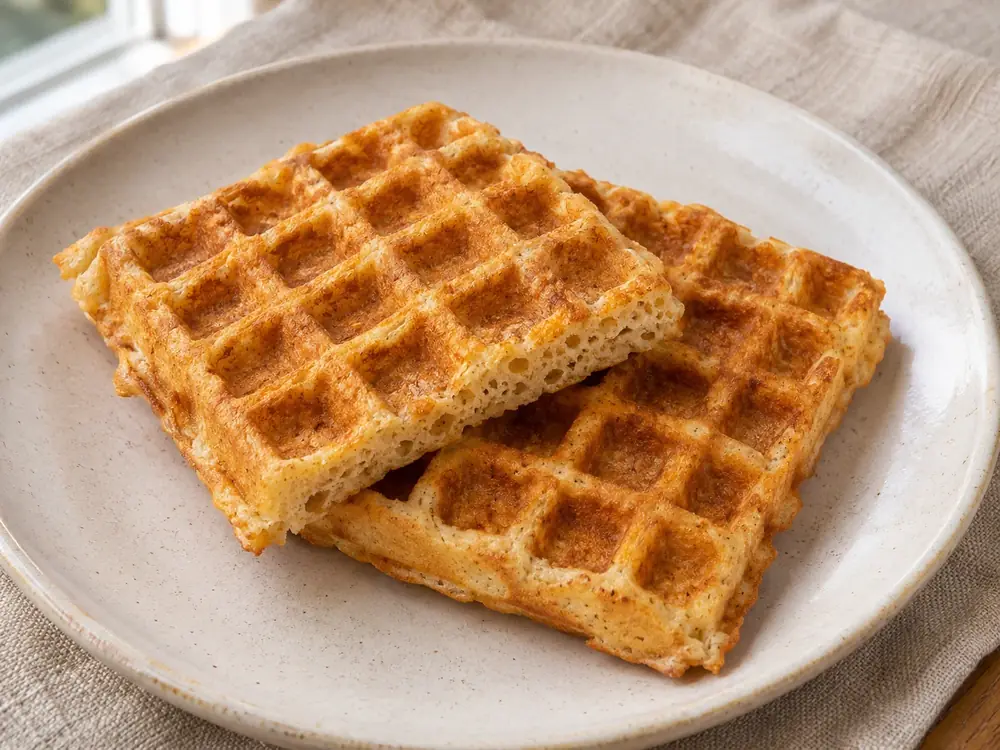
These waffles combine sorghum and wheat flour in a yoghurt batter. Sorghum contributes grain flavour, while wheat gives enough structure for release without crumbling. Aim for a lightly crisp surface and soft interior. Yoghurt does not replace cooking: a waffle may look browned outside yet remain wet inside if the appliance is insufficiently preheated or overfilled. Use the first waffle to establish the right setting.
Ingredients
- 120 g sorghum flour
- 100 g wheat flour
- 2 eggs
- 250 g plain yoghurt
- 80 ml milk
- 30 g melted butter
- 8 g baking powder
- 20 g sugar
- 2 g salt
- 5 ml oil for greasing the waffle maker if needed
Preparation
Method at a glance — Mix flours, baking powder, sugar and salt. Whisk eggs, yoghurt, milk and butter. Combine, rest 5 minutes, then spoon into a hot, lightly greased waffle maker. Cook each batch 4–5 minutes according to the appliance. Transfer to a rack and serve with fresh fruit.
Culinary context — This contemporary creation uses sorghum in a widely shared baking technique. It does not borrow a traditional porridge name or claim to make waffles an historic South African speciality. Sorghum is an ingredient choice, not evidence of the dish's origin. Wheat flour is explicitly included, so these waffles are not gluten-free. Preserve that distinction in translations and any later website presentation.
Choosing flours — Use fairly fine food-grade sorghum flour, not an equal weight of coarse meal or whole grains. Keep the stated ratio for the first attempt rather than removing all wheat immediately. Water absorption varies with grind and storage. The 5-minute rest lets the flour hydrate before judging consistency. If very stiff, add a small spoonful of milk, stir and check before making larger corrections. Choose plain, unsweetened yoghurt. Very thick yoghurt may need extra milk; drinking yoghurt changes fluidity substantially and is not directly equivalent. Cool melted butter to lukewarm before adding eggs. Sugar is limited to 20 g because fruit provides sweetness. Distribute baking powder in the flour before adding liquid: a poorly mixed pocket can make one waffle bitter.
Preparing the waffle maker — Follow appliance instructions for heating, greasing and opening. Some non-stick plates need very little fat; others benefit from a light oiling before each batch. The 30 g butter belongs in the batter; the separate 5 ml oil allows for greasing if necessary. Record actual extra greasing when finalising quantities. Do not immerse the appliance to clean it or damage plates with metal tools. Clean, thoroughly heated plates release waffles more evenly.
Making the batter — Combine flours, sugar, salt and baking powder. Separately whisk eggs with yoghurt, milk and lukewarm butter. Pour over dry ingredients and fold with a spatula, scraping the bottom to incorporate dry flour. Prolonged machine beating is unnecessary. Rest 5 minutes while plates finish heating. Batter must be thick enough not to escape the cells immediately, but supple enough to spread as the lid closes.
Portioning and cooking — Place a moderate amount in the centre or distribute as the manufacturer recommends. Close without forcing and allow cooking before checking. Opening early tears a setting waffle even when the formula is sound. The 4–5 minutes is guidance, not a rule for every machine. Watch reduced steam and colour, then lift gently with a suitable spatula. If each half sticks to its plate, close again and cook briefly longer. Overflow often means excess batter. Reduce the next ladleful rather than pressing harder on the lid. A pale surface and doughy middle suggest weak heat; a dark surface and wet centre suggest excessive thickness or high heat. Adjust gradually and record portion size and cooking time for your appliance. This is more useful than pursuing a time precise to the second.
Preserving contrasting textures — Place cooked waffles on a rack without immediately stacking: steam can escape instead of softening undersides. For simultaneous service, hold briefly on a rack in a low oven and serve when the last are ready. Prolonged holding dries the crumb. Prepare fruit separately and add on the plate, not over the waiting stack. Offer thin fruit sauces alongside so each person controls the amount and retains crispness.
Variations and serving — Pear, mandarin segments or grapes suit the season and availability. These are accompaniments outside the basic quantities; add them to the shopping list. Extra plain yoghurt is optional. For a less sweet presentation, keep the stated batter sugar and choose unsweetened toppings rather than replacing it with abundant syrup. Major flour changes need testing, not a promise of identical results.
Advance preparation and conclusion — Measure dry ingredients the previous day into a dry container. Keep dairy and eggs refrigerated until preparation. Mix shortly before cooking rather than leaving baking-powder batter standing. Cooked waffles can be cooled, frozen individually and reheated until hot at the centre, accepting a slightly different texture. Even cooking and restrained toppings let sorghum remain noticeable. Serve once the light crust surrounds fully cooked crumb. Enjoy your meal!
Introduction
These waffles combine sorghum and wheat flour in a yoghurt batter. Sorghum contributes grain flavour, while wheat gives enough structure for release without crumbling. Aim for a lightly crisp surface and soft interior. Yoghurt does not replace cooking: a waffle may look browned outside yet remain wet inside if the appliance is insufficiently preheated or overfilled. Use the first waffle to establish the right setting.
Cultural context
The recipe serves four, but waffle numbers depend strongly on the machine. A large Belgian-style plate and a small heart-shaped iron take different quantities. Mentally dividing the batter into four portions helps without imposing one waffle per person. The 20 minutes assumes successive batches and may not include the machine's full heating time. Allow for this so the last waffles can be served without rushing.
Planning
Serves 4; preparation 15 min; cooking 20 min.
Enjoy your meal
Enjoy your meal!