Egg and cheddar stuffed mushrooms
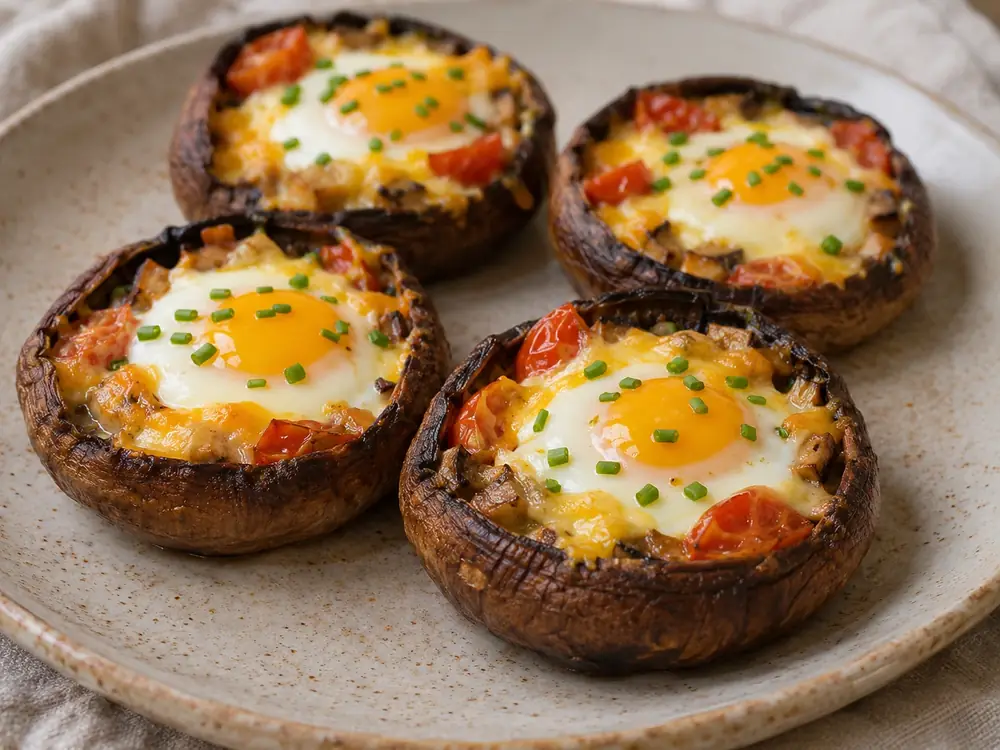
A large mushroom provides a natural container for an egg filling. Precooking caps releases some water before adding tomatoes, chopped stalks, cheddar and a small egg. Aim for tender mushroom flesh, a set white and a filling that holds on the plate. Eat with knife and fork; this is not a finger-food bite that can be lifted without spilling.
Ingredients
- 4 large portobello mushrooms
- 4 small eggs
- 80 g cheddar
- 100 g cherry tomatoes
- 15 ml oil
- 2 g salt
- pepper
- 5 g chives
Preparation
Method at a glance — Remove and chop mushroom stalks. Oil caps, place cavity upwards and precook 10 minutes at 190 °C. Drain released liquid. Fry chopped stalks in remaining oil for 3–5 minutes until dry. Fill caps with stalks, finely diced tomatoes and some cheddar, then add an egg to each, using only as much white as fits. Season and scatter remaining cheddar. Bake another 12–15 minutes or until the white is set, then add chives.
Culinary context — This is a contemporary brunch or light-meal creation. Mushrooms and cheddar do not establish a specific South African origin, and no historical attribution is claimed. It belongs here as a new home-cooking proposal alongside better-documented repertoire dishes. Retain portobello in translation with the description “large brown mushroom with an open cap”; this is more useful than an unfounded cultural name.
Choosing caps — Choose four large fresh, firm, non-slimy mushrooms with edges able to retain filling. Wipe or brush clean without soaking. Gently twist out stalks and chop for the filling. Gills may remain if space allows; if crowded and shallow, carefully remove some. Do not scrape through the base: it must remain a sound shell. The chopped stalks are precooked for a few minutes, correcting the initial short method so raw stalks do not release extra water beneath the egg at the last minute. Deseed very juicy tomatoes, chop finely and drain. Small eggs fit more easily than very large ones. Weigh cheddar before dividing: too heavy a layer leaves insufficient room for white.
Precooking and draining — Lightly oil caps with part of the measured 15 ml, salt very sparingly and set cavity upwards in a dish. Bake 10 minutes at 190 °C. Remove and tilt each cap using tongs to drain without tearing. This distinguishes a stuffed mushroom from a little bowl of juice. Do not return that liquid to the filling merely to use everything: reserve for another cooked preparation if desired; it is unnecessary here. During precooking, fry chopped stalks in remaining oil for 3–5 minutes until juice evaporates. Combine with prepared tomatoes and some cheddar. Divide into caps, leaving a central hollow. Do not pack tightly: keep the mushroom supple and filling below the rim. Capacity varies; cook a small excess alongside rather than forcing it into an inadequate shell.
Adding eggs — Crack each egg into a separate cup. Slide the yolk into the hollow first, then add as much white as the cap reasonably holds. This accommodates differences in egg and mushroom sizes, but may leave unused white. Refrigerate it for another cooked dish and record it when tracking precise yields. Do not force in a whole egg that will overflow throughout the dish.
Finishing cooking — Scatter remaining cheddar mainly around the egg; add pepper and remaining salt only as the cheese requires. Return to the oven and begin checking after 10 minutes. The 12–15 minutes is a guide; mushroom thickness and initial egg temperature may require longer. White must be opaque and set. For a firm yolk, continue until fully set. Deeply golden cheese does not prove that a concealed egg is cooked. Once cooked, remove and wait 1–2 minutes before transferring. A broad spatula supports the base better than tongs gripping the rim. If more water has emerged, briefly place on an intermediate plate before final service without pressing. Add chopped chives after baking to retain aroma. Avoid watery sauce that undoes draining and makes clean eating difficult.
Troubleshooting — A pierced cap may cook in a small ramekin that retains filling, though presentation changes. Thin mushrooms may collapse; choose fleshier ones next time rather than shortening precooking so much that water remains. Very acidic tomato may dominate: slightly reduce it and add more precooked stalk, rather than automatically adding sugar. Adjust salt after considering cheddar.
Variations and conclusion — A spoonful of cooked, thoroughly squeezed spinach may replace some tomato within this recipe. Different herbs change aroma without making additional recipes. Caps and filling can be prepared ahead, promptly cooled and refrigerated, but add eggs only before final baking. Reheat a cold base and monitor longer rather than trusting the timer alone. Serve immediately with something fresh and plain bread. Enjoy your meal!
Introduction
A large mushroom provides a natural container for an egg filling. Precooking caps releases some water before adding tomatoes, chopped stalks, cheddar and a small egg. Aim for tender mushroom flesh, a set white and a filling that holds on the plate. Eat with knife and fork; this is not a finger-food bite that can be lifted without spilling.
Cultural context
Four large caps make four starter or light-meal portions. Diameter and depth matter more than exact weight: the hollow must hold filling and egg. A small flat mushroom is unsuitable despite the same shop name. For lunch, add bread and raw vegetables or a small grain salad. These accompaniments are outside the recipe list and must be added separately when shopping for a menu.
Planning
Serves 4; preparation 15 min; cooking about 25 min.
Enjoy your meal
Enjoy your meal!