Rolled sweetcorn and pepper omelette
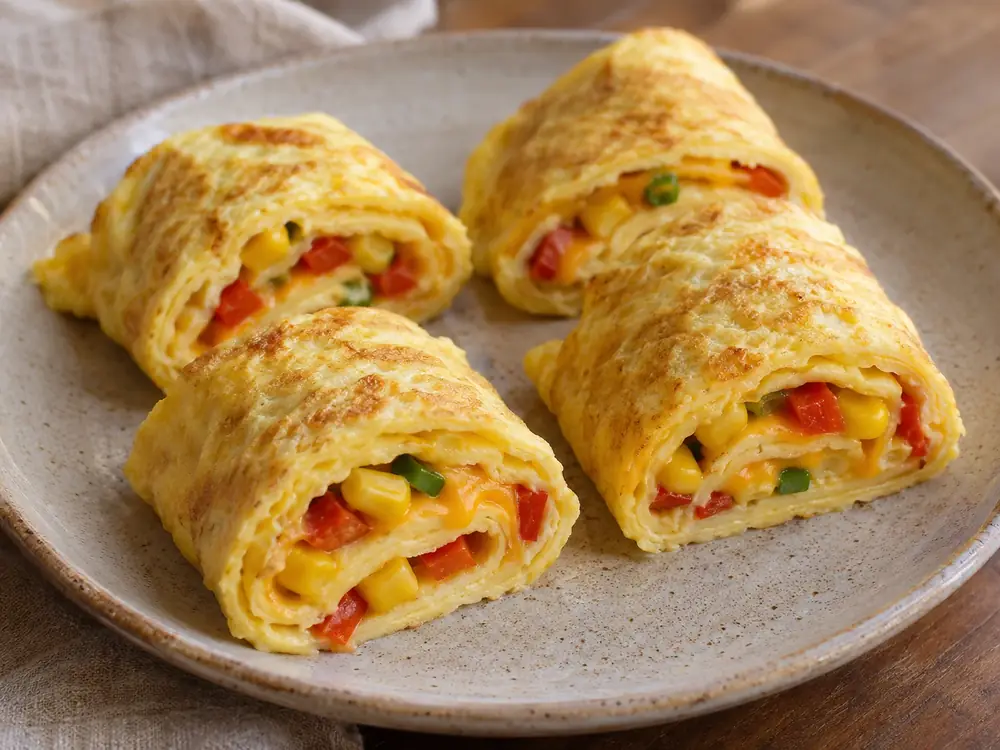
Rolling gives corn and pepper an easily shared form without oven cooking. Two thin filled omelettes are rolled, each making two portions. Corn supplies sweet notes, pepper bright colour and spring onions freshness. Melted cheddar binds the filling but should not dominate as an elastic mass. A slightly diagonal cut makes attractive, clearly visible rolls without elaborate plating.
Ingredients
- 6 eggs
- 150 g cooked, drained sweetcorn
- 1 red pepper
- 2 spring onions
- 60 g cheddar
- 20 ml oil
- 2 g salt
- pepper
Preparation
Method at a glance — Fry finely diced pepper in half the oil for 6 minutes. Add corn and sliced spring onions. Beat eggs with salt and pepper. Make two thin omelettes in the remaining oil; add vegetables and cheese before fully set. Roll gently and finish covered for 2 minutes.
Culinary context — This combination of corn, vegetables and cheese belongs to contemporary family cooking. Rolling is not claimed as specifically South African, and no heritage name is invented. The recipe expands practical uses of maize, an important ingredient in this volume, with results distinct from porridge, bread or gratin. Its descriptive cultural note does not replace documented history with an imagined origin story.
Choosing and weighing — The 150 g is cooked and drained kernels. Rinse canned corn only if needed and let it dry in a colander. Cook frozen corn according to its packet and drain before assembly. Raw kernels cut from a cob cannot directly replace cooked corn within the stated few minutes. Choose a firm pepper, remove stalk, seeds and membranes. Use spring onion whites and tender greens. Grate cheddar and divide ingredients into two equal portions in advance. Beat all six eggs with salt and pepper and split if preferred, rather than mixing each omelette separately. Do not add milk for volume: it weakens the layer for rolling. Egg weights vary, but similar sizes and the same pan give sufficient consistency at home.
Cooking a dry filling — Dice pepper into 5–8 mm pieces. Fry over medium heat in 10 ml oil for about 6 minutes, until tender with a little bite. Light colouring is fine; burnt pepper makes the omelette bitter. Add corn and spring onions briefly to heat, then transfer to a bowl. Evaporate any pan liquid before transfer. Wet filling slips inside the roll and tears the egg layer. Keep the filling warm rather than piping hot while preparing the first omelette: it spreads easily without immediately overcooking patches of egg. Quickly clean the pan if strongly coloured fragments remain, especially with a surface that holds residue. Cooking vegetables first controls their tenderness separately. Raw vegetables enclosed in thin omelette would not cook before the eggs dried out.
Forming the first omelette — Heat the pan over medium heat with half the remaining oil. Pour half the beaten eggs and tilt to cover the base. Initially draw some set areas towards the centre, allowing liquid egg into the gaps. Then stop stirring to form a continuous sheet. When the underside holds and the top remains soft, arrange half the vegetables and cheese in a central band, leaving edges clear.
Rolling without tearing — Loosen one edge with a flexible spatula and fold over the filling. Continue gradually, using a second spatula for support if needed. A tightly compressed restaurant-style roll is unnecessary: a loose shape holds better and crushes fewer kernels. Place seam underneath, cover and finish gently for about 2 minutes until egg is set. Transfer to a plate and repeat with remaining ingredients. If it tears, check cooking and filling quantity first. A fully liquid surface lacks strength; a dried sheet becomes brittle. Hide a small split underneath when serving rather than overcooking the entire roll in a fierce pan. Next time, use slightly less filling at each placement and distribute the same total over a broader band.
Serving and variations — Rest rolls 1 minute and halve each with a clean knife. Serve with separately prepared tomatoes or crunchy salad. For heat, add a little chilli while cooking vegetables without imposing it on everyone. Cooked peas may replace some corn as a variation of the same recipe. Avoid enclosing much sauce; serve alongside so it does not soften eggs and cheese.
Planning and conclusion — Vegetables can be cooked the previous day, cooled promptly and refrigerated. Reheat before starting omelettes. Cook and roll eggs at the last minute: prolonged covered holding causes condensation and firmer texture. For groups, make multiple small rolls in two pans rather than an enormous, hard-to-turn omelette. Dry ingredients, supple eggs and prompt serving bring success. Enjoy your meal!
Introduction
Rolling gives corn and pepper an easily shared form without oven cooking. Two thin filled omelettes are rolled, each making two portions. Corn supplies sweet notes, pepper bright colour and spring onions freshness. Melted cheddar binds the filling but should not dominate as an elastic mass. A slightly diagonal cut makes attractive, clearly visible rolls without elaborate plating.
Cultural context
For clarity, use a 26–28 cm pan and three eggs per omelette. A small pan makes the layer too thick to roll intact. With only a 20 cm pan, make three omelettes of two eggs and divide portions afterwards. The number of rolls changes, not total ingredients. Retain this detail in translation.
Planning
Serves 4; preparation 15 min; cooking 15 min.
Enjoy your meal
Enjoy your meal!