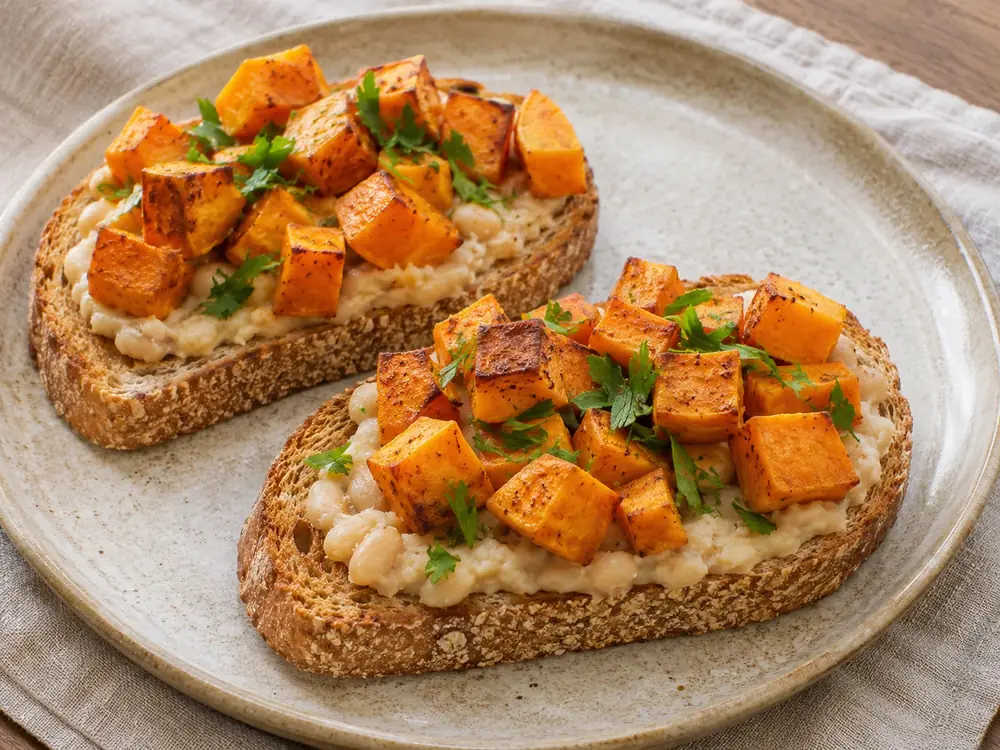
Sweet potato and white bean toasts
These toasts combine lemony white bean purée and cumin-roasted sweet potato. Bread provides structure, beans a creamy base, and sweet potato tender cubes with browned corners. Assemble at the last minute to preserve crispness under the generous topping. This is a contemporary plant-based light meal rather than a recreation of a named heritage dish, using accessible ingredients and separate operations requiring no specialist equipment.
Ingredients
- 8 slices wholemeal bread
- 400 g peeled sweet potato flesh
- 240 g cooked, drained white beans
- 1 lemon
- 25 ml oil
- 2 g cumin
- 3 g salt
- 10 g parsley
Preparation
Method at a glance — Dice sweet potato, toss with 15 ml oil, cumin and half the salt. Roast 25–30 minutes at 200 °C. Mash beans with juice from half the lemon, remaining oil and salt. Toast bread, spread with bean purée, then top with roasted cubes and parsley.
Culinary context — Sweet potatoes and beans feature in many African cuisines and beyond. Their presence alone does not attribute these toasts to a specific South African tradition. Their connection here is contemporary cooking embracing cereals, pulses and vegetables in a volume that identifies its new creations. No source is used to invent an origin for this assembly. Cultural notes should reflect what is known and give more space to practical cooking and results.
Preparing beans — The 240 g refers to already cooked, drained beans, not dry seeds, which would yield far more and require soaking and cooking. A small tin is suitable if drained weight matches. Rinse if its liquid is very salty, then drain for several minutes. Wet beans make purée that quickly soaks bread. Home-cooked beans also work if tender and correctly refrigerated. Mash with a fork for a rustic texture or blend briefly for smoothness. Add the reserved 10 ml oil and some lemon juice. Juice varies between fruits: start small, taste and add more. Half a lemon is guidance, not a universal volume. Purée must spread without running. A small spoonful of water usually loosens an overly firm mash; substantial liquid is unnecessary for toast.
Cutting sweet potato — Peel and weigh 400 g flesh. Cut uniform cubes about 1.5 cm across. Very small pieces dry and burn quickly; large ones make unstable toppings and exceed the stated time. Dry surfaces after rinsing so oil adheres evenly. Toss in a bowl with cumin and part of the salt rather than pouring all seasonings onto one tray area.
Roasting properly — Spread in one layer with small gaps. Preheat to 200 °C, roast and turn after about 15 minutes. The stated 25–30 minutes suits this cube size: a knife should enter readily and some surfaces be golden. An overcrowded tray traps steam and produces soft but pale cubes. For eight people, use two trays and swap halfway instead of piling vegetables into one dish. Let cubes cool slightly before assembly. Piping-hot cubes warm the purée immediately and create moisture in the bread. Cold ones work but give less contrast. Best service combines freshly toasted bread, cool purée and warm sweet potato. This temperature choice does not mean leaving prepared beans unrefrigerated for hours. Remove only what is needed for plating.
Choosing and toasting bread — Fairly close-textured wholemeal bread cut about 1 cm thick supports the topping. Large holes let purée fall through; thin slices soften quickly. Toast both sides lightly, then briefly place on a rack to release steam. Hot slices stacked on a plate may lose crispness before topping. Extra fat on bread is unnecessary if bread and purée already have a satisfactory texture.
Assembling — Divide beans over eight slices, leaving a narrow edge to hold. Add cubes without crushing and finish with finely chopped parsley. Taste a complete bite before using all remaining salt: bread and tinned beans may already contribute some. Lemon zest can add aroma without extra juice. Serve on plates rather than a large board where heavily topped toasts are difficult to lift.
Variations and difficulties — Correct runny purée with extra well-drained beans, not plenty of raw flour. If sweet potato collapses when mixed, handle more gently after cooking and cut slightly larger cubes next time. Chickpeas may replace beans for a different adaptation, possibly needing longer blending. Reduce overpowering cumin; fresh coriander can replace parsley if clearly announced to diners.
Planning and conclusion — Prepare beans and sweet potato separately, cool promptly and refrigerate if not serving immediately. Reheat cubes in the oven and toast bread at the last moment. Assembled toasts do not suit long waits or transport because contrasting textures are central. To take away, pack the three components separately and assemble at the meal. Treating and seasoning each element carefully brings precision to a simple plant-based dish. Enjoy your meal!
Introduction
These toasts combine lemony white bean purée and cumin-roasted sweet potato. Bread provides structure, beans a creamy base, and sweet potato tender cubes with browned corners. Assemble at the last minute to preserve crispness under the generous topping. This is a contemporary plant-based light meal rather than a recreation of a named heritage dish, using accessible ingredients and separate operations requiring no specialist equipment.
Cultural context
Eight medium slices make four portions of two toasts. Two thin slices of a small loaf differ from two large country-loaf slices. Recording bread type or weight during preparation for the final manuscript will refine portions and later nutrition estimates. For aperitif bites, cut after assembly and announce a yield in bites, without calling each a full portion.
Planning
Serves 4; preparation 15 min; cooking 30 min.
Enjoy your meal
Enjoy your meal!