Cinnamon and lemon pannekoek
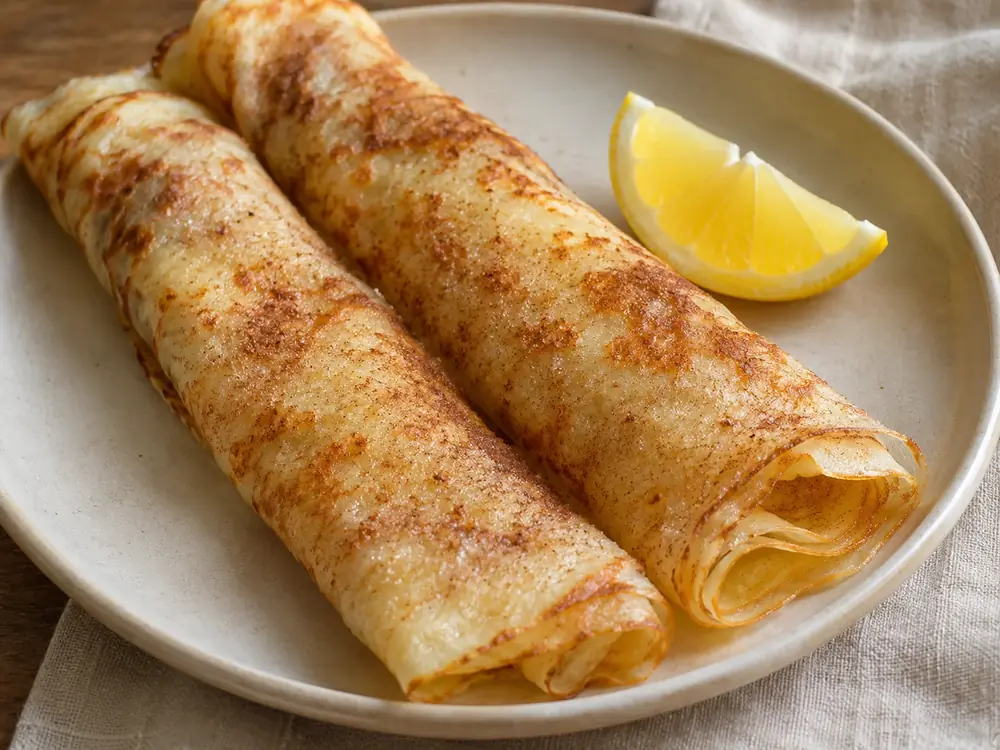
These pannekoek are thin, pliable pancakes filled with cinnamon sugar and a few drops of lemon, then rolled. Their simplicity reveals every detail: smooth batter, an even film in the pan and restrained seasoning. Lemon must not soak the pancake, nor cinnamon form a powdery layer. The topping should melt slightly against the hot surface and complement the pancake, rather than form a thick filling that prevents rolling.
Ingredients
- 150 g plain flour
- 2 eggs
- 350 ml milk
- 50 ml water
- 20 ml oil
- 1 g salt
- 40 g sugar
- 3 g ground cinnamon
- 1 lemon
Preparation
Method at a glance — Whisk flour, eggs, milk, water, half the oil and salt into a thin batter. Rest 20 minutes. Mix sugar and cinnamon. Cook eight thin pancakes in a lightly oiled pan, about 1 minute per side. While hot, sprinkle with cinnamon sugar, add a few drops of lemon and roll.
Choosing ingredients — Use ordinary wheat flour without raising agents. Eggs help the thin film hold together; omitting them requires reformulation. Milk adds suppleness and water keeps the batter fluid. Oil is divided between batter and pan, a distinction that must remain explicit in every language. Fine sugar spreads more evenly over the filling; large crystals feel crunchier. Choose fragrant, evenly ground cinnamon rather than increasing the dose to compensate for an old, faded jar. Mixing the 3 g cinnamon with 40 g sugar before serving ensures even distribution. Wash the lemon and cut into wedges so each person can adjust the juice. Acidity depends on the fruit and preference; the intention is not to pour a whole lemon's juice over the stack. A few drops per pancake often suffice.
Making lump-free batter — Put flour and salt in a bowl, make a well and add eggs. Whisk with a little milk, gradually drawing flour into the centre. Once smooth, add remaining milk, water and half the oil. This prevents flour clumps floating in a large volume of liquid. If lumps remain, briefly strain rather than adding flour to correct a dispersion problem. Rest the covered batter for 20 minutes somewhere cool, or refrigerate if waiting longer. This hydrates the flour and helps even pancakes form. Stir gently before cooking because slight separation may occur. Batter should barely coat the ladle and pour readily. If noticeably thicker after resting, add a small spoonful of water, stir and test one pancake before adjusting further.
Controlling the pan — Heat a clean pan over medium to moderately high heat and oil very lightly. Pour a small ladleful while immediately tilting the pan to coat the base. Once the technique is established, do not patch nearly cooked holes with more batter: patches make thick, fragile areas. If batter sets before covering the base, either the pan is too hot or too little was poured. Adjust one variable at a time. Turn when edges lift and the surface is no longer clearly wet. The first side may take about a minute; the second often takes less. Do not dry the pancake to obtain uniform colour. Transfer to a plate and cover lightly while cooking the rest. An imperfect first pancake helps set the heat; it does not justify changing the whole recipe. Wipe the pan if torn batter remains and burns.
Filling and rolling — Sprinkle each hot pancake moderately with cinnamon sugar, distributing to the edges without a central mound. Add a few lemon drops and roll without tightening excessively. Serve rolls whole or halved. Offer remaining sugar mixture separately so diners can adjust. Do not wet the whole stack with lemon in advance: juice runs through the first layers and makes lower pancakes difficult to handle.
Adapting service — For entertaining, make pancakes without filling, separate with suitable paper if needed, then briefly reheat covered before rolling. Cooked fruit may be offered separately as a variation of this recipe. A savoury adaptation omits serving sugar and cinnamon; it does not automatically count as another speciality. The neutral batter supports these uses, but this dessert's title describes the sweet version.
Storage and conclusion — Cool pancakes intended for storage promptly, cover, refrigerate and use within 48 hours. Reheat without drying on an uncovered tray. Raw batter also belongs in the refrigerator and must be used promptly; leaving it on a worktop all morning is not a recipe step. Even thin pancakes and aromatic sugar make an appealing dessert without spectacular fillings. Last-minute lemon reveals the contrast. Enjoy your meal!
Introduction
These pannekoek are thin, pliable pancakes filled with cinnamon sugar and a few drops of lemon, then rolled. Their simplicity reveals every detail: smooth batter, an even film in the pan and restrained seasoning. Lemon must not soak the pancake, nor cinnamon form a powdery layer. The topping should melt slightly against the hot surface and complement the pancake, rather than form a thick filling that prevents rolling.
The recipe yields about eight pancakes in a 22–24 cm pan, two per person. A larger pan uses more batter and reduces yield. A measured ladle, or the same small ladle each time, helps consistency. Allow for resting when planning the meal. For guests, make the batter before sitting down and cook at dessert time.
Cultural context
South African producer Weldhagen Eggs includes cinnamon and lemon pannekoek among its South African classics. This documents their presence in the local repertoire without claiming thin pancakes have an exclusively national origin. This manuscript uses independent proportions while retaining the idea of a thin, rolled sweet pancake. Keep the name pannekoek with a description in translation to distinguish it from the thicker flapjacks in this part of the book.
Planning
Serves 4; preparation 15 min; resting 20 min; cooking 20 min.
Enjoy your meal
Enjoy your meal!