Cultured milk and naartjie flapjacks
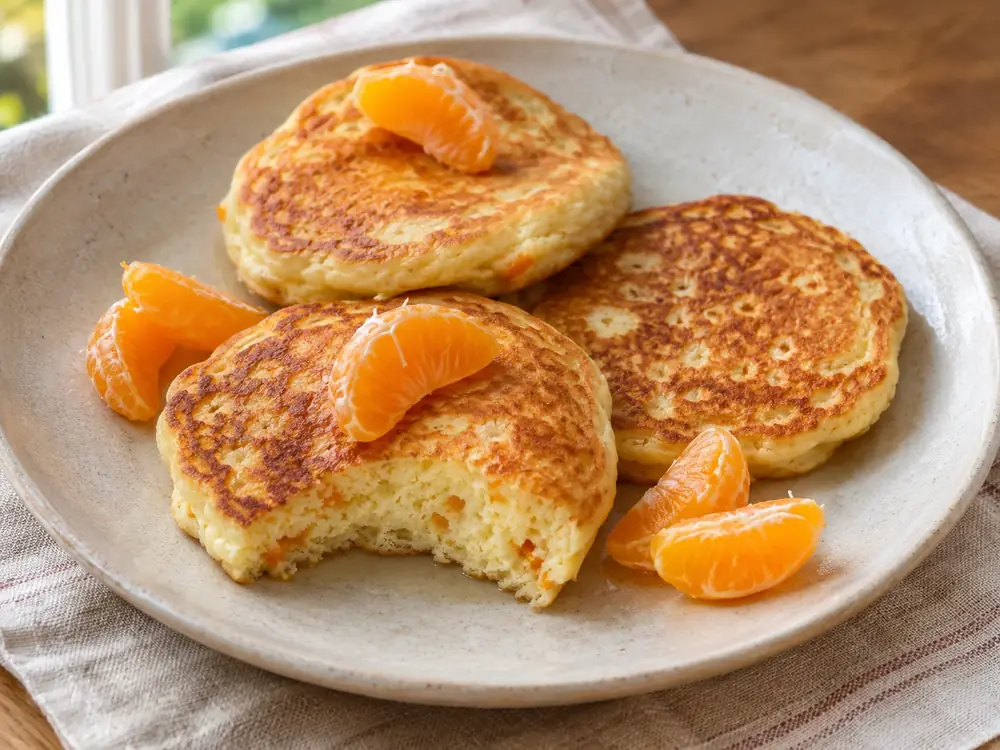
These small, thick, pan-browned pancakes have a soft, slightly tangy batter thanks to cultured milk. Naartjie zest flavours the batter and its segments accompany the finished pancakes, providing aroma and fresh fruit rather than a very sweet syrup. Keep pancakes small enough to turn intact and cook through before excessive browning. A trial batch establishes pan temperature and ladle size.
Ingredients
- 200 g plain flour
- 250 ml cultured milk
- 1 egg
- 25 g sugar
- 8 g baking powder
- 20 g melted butter
- 2 naartjie mandarins
- 1 g salt
- 10 ml oil
Preparation
Method at a glance — Mix flour, sugar, baking powder and salt. Beat cultured milk with egg, butter and the zest of one mandarin. Combine without overworking. Lightly oil a pan; cook small ladlefuls over medium heat for about 2 minutes per side. Peel the mandarins, removing pith, and serve their segments over the warm pancakes.
Understanding the batter — Wheat flour provides structure, egg binds and baking powder gives a quick rise. Cultured milk varies in acidity and thickness between brands; do not replace 250 ml unchecked with extremely thick yoghurt. Batter should fall from the spoon in a broad ribbon and spread slowly in the pan, rather than run like thin crêpe batter. A very stiff mixture needs a little liquid; an overly thin one makes flat discs. Cool melted butter to lukewarm before adding it to egg and cultured milk. Too hot, it can form strands of cooked egg; chilled by icy milk, it may solidify into particles. These do not necessarily ruin the batter but make it less uniform. Taking ingredients out only during preparation usually helps mixing; leaving dairy unrefrigerated for a long time is unnecessary.
Preparing the naartjies — Choose fragrant mandarins that feel heavy for their size and have no soft areas. Wash and dry before zesting. Use only coloured peel: white pith may be bitter. Two fruits flavour the batter and modestly garnish four plates. Extra fruit may be offered separately, identified as an optional accompaniment rather than silently added to the ingredient list. Prepare segments before cooking, removing seeds and thicker membranes without insisting on perfect knife-cut segments. Keep in a small bowl and reserve released juice for serving. Putting fruit directly into the batter causes less even cooking and more tearing when turning. Serving it separately keeps the batter simple and allows freshness to vary with fruit ripeness.
Mixing gently — Combine the dry ingredients first to distribute them. Separately beat cultured milk, egg, lukewarm butter and zest. Pour wet into dry and fold with a spatula until large pockets of flour disappear. A few small lumps do not justify prolonged whisking. Overworking makes batter more elastic and pancakes less tender. Rest 5 minutes while heating the pan; no fermentation is intended.
Cooking evenly — Heat a heavy-based pan over medium heat and brush with a thin film of oil. Add three or four small ladlefuls, leaving gaps. Do not flatten with the spatula. Once bubbles appear and edges set, turn in one movement; cook the second side for approximately 1–2 minutes. Two minutes per side is only a guide; diameter, thickness and hob power affect it. If undersides darken while tops remain very liquid, reduce heat before the next batch. If pale discs spread slowly without setting, increase it slightly. A small test drop is more useful than a smoking pan. Wipe out excess oil and burnt residue between batches, then oil very lightly again. Keep cooked pancakes on a warm plate without a tall, steam-trapping stack.
Variations and planning — Pasteurised cultured buttermilk may replace another cultured milk in equal volume, provided consistency is checked. Clementines may replace naartjies if necessary; indicate the adaptation in the title or note. For twelve people, multiply ingredients but cook small batches, perhaps using two pans. Larger ladlefuls do not speed service if each pancake then cooks much longer. Prepare fruit and plates before heating pans.
Storage and conclusion — Serve promptly with segments and reserved juice. Cool cooked leftovers quickly, refrigerate and use the next day; briefly reheating in a gentle pan restores the surface better than prolonged hot holding. Raw egg-and-baking-powder batter should not sit on the worktop for hours. For advance preparation, measure dry and wet ingredients separately and combine only before cooking. Brief mixing and moderate heat are the keys. Enjoy your meal!
Introduction
These small, thick, pan-browned pancakes have a soft, slightly tangy batter thanks to cultured milk. Naartjie zest flavours the batter and its segments accompany the finished pancakes, providing aroma and fresh fruit rather than a very sweet syrup. Keep pancakes small enough to turn intact and cook through before excessive browning. A trial batch establishes pan temperature and ladle size.
Allow approximately three small pancakes per person, depending on diameter. Count the actual yield on the first attempt: generous spoonfuls easily turn twelve into eight. Keep size consistent to compare portions and cooking times. Sugar is already included; honey, jam and icing sugar need not automatically accompany them. Mandarin segments provide fruitiness while preserving the cultured milk flavour.
Cultural context
South African producers and food publishers feature flapjacks, also called plaatkoekies in some collections. Here the word means small thick pancakes, not the British oat bars of the same name. This cultured milk and naartjie combination is contemporary. A local citrus name does not establish an old recipe. Preserve this distinction in translation so a new composition does not become an invented heritage speciality.
Planning
Serves 4; preparation 15 min; cooking 15 min.
Enjoy your meal
Enjoy your meal!